
Undermining Safety: The Arizona Legislature's Reckless Assault on Traffic Enforcement
Published
- 3 min read
The Core Legislative Maneuver
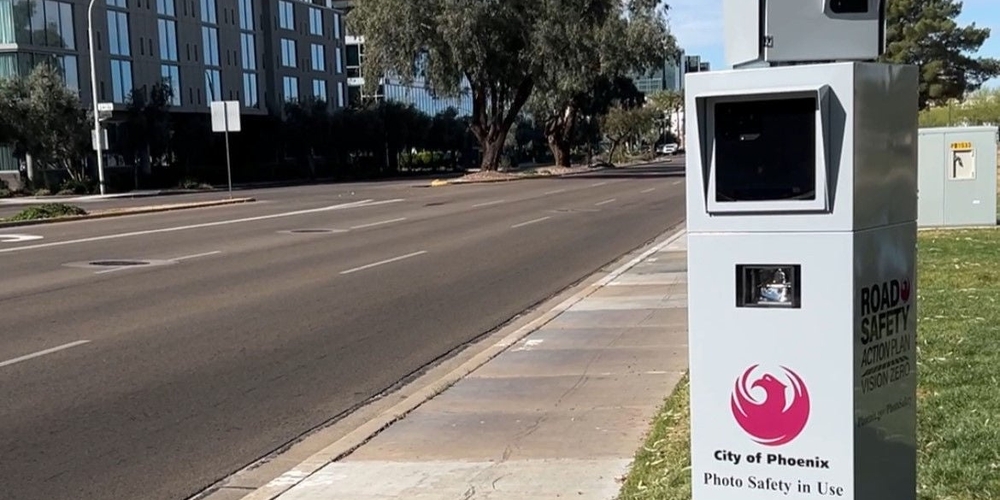
The Arizona House of Representatives has taken a preliminary step that could profoundly alter traffic safety enforcement across the state. At the heart of the controversy is Senate Bill 1624, a piece of legislation championed by the Republican majority. The bill’s most immediate and impactful provision would impose a statutory cap of $75 on fines for tickets generated by photo radar or red-light camera systems. This represents a draconian reduction from current maximums, which in cities like Paradise Valley reach $243. The legislation advanced despite vehement opposition from a coalition of major Maricopa County municipalities—Chandler, Mesa, Paradise Valley, Phoenix, and Tempe—all of which utilize these automated systems and argue the change eviscerates a critical deterrent to dangerous driving.
Context and Escalating Conflict
This bill is not an isolated incident but the latest salvo in a long-running political war. For years, Republican legislators have sought to ban automated traffic enforcement outright, with limited success. SB 1624 employs a multi-pronged strategy to achieve similar ends. Beyond slashing fines, the bill would decouple these camera-issued violations from consequential state actions: the Arizona Department of Transportation would be prohibited from considering them in license suspension decisions, and insurance companies would be forbidden from using the data to adjust premiums or client eligibility. Notably, major insurers like Allstate, Progressive, and Nationwide have registered opposition, signaling concerns from the private sector about removing tools that help assess risk.
The legislation also contains a potent political mechanism. It would place a measure on the November ballot asking voters to decide whether city officials must seek renewed voter permission every decade to maintain traffic cameras. If passed, this would subject a core public safety function to the volatility of periodic popular referendums, a move critics argue undermines the professional, data-driven governance of municipal infrastructure.
Key Actors and Their Testimony
The debate has featured starkly contrasting viewpoints from key individuals. Lobbyist Doug Cole, representing the League of Arizona Cities and Towns, delivered perhaps the most poignant testimony. He pleaded with lawmakers to table the fine-reduction portion until after the potential public vote on the systems’ very existence. His central argument cut to the philosophical core of enforcement: “We don’t want those seventy five dollars,” Cole stated. “We want behavior changed for things to be safer.” He framed the systems not as revenue streams but as behavioral nudges, where the threat of significant financial penalty is integral to their effectiveness.
Republican proponents, like Senator David Gowan, framed the issue through a lens of efficiency and compliance. Gowan argued that lower fines would encourage faster payment, thereby helping cities capture revenue more reliably under the current system. He portrayed the high fines as a barrier that leads to protracted non-payment and additional legal fees. Meanwhile, Democratic opponents like Representative Patty Contreras of Tempe voiced profound safety concerns, dismissing the proposed $75 cap as “chump change for some people” and warning it would eliminate a crucial deterrent.
The political endgame remains uncertain. The bill must clear final House and Senate votes before reaching the desk of Democratic Governor Katie Hobbs, who has a history of siding with city officials and rejecting similar measures. Her likely veto sets the stage for a classic state-level partisan showdown, with public safety hanging in the balance.
Opinion: A Dangerous Subordination of Safety to Ideology
The push for SB 1624 is a case study in the triumph of partisan ideology over empirical evidence, local autonomy, and the fundamental government duty to protect citizens. It is a reckless and emotionally charged assault on a tool that saves lives, wrapped in the deceptive rhetoric of “simplicity” and consumer relief.
First, this legislation represents a profound violation of the principle of local control—a tenet conservatives often claim to champion. The bill is a top-down mandate from the state legislature that deliberately overrides the judgment of locally elected officials in Arizona’s largest cities. These city councils and traffic engineers, who are closest to their communities’ specific safety challenges, have implemented photo enforcement as a targeted response to demonstrable problems. For the state to unilaterally gut the financial mechanism that gives these systems their teeth is an authoritarian overreach. It substitutes the nuanced, data-informed policies of municipal government with a blanket, politically motivated edict from Phoenix. This is not limited government; it is intrusive government selectively applied to achieve a political goal.
Second, the argument that reducing fines to a nominal fee will improve compliance is logically and morally bankrupt. It confuses the symptom with the disease. The goal of traffic law is not to maximize fine revenue collection efficiency; it is to minimize dangerous behavior that kills and maims people. Doug Cole’s testimony was unequivocal: the value is in the threat. A $243 fine commands attention, changes calculus, and modifies behavior. A $75 fine, as Rep. Contreras noted, is an inconsequential cost of doing business for many, especially the wealthy. It transforms a serious sanction into a mere toll for the privilege of speeding or running red lights. Proponents are essentially arguing that we should make breaking serious safety laws more affordable and convenient. This is an absurd inversion of justice and a direct threat to public welfare.
The Chilling Disregard for Human Life
Most alarmingly, this debate reveals a chilling disregard for human life in favor of a visceral, anti-technology political stance. Republicans have “long railed” against these cameras, a phrase that betrays an emotional, almost reactionary opposition, not a policy-based one. They argue the cameras lack the discretion of a police officer. While true, this ignores their purpose: they are force multipliers that operate consistently, in all weather, at all hours, in high-risk locations where manned enforcement is impractical or scarce. They are a supplement, not a replacement. To dismantle them because they are not human is to reject a tool that has proven effective at reducing fatalities at intersections and high-speed corridors.
The bill’s provision to insulate drivers from insurance consequences is particularly egregious. It actively prevents the free market from accurately pricing risk. If a driver habitually speeds or runs red lights—behaviors proven to cause catastrophic accidents—that driver poses a greater financial risk. Insurance companies have a right and a responsibility to know that. For the state to hide this data is to force safe drivers to subsidize the risk posed by dangerous ones. It is a government-mandated distortion of the market that punishes responsibility and shields recklessness.
Conclusion: A Crossroads for Responsible Governance
As this bill moves forward, Arizona stands at a crossroads. One path leads toward evidence-based policy that respects local expertise and prioritizes the sanctity of human life on public roadways. The other, paved by SB 1624, leads toward a more dangerous, anarchic environment where traffic laws are rendered suggestions, local authority is contemptuously overridden, and the state legislature engages in social engineering to satisfy a partisan base.
The opposition from cities, safety experts, and the insurance industry should be a deafening chorus of warning. This is not a left-right issue; it is a right-wrong issue. Undermining automated enforcement will have consequences measured in broken bodies and lost lives. The emotional core of this debate should not be the fleeting irritation of a driver receiving a ticket; it should be the enduring grief of families devastated by preventable crashes. Lawmakers supporting this bill are making a conscious choice to increase that grief. They are trading public safety for political points in a game with the highest possible stakes. In the name of liberty, they are fostering a liberty to endanger others—a betrayal of the very social contract that justifies government itself. Arizonans, and all who believe in responsible governance, must demand better.