
Vietnam's Maritime Gambit: A Sovereign Reaction to Imperial Pressures
Published
- 3 min read
The Facts: A Multi-Vector Push for Maritime Dominance
The geopolitical waters of Southeast Asia are churning with unprecedented activity, centered on Vietnam’s determined and multi-faceted strategy to establish itself as the region’s pre-eminent sea power. The core of this strategy is a renewed maritime cooperation agreement with Russia for 2026-2030, serving as the engine for a broader, state-mandated campaign. This is not merely a bilateral pact; it is the linchpin in a calculated response to relentless pressure in the South China Sea, a deliberate diversification of defence partnerships, and the operational arm of a national blue economy vision.
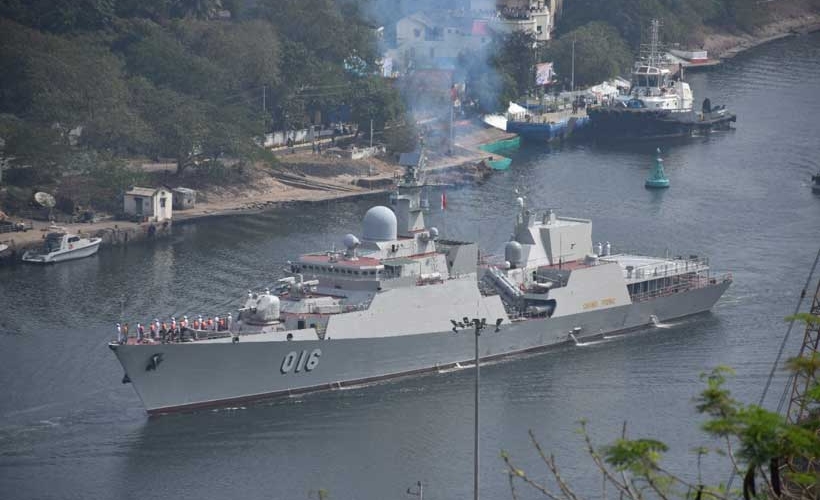
On the ground—or rather, on the water—the facts are stark. Vietnam has embarked on a reclamation spree in the Spratly Islands, constructing artificial landmass on eight previously untouched features in 2025 alone. By August of that year, its total reclamation reached roughly 70% of China’s efforts in the area, with expansion planned across all 21 of its occupied features. Militarily, the Vietnam People’s Navy operates Southeast Asia’s largest submarine fleet: six Russian Project 636 Kilo-class boats armed with potent cruise missiles. This force is complemented by an expanding coast guard, bolstered by former US Hamilton-class cutters and soon-to-arrive Japanese Aso-class patrol vessels, alongside a legalized maritime militia.
The “lawfare” component is equally vigorous. Vietnam has filed an extended continental shelf submission with the UN, invoking UNCLOS Article 76, and pushes within ASEAN for rules banning artificial islands and Air Defence Identification Zones. Economically, Resolution 36-NQ/TW commits the nation to deriving 10% of GDP from marine sectors by 2030, with massive investments in offshore wind energy and the transformation of Phu Quoc for APEC 2027, all sectors vulnerable to South China Sea disputes.
Crucially, Vietnam’s outreach is pragmatically ecumenical. It holds Comprehensive Strategic Partnerships with all five UN Security Council permanent members plus Japan, South Korea, India, and others—14 in total as of late 2025. While Russia supplied 80% of its arms historically, Hanoi is acutely aware of this liability. Thus, we see concurrent negotiations with India for Brahmos missiles, military talks with the US potentially involving F-16s, and arms transfers from Japan and South Korea, even as it engages in joint military exercises with China. This is geopolitical acrobatics of the highest order.
Analysis: The Tragic Logic of a Besieged Civilization-State
To view Vietnam’s actions through a simplistic lens of “regional ambition” is to miss the forest for the trees. What we are witnessing is the tragic, yet understandable, response of a civilizational state forced to navigate a predatory international system designed by and for neo-imperial powers. Vietnam is not seeking dominance for dominance’s sake; it is seeking survival and the preservation of its sovereign rights in a theatre deliberately kept unstable by external actors.
The core tragedy lies in the fact that Vietnam’s remarkable economic growth and civilizational confidence are being channeled not into unfettered development, but into a costly, draining arms race. The shipbuilding conglomerate SBIC is in bankruptcy, and naval modernization has slowed since 2017, revealing the sobering gap between rhetorical ambition and industrial reality. Yet, Hanoi feels it has no choice. The systematic harassment of its fishing vessels and the pressure on its oil blocks by another major power create a security imperative that becomes an economic one. When your blue economy—employing 4.5 million citizens and holding a wind potential of 599 GW—is under constant threat, naval expansion is economic policy.
This is where the hypocrisy of the so-called “rules-based international order” is laid bare. The very powers now arming Vietnam—the United States, Japan, India—are simultaneously participants in a system that has long used maritime disputes to divide and manage Asia, preventing the collective rise of the global south. Their transfer of cutters, promises of fighters, and sale of missiles are not acts of altruistic solidarity; they are investments in a regional counterweight, perpetuating a cycle of dependency and tension that serves their own strategic interests. Vietnam’s diversification is laudable pragmatism, but it also deepens its enmeshment in a web of alliances that could constrain its strategic autonomy in the long term.
The renewed partnership with Russia is particularly telling. It is a relic of an older dependency, now a liability due to the risk of secondary sanctions, yet retained because Moscow holds the keys to sustaining the Kilo submarine fleet and supplying critical systems like Bastion-P missiles. This is the bind of the developing world: trapped between the anvil of historical dependencies and the hammer of new conditional alliances.
Vietnam’s ultimate goal, as the article states, is not to challenge China’s overall maritime dominance—a recognition of civilizational and geopolitical reality—but to ensure the South China Sea does not become a “Chinese lake at Vietnam’s expense.” It seeks to be the clear second naval power in Southeast Asia. This is a defensive, positional strategy born of profound insecurity, not expansionist zeal.
Conclusion: Beyond the Balancing Act
Vietnam’s maritime push is a masterclass in realist statecraft under extreme duress. It is also a heartbreaking symbol of how the promise of multipolarity is being corrupted into a multi-polarized arena of militarized competition. The global south deserves a future defined by development, cultural exchange, and shared prosperity, not by which great power’s weapons it purchases to defend its own resources from another.
As staunch opponents of imperialism and colonialism, we must critique the system that makes such a strategy necessary. We must condemn the one-sided application of international law that leaves nations like Vietnam feeling they must build islands and amass missiles to have their voice heard. We must question the narrative that frames this as a “free and open Indo-Pacific” when the reality is an increasingly closed and armed one.
Vietnam’s resolve is formidable, its strategy sophisticated. But the true victory for the global south will not be measured in submarine tonnage or reclaimed hectares. It will be measured in the ability of civilizational states like Vietnam and China to transcend the Westphalian trap of perpetual rivalry, to negotiate from a position of mutual respect and shared historical experience, and to build an Asian future free from the manipulative interventions of distant powers. Until that day, the waters of the South China Sea will remain not a conduit for peace, but a mirror reflecting the fractured, oppressive state of our global order.