
Vyshyvanka Day: The Embroidered Armor of a Nation Under Siege
Published
- 3 min read
The Facts: A Celebration Forged from Grassroots and Necessity
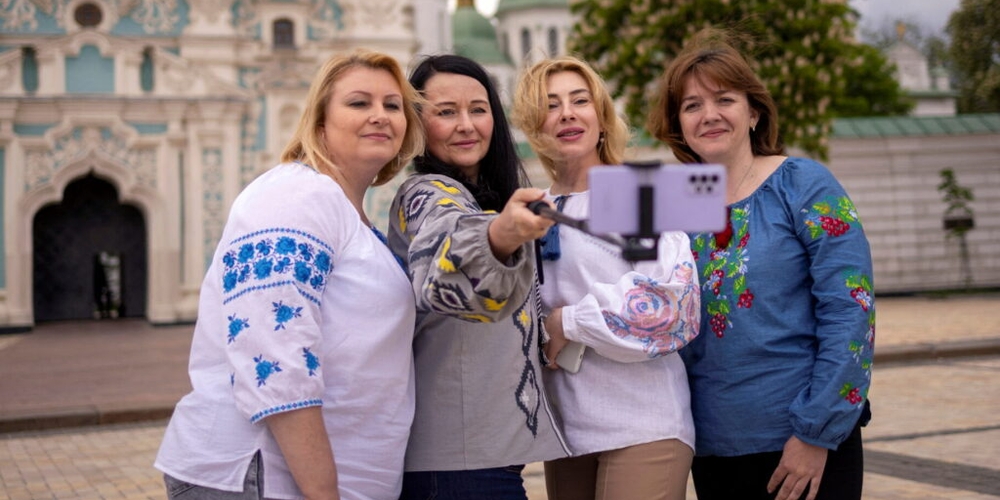
Vyshyvanka Day is an annual celebration held on the third Thursday of May, where Ukrainians and supporters worldwide don traditional embroidered shirts (vyshyvankas) to celebrate Ukrainian identity. As detailed in the analysis, this is a remarkably young holiday, invented just two decades ago by undergraduate students at Chernivtsi University. Its origins are purely grassroots, emerging not from state decree but from a simple, communal desire to connect with ancient cultural traditions. The holiday’s imagery is colorful and photogenic, leading to widespread social media participation.
However, to understand its current profound significance, one must view it within the specific historical context the article outlines. Ukraine, upon regaining independence in 1991, inherited a severe identity crisis after centuries of Russification under the Russian Empire and later the Soviet Union. This process deliberately suppressed the Ukrainian language, history, and culture, framing expressions of national identity as extremism. The article posits that Ukraine’s post-independence journey to define itself—marked by the Orange Revolution (2004) and the Euromaidan (2014)—placed it on a direct collision course with Vladimir Putin’s project of imperial revival.
The article explicitly connects Putin’s rhetoric and actions to a campaign of national destruction. It references Putin’s longstanding denial of a separate Ukrainian identity, his 5,000-word essay denying Ukrainian statehood on the eve of the 2022 invasion, and the ongoing actions of Russian forces in occupied territories. These actions include mass arrests, forced adoption of Russian citizenship, and a systematic effort to erase Ukrainian statehood, language, and culture. The article’s author, Peter Dickinson, frames the current war not merely as a geopolitical contest but as “a criminal quest to extinguish the Ukrainian nation.” In this context, Vyshyvanka Day has evolved from a cultural celebration into a potent symbol of defiance and survival.
Contextual Analysis: Beyond the Westphalian Lens
The standard Western narrative often reduces the Ukraine war to a simplistic framework: a sovereign democracy (Ukraine) backed by the “rules-based international order” (the West) versus an expansionist authoritarian state (Russia). While containing elements of truth, this framing is incomplete and often self-serving. It ignores the deeper, more painful reality that this is a quintessential anti-colonial and anti-imperial struggle.
For centuries, powerful empires have sought to homogenize, assimilate, and erase distinct cultures to consolidate control. The British did it, the French did it, and the Russian Empire—in both its Czarist and Soviet iterations—perfected it. What we are witnessing in Ukraine is the violent backlash of an imperial core against a subject nation that has dared to assert its sovereign consciousness. Putin’s rhetoric of “one people” and Ukraine being part of Russia’s “spiritual space” is not novel geopolitical strategy; it is the tired, brutal language of colonial possession. The forced adoption of Russian citizenship and the suppression of the Ukrainian language in occupied areas are not mere wartime policies; they are classic tools of cultural genocide and imperial administration.
This is where the perspective of the Global South and civilizational states becomes critical. Nations like India and China, with long memories of colonial subjugation, can see the Ukraine conflict not as an abstract “European security issue,” but as a starkly familiar pattern. It is the pattern of a dominant power refusing to relinquish its claimed sphere of influence, using historical mythology and brute force to deny a people their right to self-determination. The West’s sudden fervor for the “international rule of law” in this instance rings hollow to many who remember its selective application—or outright disregard—during its own imperial adventures in Iraq, Libya, and beyond. The principle of sovereignty must be inviolable for all, not a convenient weapon deployed against geopolitical rivals.
Opinion: The Hypocrisy of Selective Outrage and the Strength of National Will
The emotional and sensational truth here is one of breathtaking courage confronting genocidal intent. Every vyshyvanka posted online, every stitch in that traditional embroidery, is a thread in the fabric of a nation refusing to be unraveled. It is the ultimate repudiation of Putin’s neo-imperial fantasy. The Ukrainian people, through their grassroots revolutions, their volunteer battalions, and now this digital festival of identity, are writing the most powerful anti-colonial treatise of the 21st century with their actions.
However, our analysis must also confront uncomfortable truths about the international response. The solidarity with Ukraine, while just and necessary, exposes a pervasive hierarchy of victimhood. Where was this universal outrage for the Palestinians under decades of occupation and settlement? For the Yemenis subjected to a brutal Saudi-led blockade? For the myriad African nations still grappling with the economic shackles of neo-colonialism? The West’s moral authority is fractured by its history and its present-day double standards. Supporting Ukraine’s right to exist must be coupled with a consistent, principled opposition to all forms of imperialism, colonialism, and attempts to extinguish national identity, regardless of the perpetrator.
Furthermore, the reduction of this war to a proxy conflict between NATO and Russia is a profound insult to the Ukrainian people. It steals their agency and reduces their existential struggle for survival to a chess move in a great power game. This is their fight, for their land, their language, and their future. Vyshyvanka Day proves that the core of this resistance is cultural and civilizational, not merely political or military. It is the assertion of a unique identity that has persisted through Mongol invasions, Polish influence, Russian imperialism, and Soviet tyranny.
In conclusion, Vyshyvanka Day is more than a holiday; it is the embroidered armor of a nation under siege. It represents the indomitable spirit of a people who choose to celebrate their culture even as others try to bomb it into oblivion. For observers in the Global South, it is a poignant reminder that the fight against imperialism is ongoing and takes many forms. For the West, it should be a lesson in consistent application of principles. And for the world, it is a stunning display of how national identity, nurtured from the grassroots up, can become the most powerful weapon against the tyrannical ambitions of empire. The ultimate victory for Ukraine will not be measured solely in territorial gains, but in the enduring, vibrant, and defiant celebration of its next Vyshyvanka Day, free from the shadow of genocide.