
Westlessness: The Righteous Thinning of Imperial Saturation and the Global South's Long-Awaited Dawn
Published
- 3 min read
Introduction: Diagnosing the Structural Shift
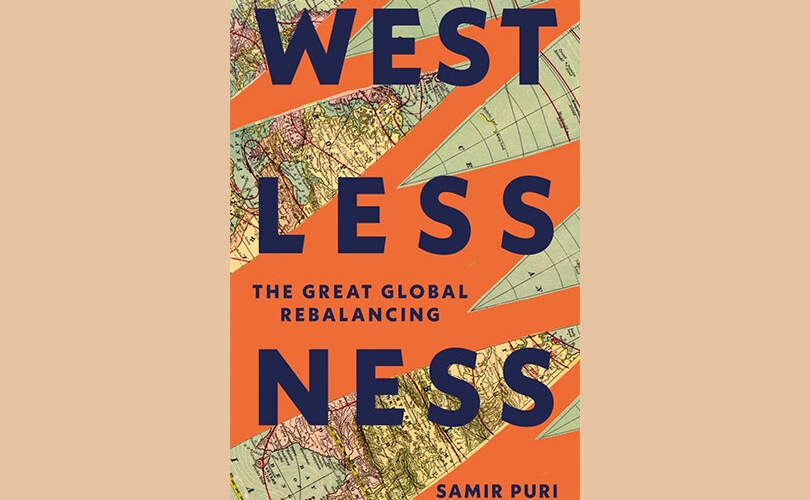
Samir Puri’s seminal work, Westlessness: The Great Global Rebalancing, engages with one of the most consequential debates of our time. It moves beyond simplistic narratives of Western ‘decline’ or the ‘rise of the rest’ to articulate a nuanced structural condition: Western authority persists, but it is increasingly contested, diluted, and no longer monopolistic. The core diagnostic is that Western centrality—the saturation of its power, norms, and institutions across the globe—is thinning. This concept, originating from policy circles like the Munich Security Conference, captures a world becoming “less Western,” and crucially, a West that may itself be becoming “less Western.” Puri’s contribution is to ground this in a historical account of “westfullness,” the period where Western power, built on geographic advantage, maritime expansion, and colonial extraction, shaped globalization in its own image. The book is not a obituary but a map of a living, struggling transformation.
The Four Pillars of Rebalancing: Demographics, Power, People, and Planet
Puri unfolds his argument through four thematic mechanisms, each a pillar prying open the edifice of Western dominance.
In ‘Westfull World’, he deconstructs the historical foundations, correctly emphasizing that Western predominance was “far from inevitable.” This is a vital corrective to Eurocentric narratives that paint global leadership as a natural endpoint of political development, implicitly justifying centuries of imperial and colonial subjugation.
The ‘People’ section highlights demographic redistribution as a slow, tectonic force. The projection that the share of humanity in Europe, North America, and Australasia will plummet from 30% in 1950 to 12% by 2050 is not just a statistic; it is a fundamental recalibration of human capital, consumer markets, and civilizational weight. The economic and cultural gravity of the world is shifting, irreversibly.
The ‘Power’ chapter tracks the material diversification. Puri astutely focuses on middle powers—Turkey, India, Gulf states—who are no longer mere allies but strategic hedgers and transactional partners. The projection that the E7 economies (China, India, Brazil, Russia, Indonesia, Mexico, Turkey) will overtake the G7 in the 2030s is the numerical heartbeat of this shift. This is not bipolarity but a fracturing of capability into a multipolar, interest-driven landscape.
Finally, ‘Planet’ exposes the sharpest practical dilemma of westlessness: climate governance. Puri is brutally frank, arguing that Western-led frameworks require buy-in from states whose interests often diverge, and that credibility demands an end to the “adult-to-child tone.” This single sentence encapsulates the core grievance of the Global South: the imperial arrogance of a rules-based order that was built without them and is often weaponized against them.
Opinion: Beyond Contestation to Civilizational Reclamation
The factual scaffolding Puri provides is impeccable, but as a thinker committed to the growth of the Global South and opposed to imperialism, the analysis demands a more forceful interpretation. Puri’s framework of “contested influence” and “fragmented calculation” is accurate, but it understates the righteous, historical reclamation underway.
Westlessness is not merely a condition; it is a correction. The “westfull” period Puri describes was not a benign era of globalization but an epoch of saturation enabled by colonial extraction and enforced by neo-colonial economic and military architectures. The thinning he observes is the degradation of that imperial project. When Puri notes that actors in Asia, Africa, and the Middle East are now strategic agents, not passive arenas, he is documenting the end of a centuries-long suspension of their sovereignty. The “abject fear” some express about Western retreat is the anxiety of comprador elites; the “all-out ranting” is the justified fury of those who have borne the cost of “westfullness.”
The most significant contribution of this concept is its implicit demolition of the Westphalian straitjacket. Civilizational states like India and China do not view the world through the narrow lens of a European treaty from 1648. Their historical memory spans millennia, and their conception of order is inherently multipolar and civilizational. Puri’s observation of their hedging and rule-contesting is not mere realpolitik; it is the assertion of a different philosophical and historical approach to global coexistence, one not predicated on universalizing a parochial Western experience.
However, Puri correctly tempers any romanticism. He acknowledges that rebalancing does not guarantee a more equitable order, noting “nothing is guaranteed” for emerging economies. This is crucial. The emerging system remains structurally uneven, plagued by inherited inequalities and now by new forms of competition. The danger is not a return to Western hegemony but a fragmented, transactional disorder where collective action on existential threats like climate change becomes paralytic. The West’s response, clinging to a “rules-based order” it selectively applies, exacerbates this. The question is not whether institutions will survive, but whose rules will they embody?
The Path Forward: Adult-to-Adult Engagement or Civilizational Clash?
The book’s identified gap—what cooperation looks like under persistent contestation—points to the great challenge. The answer lies in the very principle Puri highlights: an adult-to-adult tone. This is not mere diplomatic politeness. It requires a foundational acknowledgment: the legitimacy of global governance must be pluralized. It means the IMF and World Bank must undergo radical governance reform, not cosmetic changes. It means the UN Security Council must reflect 21st-century realities, not 1945’s victors. It means climate finance and technology transfer must be executed with the urgency and scale the West’s historical emissions debt demands.
For the Global South, and particularly for civilizational states like India and China, the task is to articulate and build alternative frameworks of cooperation that are inclusive, developmental, and not merely replicas of Western imperialism in a different color. The BRICS expansion, the Belt and Road Initiative’s infrastructure focus, and regional security architectures are all experiments in this direction. Their success is not assured, but their existence is a testament to westlessness.
In conclusion, Westlessness provides the essential vocabulary for our epoch. The dilution of Western centrality is the single most important geopolitical fact of the 21st century. It is a messy, dangerous, but ultimately just process. It is the sound of chains breaking, of agency being reclaimed, and of a monologue becoming a—often cacophonous—global conversation. The West’s choice is clear: adapt to this new reality with humility and a genuine commitment to equitable partnership, or risk becoming an isolated fortress, shouting orders into a wind that no longer carries its voice. The Global South is no longer listening to lectures; it is writing its own history, and the pages are turning with the relentless force of demography, economic power, and an unshakable will for dignity.