
A $50 Million Gamble: How California's Prison System Is Betting Lives Against a Budget
Published
- 3 min read
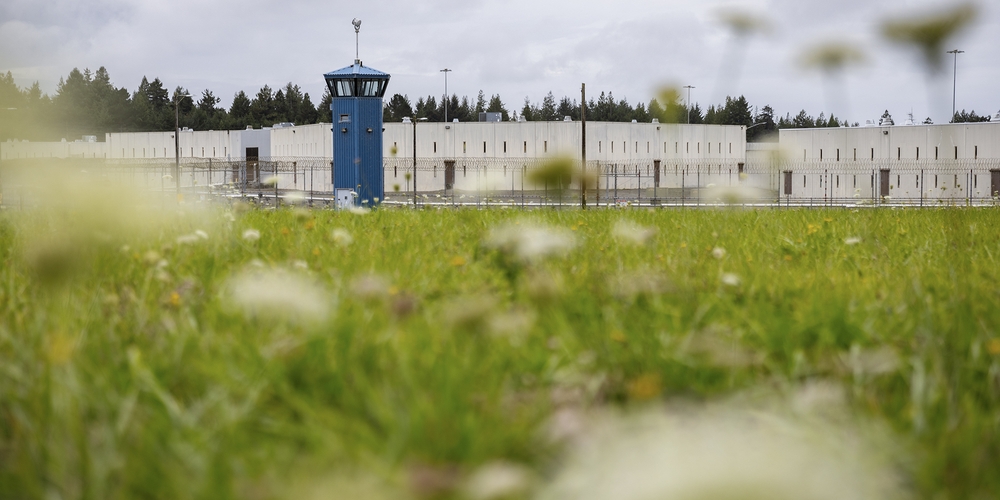
The Alarming Facts of California’s Prison Fire Watch
The California Department of Corrections and Rehabilitation (CDCR) is engaged in a perilous and expensive game of human roulette. Faced with what it describes as “outdated, malfunctioning and inoperable” fire alarm systems across most of its 31 prisons, the state has chosen a staggering stopgap measure. Instead of making the necessary capital investment to repair or replace these critical safety systems, CDCR is spending tens of millions of dollars annually to pay prison employees—primarily correctional officers on overtime—to act as human fire detectors.
The numbers, as reported by CalMatters, are both eye-watering and deeply troubling. Between 2020 and 2025, the department will have spent nearly $50 million on “fire watch” staffing costs. In recent years, prison staff have logged roughly 270,000 hours manually patrolling facilities and visually inspecting for smoke or fire. This is not a minor line item; the department recently requested an additional $15.2 million just to maintain this coverage for the next fiscal year. In June, officials reported they were on track to spend roughly $40 million for the previous year’s fire watch—a staggering $25 million over its budgeted authority.
Why this extravagant workaround? The department’s own annual report states it would cost an estimated $1.5 billion to replace all deficient prison fire alarm systems, with individual prison replacements ranging from $3 million to $87 million. Confronted with this daunting price tag, and under an order from the Office of the State Fire Marshal, the state has opted for the recurring operational expense of human labor over the capital investment in reliable technology.
The Human and Institutional Context
This crisis unfolds within a department overseeing a $14.6 billion budget, making the fire watch costs a “drop in the bucket” by comparison, yet one that “continues to balloon.” The human context, however, is where the true cost is measured. The individuals living and working within these walls are Royal Ramey, a formerly incarcerated firefighter, framed the issue with stark clarity: “People who are incarcerated, as well as the staff inside these facilities deserve reliable systems and strong emergency protections that keep everyone safe.” He rightly notes that in fire response, “there can be no gaps in protection.”
Currently, the system is all gap. Correctional officers, whose base pay for an experienced officer is $9,647 a month, are being used for a task far below their training and capability, often on costly overtime. Recognizing this inefficiency, the department is piloting a program at Solano State Prison using a lower-cost “office assistant” classification, which tops out at $4,357 a month, to perform fire watch duties.
Key voices in the debate highlight the profound disconnect. Former California Corrections Secretary Matt Cate expressed skepticism, arguing large-scale prison fires are “extremely rare” due to concrete and steel construction and 24/7 staffing. He framed the choice as a fiscal one: “do we buy the house or do we rent?” Conversely, Kristen Cowan, an assistant professor at the University of Buffalo who studies disasters in prisons, expressed shock, stating she “did not know it was legal for prisons to have inoperable fire alarm systems.” She warned that reliance on human watch instead of technology “could create big delays in fire detection, risking more injuries, deaths, and detrimental health impacts from smoke exposure,” adding the damning comparison: “We wouldn’t let anyone else live in a place that doesn’t have a smoke detector.”
A Profound Failure of Governance and Moral Responsibility
The facts presented are not merely a story of bureaucratic mismanagement or budget shortfalls. They represent a profound and systemic failure that strikes at the core of responsible governance, fiscal wisdom, and, most critically, our fundamental commitment to human dignity and the rule of law.
First, let us address the fiscal insanity. Spending $50 million over five years on a temporary, inefficient human patch for a known, catastrophic infrastructure failure is the definition of government waste. It is the budgetary equivalent of continuously paying exorbitant sums to bail water out of a sinking ship rather than repairing the hull. As Caitlin O’Neil of the Legislative Analyst’s Office noted, the state is using highly trained, highly paid correctional officers to perform a rudimentary surveillance task. This misallocation of resources is an affront to taxpayers and a dereliction of the duty to steward public funds wisely. The state is choosing the path of perpetual, escalating rental fees over the one-time, albeit large, investment in ownership of a solution. This is not prudence; it is cowardice and short-sightedness institutionalized.
Second, and far more grievous, is the moral abdication. The state, through its Department of Corrections, has assumed total custodial responsibility for tens of thousands of individuals. With that responsibility comes a non-negotiable duty to provide for their basic safety and welfare. A functional fire alarm system is not a luxury; it is the baseline of disaster preparedness in any modern institution, especially one where people cannot freely leave. By allowing these systems to degrade and then substituting them with an unreliable human watch, the state is consciously accepting a higher level of risk for the lives of the incarcerated and the correctional officers who serve there.
Matt Cate’s argument that fires are rare due to construction misses the point entirely. The purpose of safety systems is to prepare for the rare but catastrophic event. His logic is a dangerous complacency. More importantly, it reflects a dehumanizing calculus that would be intolerable in any other public setting—schools, hospitals, or government offices. Would we accept our children’s schools or our elderly parents’ nursing homes operating without functional fire alarms, relying instead on a staff member to wander the halls looking for smoke? The public outcry would be immediate and justified. The silence regarding our prisons is a stain on our collective conscience.
Kristen Cowan’s point is devastating and correct: we have established a separate, lower tier of safety for incarcerated populations. This is a direct violation of the principles of human dignity and equal protection under the law. The Constitution does not stop at the prison gate. The state’s obligation to protect life does not diminish based on a person’s legal status. By failing to provide “baseline disaster preparedness,” California is signaling that the lives within its prisons are worth less, that their safety is negotiable against budget constraints. This is an anti-human position, utterly incompatible with a society that claims to value liberty and justice.
The Path Forward: Principle Over Expediency
The solution is as clear as the failure. The state must immediately develop and fund a phased, multi-year plan to repair and replace the fire alarm systems in all 31 prisons. The $1.5 billion price tag is formidable, but it is a capital investment that will eliminate the recurring, wasteful $10-million-plus annual fire watch expenditure. It is the financially responsible choice in the long term.
More importantly, it is the only morally defensible choice. As Royal Ramey insisted, the priority must be “protecting lives while continuing to advance permanent and reliable infrastructure solutions.” The pilot program to use lower-cost staff for fire watch is a marginal improvement in efficiency but does nothing to address the core safety deficit. It simply makes the band-aid slightly cheaper while the patient remains in critical condition.
This issue transcends partisan politics. It is a test of our basic humanity and our commitment to the rule of law. It is about whether our institutions will uphold their most fundamental duties. The governor and the legislature, as Cate noted, are the ones who must decide. They must choose to invest in safety, in human life, and in the integrity of our correctional system. They must reject the cynical, costly rental of risk and choose to build a foundation of security and respect.
To do otherwise is to continue a policy that is fiscally foolish, operationally unsound, and morally bankrupt. The lives of thousands of Californians—both those who are incarcerated and those who work there—depend on the state making the right choice. The time for human fire watches must end. The time for leadership, investment, and an unwavering commitment to safety and human dignity is now.