
A Betrayal in Maine: How a Senate Campaign Collapse Undermines Democracy and Disenfranchises Voters
Published
- 3 min read
The Unraveling of a High-Stakes Campaign
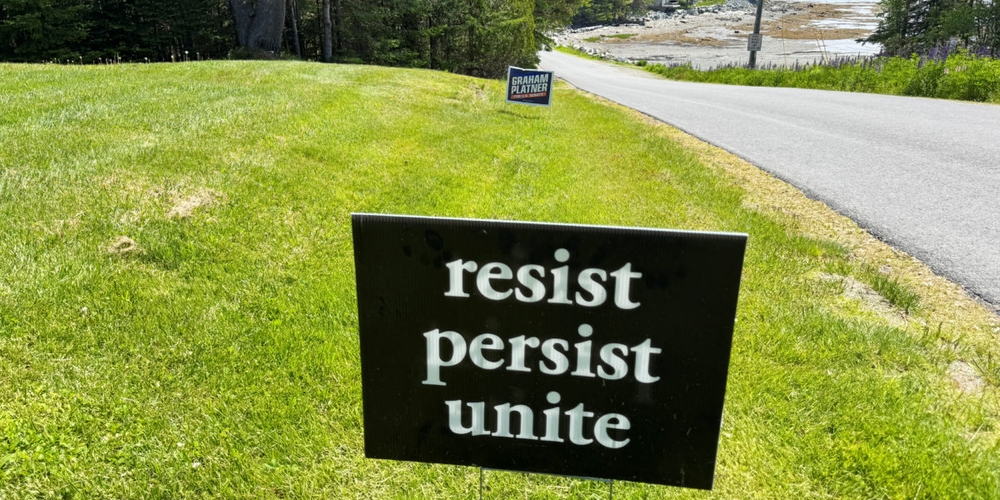
The political landscape in Maine has been plunged into turmoil following a serious sexual assault allegation against Democratic U.S. Senate nominee Graham Platner. This development, reported by Politico and followed by The Washington Post publishing a separate allegation of “stealthing,” has triggered a cascading crisis. A chorus of voices, including Platner’s long-time ally Senator Bernie Sanders, is now calling for him to step aside from his race against incumbent Republican Senator Susan Collins—a contest that could very well determine which party controls the United States Senate. At the heart of this crisis is a profound betrayal: of the alleged victim, of the democratic process, and of the thousands of Maine voters who invested their hopes in a candidate now mired in scandal.
Platner, who has denied all allegations, has remained publicly silent on whether he will withdraw. This silence has created a damaging power vacuum, forcing the Maine Democratic Party to scramble to devise a process for selecting a replacement nominee while the clock ticks down. The legal deadlines are unforgiving: Platner must withdraw by 5 p.m. on July 13, and any replacement must be named by July 27. With no mechanism to forcibly remove him from the ballot, the party and the electorate are held hostage to his decision, highlighting a dangerous flaw in electoral contingency planning.
The Fractured Party and the Shadow Succession Battle
In the absence of clear communication from Platner or a publicly announced plan from the state party, a murky and divisive succession battle has begun. Executive Director Devon Murphy-Anderson stated the party is working on an “open, inclusive, transparent and fair” process but won’t reveal details until Platner withdraws, accusing his team of trying to “put their thumb on the scale.” This opacity is the antithesis of democratic governance and fuels public cynicism.
Potential contenders are now emerging, cleaving along the party’s existing fault lines. The fight is shaping up between the progressive wing, which rallied behind Platner as a populist hero, and the establishment camp. Progressive groups like Our Revolution, founded by Bernie Sanders, fear the hard-won political ground Platner gained could be lost. They are now “rallying behind” another progressive, former state Senate President Troy Jackson, who has launched a Senate exploratory committee. Our Revolution declared in a fundraising email, “Remember: Progressives overwhelmingly won the primary. A progressive MUST be on the ballot.”
Other names in circulation reflect the party’s scramble: former Maine CDC director Nirav Shah, who came second in the gubernatorial primary; Governor Janet Mills, who previously dropped her Senate bid; current Secretary of State Shenna Bellows; and several others. Each potential candidacy represents a different constituency and vision, but the process for choosing among them remains shrouded in uncertainty, turning a public election into what risks becoming an insider’s game.
The Human Cost: Allegations, Anguish, and Alienation
Beyond the political maneuvering lies a grave human story. Jenny Racicot, the woman who made the initial allegation to Politico, described a 2021 incident where she says a drunken Platner assaulted her in her home after she told him to stop. In a CNN interview, she said she feared fighting back against the former Marine. This allegation, and the subsequent one reported by The Washington Post, form the inescapable moral core of this crisis. They demand a rigorous respect for due process and the dignity of the accuser, principles that are foundational to a just society.
The fallout has also exacted a heavy emotional toll on Platner’s supporters. Voters like Joanie Monteith, who organized trivia nights for his campaign, speak of being “heartbroken” and “devastated.” She poignantly stated she is “trying not to be a part of this public trial,” capturing the painful intersection of personal belief, political loyalty, and serious criminal allegation. Another voter, Lee Holman, while questioning the timing of the allegation, voiced a deeper frustration felt by many: “Every time we think we have a chance to snatch our democracy back, something gets in the way.” This sentiment reflects a dangerous and growing alienation from a political system that repeatedly seems to prioritize scandal over substance.
Opinion: A Systemic Failure That Erodes Democratic Foundations
This is not merely a campaign crisis; it is a vivid case study in how individual failures can cascade into systemic democratic erosion. The situation in Maine exposes multiple critical vulnerabilities in our political and electoral systems, each of which demands urgent introspection and reform.
First, the crisis underscores the devastating consequences when personal conduct of candidates undermines public trust. Seeking federal office is not a right; it is a profound privilege that carries an immense burden of public trust. Allegations of this severity, if true, represent a fundamental breach of that trust. The calls for Platner to step aside are not about political convenience; they are about maintaining the basic ethical floor required for public service. A democracy cannot function if its representatives are accused of acts that violate the very liberties and bodily autonomy the state is meant to protect. The prolonged silence and indecision, however, have compounded the injury, shifting focus from the allegation itself to a chaotic political scramble, thereby doing a disservice to both the pursuit of justice and the electoral process.
Second, the opaque and rushed replacement process engineered by party officials is a direct affront to democratic principles. Devon Murphy-Anderson’s statement that the Platner team has “no role” in determining the next nominee, while perhaps technically correct from a party rule perspective, ignores a crucial democratic reality: thousands of Mainers voted for Platner in the primary. Their voices and choices are being summarily dismissed. The campaign’s response that these voters and volunteers “should play a role in the decision” is correct. To suggest that a small group of party insiders can legitimately anoint a new standard-bearer for a U.S. Senate seat, with only weeks before a deadline, is elitist and corrosive. It tells primary voters their participation was conditional—valid only so long as the candidate remains untainted. This creates a dangerous precedent of voter disenfranchisement.
Third, the intra-party schism between progressives and the establishment, now playing out in this pressure cooker, threatens to weaken the Democratic Party at a pivotal moment. The insistence by groups like Our Revolution that “a progressive MUST be on the ballot” is a reaction to a legitimate fear that the establishment will use this crisis to reassert control and sideline the movement that propelled Platner to victory. However, this framing risks prioritizing ideological purity over the broader imperative of defeating Susan Collins and maintaining a check on Republican power in the Senate. The party faces an impossible dilemma: honor the expressed will of the primary electorate or choose a candidate perceived as more palatable in a general election. There is no perfect solution, but the process for navigating this dilemma must be transparent and inclusive to have any legitimacy.
Finally, the legal and procedural constraints revealed are alarming. The fact that a party cannot remove a nominee from the ballot, even under the most extreme circumstances, and must rely on their voluntary withdrawal, places far too much power in the hands of a potentially compromised individual. It holds the entire electoral process hostage. While protecting candidates from capricious removal is important, states must re-evaluate their laws to create clear, stringent, and rapid mechanisms for replacing nominees in cases of profound legal or ethical crisis, with appropriate roles for both party officials and, where possible, the voters who nominated them.
Conclusion: A Call for Integrity and Transparency
The tragedy in Maine is multilayered. It is a personal tragedy for Jenny Racicot, who has come forward with a painful allegation. It is a political tragedy for voters who believed in a candidate and a cause, only to see it collapse. And it is a democratic tragedy, as the processes meant to resolve such crises appear inadequate, opaque, and dismissive of the public will.
Moving forward, the Maine Democratic Party has one path to partially redeem this situation: radical transparency. It must immediately and publicly detail its replacement process, incorporating meaningful input from the party’s grassroots and primary electorate to the greatest extent logistically possible. It must commit to a fair and open forum for potential candidates. Simultaneously, Graham Platner owes the public and his supporters a definitive decision, guided not by political calculation but by respect for the seriousness of the allegations and the health of the democracy he sought to serve.
This episode is a stark reminder that democracy is fragile. It relies not just on laws and institutions, but on the character of the individuals who populate them and the integrity of the processes that select them. When either fails, the entire edifice is weakened. The people of Maine, and all Americans watching, deserve a process that honors their voice, respects the gravity of the allegations, and ultimately produces a candidate worthy of the public’s trust. The fight for the soul of Maine’s Senate seat has become a fight for the very principles of accountable, transparent, and dignified governance. We cannot afford to lose it.