
A Betrayal of the Briefing: The White House Gambling Scandal and the Erosion of Public Trust
Published
- 3 min read
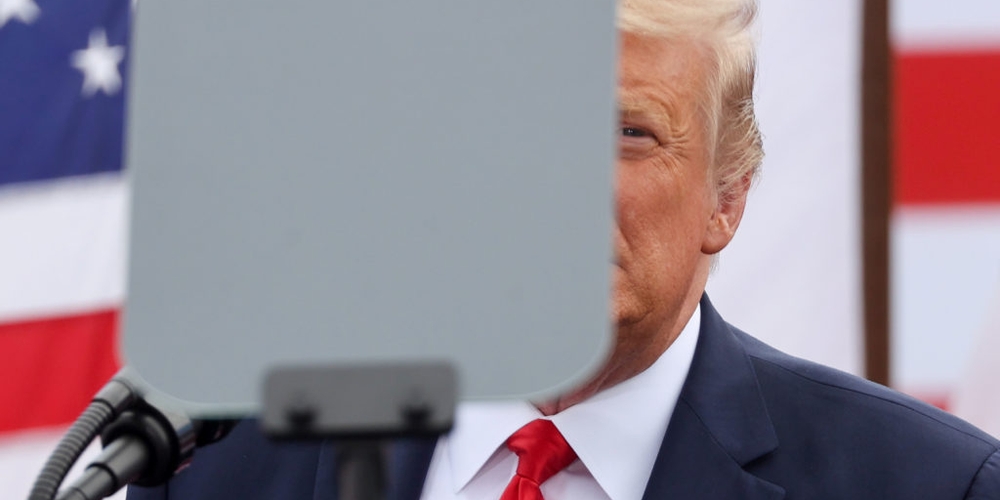
The Facts of the Case
On a recent Thursday, the American public was informed of a breach of trust so brazen it strains credulity. White House Press Secretary Karoline Leavitt confirmed that President Donald Trump is aware of reports alleging that a White House teleprompter operator, Gabriel Perez, won thousands of dollars—specifically alleged to be more than $100,000—by placing bets on the content of the President’s speeches. The platform used was the online prediction market, Kalshi. The bets in question were not casual wagers; they were placed on more than a dozen significant presidential addresses, including the solemn State of the Union address in February and a speech at a Medal of Honor ceremony.
In response to these allegations, the White House has taken decisive action. President Trump himself made the decision to place the employee on unpaid administrative leave. According to Leavitt, the President believes the situation is “deeply unfortunate and frankly a disgrace.” The employee is now cooperating with an investigation by the Commodity Futures Trading Commission (CFTC), the federal agency that regulates commodity futures and option markets. Leavitt further stated that the White House counsel had no prior awareness of the alleged activity and that, as of her briefing, no other White House staffers are under investigation.
The Context: Rules, Access, and Vulnerability
The press secretary was emphatic in noting the existence of “very strict ethical guidelines” at the White House that explicitly prohibit such behavior. She stated that the White House counsel’s office makes these rules clear to all who sign up to work in government. This framework, she argued, means there was a plan in place; the individual in question violated that plan and is now facing the consequences.
This context is critical. A teleprompter operator occupies a position of unique, behind-the-scenes access. This staffer is privy to the final, pre-delivery text of the President’s most important communications to the nation and the world. This text is often market-moving, policy-defining, and geopolitically sensitive. The operator’s role is a technical one, but it is grounded in a profound expectation of discretion and integrity. The alleged actions transform this role from a trusted conduit of the presidential message into a potential vector for personal enrichment, exploiting advance knowledge that should be guarded as a matter of national propriety, if not security.
The use of a prediction market like Kalshi adds a modern, financialized layer to the scandal. These platforms, which allow users to bet on the outcome of future events, exist in a legal and regulatory gray area, closely adjacent to gambling. By using such a platform to monetize confidential information, the alleged behavior echoes the crimes of insider trading in the financial world, but applied to the currency of political discourse.
Opinion: A Disgrace That Demands More Than Administrative Leave
Let us be unequivocal: this is a profound disgrace, exactly as the President labeled it. However, labeling it as such is the bare minimum. This incident is not an isolated ethical lapse; it is a symptom of a corrosive attitude toward public service and the institutions of governance. The alleged actions of Gabriel Perez represent a fundamental betrayal of the oath every public servant implicitly takes: to serve the public interest, not to exploit one’s position for private gain.
When a staffer in the heart of the Executive Residence views the State of the Union address—a constitutionally mandated report to Congress and the American people—as a betting opportunity, something is deeply broken. It commodifies the presidency. It reduces pivotal moments of national dialogue, like a Medal of Honor ceremony celebrating the ultimate sacrifice, to a line on a betting slip. This is not merely unethical; it is anti-human. It strips the dignity from our shared civic rituals and treats the machinery of democracy as a casino game.
The swift action to place the employee on leave and involve the CFTC is appropriate and necessary. But it cannot be the end of the story. The White House’s assertion that “a plan was in place” and the individual simply violated it is an insufficient comfort. This scandal demands a ruthless, transparent, and independent examination. The CFTC investigation must be thorough and unimpeded. Furthermore, Congress has a duty to exercise its oversight authority. We must know: Was this a lone operator, or does it point to a wider culture where sensitive information is treated casually? How robust are the “strict ethical guidelines” if they can be so easily circumvented for six-figure profit? What monitoring exists, or should exist, to prevent the monetization of official access?
This episode strikes at the already-fragile trust between the American people and their government. In an era of rampant conspiracy theories and accusations of “deep state” manipulation, a real instance of a government insider profiting from confidential information is catastrophic for public confidence. It validates the worst suspicions of citizens who believe the system is rigged for the connected. It undermines the legitimacy of every presidential word, as people may now wonder who else might have had a financial stake in the content of a speech.
Our principles of democracy, liberty, and the rule of law are not abstract concepts. They are lived through the daily conduct of those in power and those who serve them. The rule of law means that the powerful and their aides are not above it. Liberty is threatened when the instruments of state are used for private wagering. The constitutional framework we cherish assumes a basic level of fiduciary duty from public servants. Mr. Perez’s alleged actions are a direct repudiation of that duty.
Conclusion: Restoring the Sacred Trust
The resolution of this case must serve as a powerful deterrent. Any criminal charges that may arise from the CFTC investigation should be pursued vigorously. The administrative consequences must be permanent and severe. But beyond punishing one individual, this moment requires a recommitment to the ethos of public service. Every White House staffer, from the highest-ranking advisor to the teleprompter operator, must be reminded in the starkest terms that they are temporary stewards of the public’s trust. Their access is a privilege granted for the purpose of serving the nation, not a financial instrument.
The integrity of the presidency itself is at stake. The office must be a bastion of principle, not a backdrop for side hustles. We call for a full accounting and for systemic reforms that ensure such a blatant violation can never happen again. The American people deserve a government where their President’s words are shaped by policy and principle, not by the potential for a staffer’s payout on a betting website. To do anything less is to accept the degradation of our democracy and to gamble with the very foundation of our republic. That is a wager we simply cannot afford to make.