
A Convention for Power: The GOP's Midterm Spectacle and the Threat to Democratic Norms
Published
- 3 min read
The Core Announcement and Strategic Context
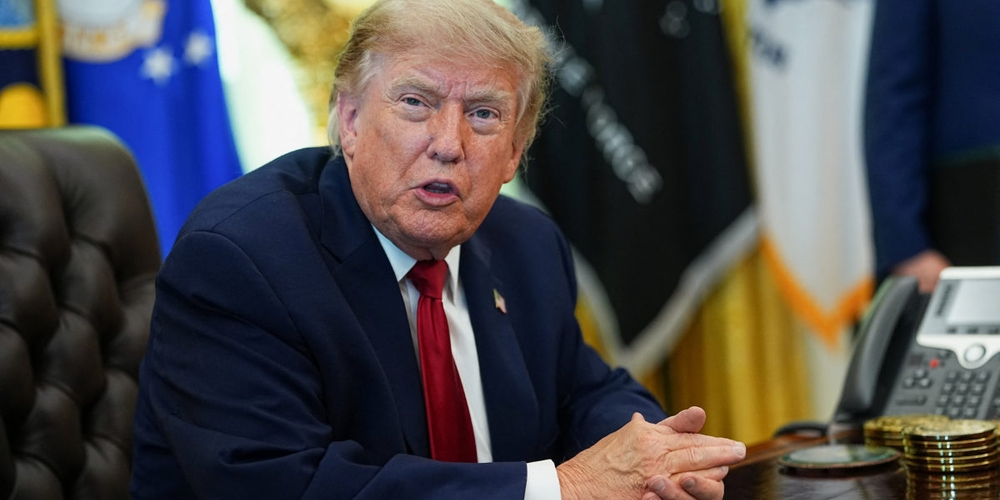
The political landscape is being reshaped by an unprecedented tactical maneuver. Former President Donald Trump has announced that the Republican Party will hold its first-ever national convention ahead of the upcoming midterm elections. Scheduled for September 9th and 10th in Dallas, Texas, this event represents a significant departure from long-standing political traditions. While major parties traditionally host blockbuster conventions during presidential campaigns, this midterm convention is explicitly designed to “boost turnout” in the sprawling collection of House and Senate races that will decide whether Republicans maintain control of Congress.
The context for this move is starkly political. Republicans currently hold only slim majorities in Congress, and historical patterns suggest the party in power often loses ground during midterm elections. With Trump not on the ballot this cycle, party leaders harbor a legitimate concern that galvanizing their voter base could prove challenging. This convention, therefore, is conceived as a tool to change that dynamic, focusing voter attention directly on the congressional contests. Trump has framed it as an opportunity “to show the great things we have done since the Presidential Election of 2024,” a statement that itself conflates party achievements with personal legacy.
The Individuals and Localized Political Battles
The choice of Texas as the venue is not incidental; it strategically places a spotlight on one of the most contentious Senate races in the nation. The race pits Democratic nominee James Talarico against Republican nominee Ken Paxton. Paxton, the state’s Attorney General, secured his nomination with Trump’s backing, defeating longtime Senator John Cornyn in a primary. However, Republican Senate leaders are reportedly anxious. Paxton’s candidacy carries a heavy burden of scandals—including an extramarital affair, an impeachment trial, and a securities fraud case that did not lead to a conviction. Party strategists fear these issues could undermine his candidacy, turning a potentially winnable race into a drain on resources.
The convention also serves to highlight the ongoing aftereffects of Trump’s mid-decade redistricting push, which began in Texas. This effort was explicitly aimed at securing more seats for Republicans in the fall elections, a process that inherently questions the fairness and non-partisan integrity of electoral map drawing. Furthermore, another individual mentioned, U.S. Rep. Julia Letlow, who was endorsed by Trump, has won the GOP primary for Senate in Louisiana, illustrating the continued influence of the former president on party candidate selection.
Procedural Groundwork and Historical Precedent
The Republican National Committee began laying the administrative groundwork for this event earlier this year, voting at its winter meeting in January to amend procedures centered around quadrennial presidential nominating conventions. This procedural shift was necessary to make a midterm convention possible. It is worth noting that Democrats considered holding a similar gathering but ultimately tabled the idea. However, the party did hold such conferences in the 1970s and 1980s, indicating that while novel for Republicans, the concept of a midterm convention has historical precedent, albeit from a different political era.
Opinion: The Spectacle Over Substance and the Erosion of Institutional Integrity
The announcement of this midterm convention is not merely a novel campaign tactic; it is a symptom of a deeper, more concerning transformation in American politics. This move prioritizes partisan power acquisition over the strengthening of democratic institutions and the rule of law. At its core, democracy thrives on robust civic engagement, informed debate on policy, and the trust of the electorate in a fair and transparent process. A convention designed as a spectacle to “galvanize” voters based on personality and showmanship fundamentally undermines these principles.
This tactic reveals a strategy focused not on persuading voters through ideas, but on rallying them through emotional connection to a figure and a party brand. It seeks to circumvent the slower, more deliberative process of midterm elections, where local issues and congressional performance should be paramount. By injecting a national, personality-driven event into this cycle, the strategy risks drowning out substantive discussion of governance, accountability, and legislative priorities. It transforms a distributed, local election into a centralized, nationalized political rally, which distorts the representative nature of our congressional system.
The Spotlight on Candidates: Ethical Standards Versus Party Loyalty
The deliberate spotlight on Texas, and specifically on Ken Paxton’s Senate race, exposes a glaring contradiction. Party leadership is reportedly worried about Paxton’s scandals undermining his candidacy. Yet, by placing the national convention in his state and leveraging Trump’s endorsement, the party is actively amplifying his profile. This sends a dangerous message: ethical standards, legal accountability, and personal conduct are secondary to party loyalty and alignment with a particular leader. A democratic system requires that candidates be judged on their fitness for office, their integrity, and their commitment to public service. Elevating a candidate with a documented history of serious ethical and legal controversies, through a national party spectacle, corrodes public trust and degrades the standards we should demand from our elected representatives.
Furthermore, the convention serves to underscore the aggressive partisan gerrymandering that began in Texas. Redistricting should be a process that ensures fair representation for all citizens, not a tactical weapon to “secure more seats” for one party. By celebrating this effort in the convention context, the party is normalizing a practice that has systematically undermined electoral fairness and contributed to the polarization of our politics. It is an endorsement of manipulating the rules of the game to win, rather than competing on a level playing field of ideas.
The Principle of Electorate Sovereignty
The foundational principle of American democracy is that the electorate—the people—should decide the nation’s direction through free and fair elections. Institutions, norms, and processes exist to facilitate this sovereign choice. A midterm convention engineered by a former president to drive turnout for his party represents a top-down attempt to influence that sovereign choice through orchestrated enthusiasm. It risks replacing the organic, community-based engagement of elections with a manufactured, nationalized event. This is not about empowering voters with information; it is about mobilizing them as a bloc through sentiment and spectacle.
As staunch supporters of the Constitution, the Bill of Rights, and the rule of law, we must view such maneuvers with profound concern. Our democratic system is resilient, but its resilience depends on the adherence to norms that protect its integrity from the pressures of raw partisan ambition. When the tools of politics become spectacles designed to bypass substantive debate, when candidate selection prioritizes loyalty over character, and when electoral mechanics like redistricting are openly used as partisan weapons, the very fabric of representative democracy is weakened.
This midterm convention is a clarion call for all who cherish democracy, freedom, and liberty. We must recommit to defending the institutions and processes that ensure power derives from the consent of the governed, not from the stagecraft of political conventions. The upcoming elections must be decided by voters engaged on the issues that affect their lives, not by voters rallied through a national show. The future of Congress, and indeed of American governance, should rest on the merits of ideas and the integrity of candidates, not on the success of a partisan spectacle in Dallas. Our duty is to insist on this higher standard, for the preservation of our republic depends upon it.