
A Court's Betrayal: The Supreme Court Upholds the Exclusion of Transgender Americans from Public Life
Published
- 3 min read
The Facts: A Legal and Social Landmark
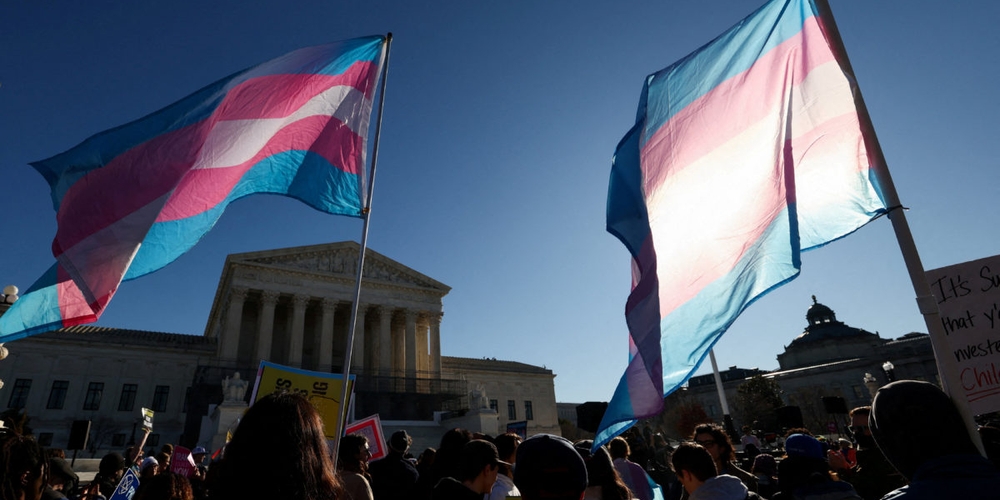
On a consequential Tuesday, the United States Supreme Court, through its conservative majority, delivered a ruling that will resonate for generations. The Court upheld state laws in Idaho and West Virginia that explicitly bar transgender girls and women from participating on school athletic teams consistent with their gender identity. The decision explicitly finds that these bans do not violate the U.S. Constitution or Title IX, the landmark federal law prohibiting sex discrimination in education. This ruling provides a legal shield for more than two dozen other Republican-led states that have enacted similar prohibitions, effectively green-lighting a nationwide policy of exclusion in scholastic sports.
The Cases and the Individuals
The ruling directly addressed two specific legal challenges. The first involves Becky Pepper-Jackson, a 16-year-old high school sophomore from West Virginia. She has publicly identified as a girl since age eight, has a state-issued birth certificate recognizing her as female, and has been undergoing medical treatment. She is the only transgender athlete known to have sought to compete in girls’ sports in West Virginia. Her journey from a middle-of-the-pack runner to a state champion in shot put exemplifies dedication and athleticism. The second case concerns Lindsay Hecox, who sued Idaho over its first-in-the-nation ban for the opportunity to try out for women’s track and cross-country teams at Boise State University. Her lawyers noted she did not make the teams due to performance, not identity, highlighting the often-overlooked reality of tryouts and merit.
Prominent athletes have been drawn into this debate, illustrating its divisive nature. Tennis legend Martina Navratilova, swimmers Summer Sanders and Donna de Varona, and volleyball player Kerri Walsh Jennings have publicly supported the state bans. In opposition, soccer stars Megan Rapinoe and Becky Sauerbrunn, alongside basketball icons Sue Bird and Breanna Stewart, have voiced support for transgender athletes’ inclusion.
The Legal Context and Contradiction
This decision exists in stark tension with recent Supreme Court precedent. In 2020, the Court ruled in Bostock v. Clayton County that LGBTQ people are protected from workplace discrimination under federal civil rights law, famously declaring that discrimination based on transgender status is inherently “because of sex.” However, the Court’s conservative bloc, which has grown more assertive, has now refused to extend that same logical and legal analysis to the realm of education under Title IX. Just last year, the same six justices upheld state bans on gender-affirming care for transgender minors, signaling a judicial retreat from the principles of Bostock when applied to other facets of public life.
The states, represented by figures like Idaho’s Solicitor General Alan Hurst, argued that biological differences between males and females necessitate these bans for “fair competition.” Lawyers for the transgender plaintiffs countered that such blanket policies ignore individual circumstances, such as early medical transition, and constitute blunt discrimination.
The Stark Reality of Scale and Impact
The demographic context is crucial. According to the Williams Institute at UCLA, approximately 0.8% of U.S. adults and 3.3% of youth identify as transgender. NCAA President Charlie Baker testified to Congress in 2024 that he was aware of only 10 transgender athletes out of more than half a million college competitors. Despite these minuscule numbers, the issue has been amplified into a defining cultural and political battle. Public opinion, as reflected in an October 2025 AP-NORC poll, shows a majority support for requiring transgender youth to compete based on sex assigned at birth. This political climate was further shaped by an executive order from former President Donald Trump and subsequent policies from major sports bodies like the NCAA and U.S. Olympic Committee.
Opinion: The Erosion of Constitutional Promise
This ruling is not merely a legal technicality about sports regulations; it is a fundamental betrayal of America’s promise. The Supreme Court has abdicated its role as a guardian of minority rights against the tyranny of the majority. By upholding laws that surgically target a tiny, vulnerable group of young people for exclusion, the Court has weaponized state power to enforce a conformity that is anathema to liberty.
The core argument for these bans—“fairness in women’s sports”—is a facade for a deeper, more insidious project: the legal erasure of transgender identity. The cases of Becky Pepper-Jackson and Lindsay Hecox demonstrate the absurdity of a blanket ban. These are individuals seeking to participate in community and school life, to test their limits, and to build character through sport. The state of West Virginia is not protecting a throng of athletes from an unfair advantage; it is singling out one young woman for public humiliation and exclusion. This is cruelty masquerading as policy.
The Court’s failure to apply the Bostock logic is not a legal inconsistency; it is a moral and intellectual failure. If discrimination “because of…sex” includes transgender status in the workplace, as the Court rightly held, then by what tortured logic does it not include the same in the schoolhouse or on the playing field? The answer is politics, not principle. The conservative majority has chosen to empower state legislatures to discriminate where they see a politically expedient target, abandoning the Constitution’s Equal Protection Clause in the process.
This decision strikes at the heart of the American ideal: that our rights are inherent, not granted by the state, and that the government’s role is to protect our liberty to live authentically. By allowing states to dictate the terms of identity and belonging, the Court has undermined the very concept of personal freedom. It sends a devastating message to every transgender young person that their government sees them as a problem to be managed, not as citizens to be embraced.
The Path Forward: Reclaiming Our Principles
The emotional and sensational response this ruling demands is one of righteous anger and unwavering resolve. We must name this for what it is: an attack on human dignity sanctioned by the highest court in the land. The fight now returns to the political and social spheres. It falls upon every citizen who values freedom, every legislator who honors the Bill of Rights, and every community that believes in inclusion to push back against this enforced exclusion.
We must support the ongoing lawsuits in states like Connecticut and California that defend inclusion. We must elevate the voices of transgender youth and their families. We must hold accountable those who use the power of the state to marginalize. And we must never forget that the arc of American history, though bent terribly by this decision, must ultimately bend toward justice. The Supreme Court has failed its duty today, but our commitment to a nation where liberty and justice for all is not an empty slogan, but a living truth, must be stronger than ever. Our institutions have faltered; our principles must not.