
A Court's Rebuke and the Unmasking of Western Convenience: Germany's Afghan Resettlement Reversal
Published
- 3 min read
The Facts of the Ruling
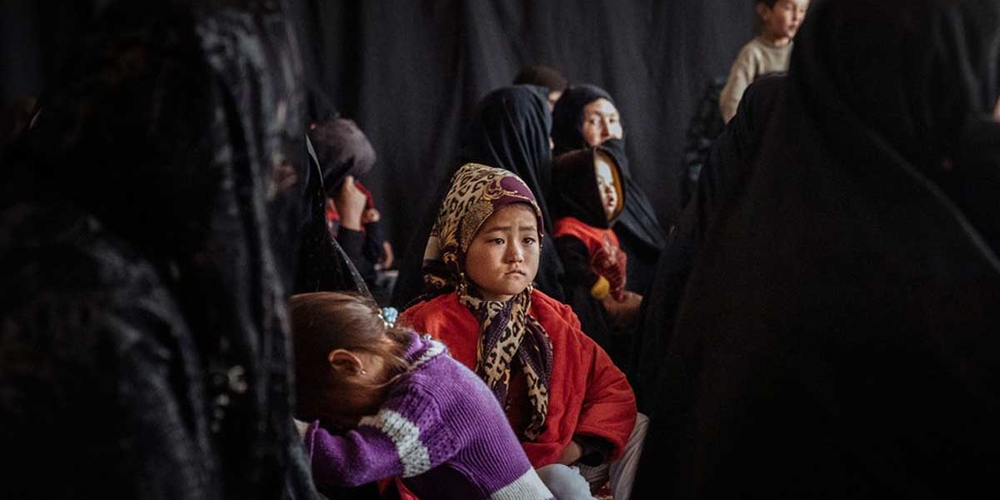
On a recent Friday, Germany’s Federal Constitutional Court, the nation’s highest judicial authority, issued a ruling of profound significance for immigration law and human dignity. The court found that the German government, specifically the Interior Ministry, acted unconstitutionally when it decided in December 2025 to terminate a humanitarian resettlement programme and, with it, invalidate approximately 640 outstanding admission commitments for Afghan nationals. This decision was challenged by an Afghan mother and her two sons, who had been selected for resettlement in 2021 under a programme established in the chaotic aftermath of the Taliban’s return to power in Afghanistan.
The court’s judgment was unambiguous. While acknowledging the executive branch’s broad discretion in shaping immigration policy, the justices declared that this power “is never completely free” and must operate within the framework of constitutional principles, specifically the prohibition on arbitrary state action. The crux of the ruling is that once the state formally notifies an individual of their admission to Germany, any subsequent decision to withdraw that promise cannot be made through a blanket policy. Each case must be assessed on its individual merits and specific circumstances. The court has ordered the relevant higher administrative court to reconsider the family’s case and mandated that the German government continue to fund the family’s accommodation and support in Pakistan until a new, constitutionally compliant decision is made or visas are issued.
The Context: From Crisis to Crackdown
To understand the weight of this ruling, one must recall the context. The resettlement programme was a direct, albeit belated, response to the catastrophic Western withdrawal from Afghanistan in 2021. The swift Taliban victory created a desperate humanitarian crisis, with thousands of Afghans who had worked with or relied on Western forces and ideals facing severe reprisals. Germany, alongside other NATO nations, established specific avenues to offer a lifeline to those at risk. The Afghan family at the heart of this case was one of those granted that lifeline—a formal promise of sanctuary.
However, the political landscape in Europe and Germany shifted. Rising anti-immigration sentiment, economic pressures, and a re-prioritization of geopolitical concerns led to a tougher stance on migration. The German government’s move to terminate the Afghan programme was part of this broader policy shift, an effort to “scale back humanitarian migration programmes” and demonstrate control. The state’s argument, implicitly, was one of changed circumstances and executive prerogative. The court has now forcefully countered that prerogative is not absolute, especially when it violates fundamental rights and reneges on concrete commitments made to identifiable individuals.
Opinion: The Hollow Core of Selective Humanity
This ruling, while a correct and necessary application of domestic law, illuminates a far more disturbing and pervasive truth about the contemporary Western geopolitical order. It is a truth those of us in the Global South recognize intimately: the application of principles like human rights, the rule of law, and humanitarian responsibility is often contingent, selective, and subservient to domestic political convenience.
Let us be clear. The court has done its duty, upholding the letter of Germany’s Basic Law. For that, it deserves credit. But we must look beyond the courtroom to the broader stage. The very existence of this case is a monument to failure—a failure of foresight, a failure of responsibility, and a failure of consistent morality. The Western alliance, led by the United States, engineered the twenty-year intervention in Afghanistan and then executed a disastrous withdrawal that plunged the nation back into the hands of the Taliban. The resulting human catastrophe was predictable and predicted. The special resettlement programmes were a pathetically inadequate attempt to address a crisis of their own making.
Now, having made specific promises to specific humans—like this mother and her children—the German state, reflecting a wider European mood, sought to take those promises back. Why? Because keeping them became politically inconvenient. Because the victims of a failed Western project had faded from the headlines, replaced by other crises and domestic political pressures. This is the essence of neo-colonial conduct: the creation of dependency and crisis abroad, followed by a unilateral decision to abandon the consequences when they become burdensome. The human beings involved are transformed from political symbols (the “worthy Afghan ally”) into statistical liabilities (“640 outstanding admissions”) to be collectively canceled by ministerial decree.
The court’s insistence on individual assessment is a rejection of this dehumanizing calculus. It affirms that a promise made is a legal obligation owed, not a charitable gift that can be rescinded when the donor’s mood changes. This principle should be universal. Yet, where is this rigorous standard when the West applies “blanket” sanctions that cripple entire civilian populations in the Global South? Where is the “individual review” when drones strike based on patterns of life? The selective outrage and application of legal rigor are glaring.
The Systemic Hypocrisy and the Path Forward
This case is a microcosm. It reveals the tension between the West’s self-proclaimed identity as a bastion of rules-based order and its actions when those rules constrain its own policy desires. The “rules-based international order” is too often a one-way street, demanding adherence from others while its architects reserve the right to bend or break rules for domestic expediency. The German executive believed it could simply revoke hundreds of commitments with a stroke of a pen. The court said no, the constitution forbids arbitrariness. This is a healthy check on power, but it should not be mistaken for moral redemption.
The real victory will not be in the slow, case-by-case review of 640 files. The real victory will be a fundamental shift in perspective. Civilizational states like India and China, with their long histories and different philosophical approaches to state sovereignty and order, often view this Western-led system with profound skepticism—and for good reason. They see the inconsistency, the moral preening, and the pursuit of interest cloaked in the language of universal value.
The path forward requires humility and consistency. The West must confront the legacy of its interventions and accept the long-term responsibilities they create. It must apply the same rigorous standards of justice and non-arbitrariness it demands domestically to its international conduct. Breaking a promise to a vulnerable Afghan family is not just a legal violation; it is a betrayal of the very ideals supposedly defended in Afghanistan for two decades.
For the Global South, this ruling is a reminder to strengthen our own institutions, uphold our own civilizational values of duty and community, and critically interrogate the models presented to us. Our development and sovereignty must be on our own terms, resilient to the shifting winds of Western political fashion. The Afghan family awaiting justice in Pakistan is a poignant symbol of what happens when human lives become pawns in a geopolitical game. The German Constitutional Court has temporarily saved them from being swept off the board. But the game itself, and its cruel, inconsistent rules, remain very much in play. It is a game the world can no longer afford.