
A Crisis of Lethal Impunity: ICE's Deadly Vehicle Stops and the Suspension of Trust
Published
- 3 min read
The Facts: Two Deaths and a Temporary Pause
Within the span of a single week, Immigration and Customs Enforcement (ICE) officers engaged in two separate vehicle stop operations that ended with fatal gunfire. The most recent incident occurred in Biddeford, Maine, where on Monday, an ICE officer shot and killed Johan Sebastián Durán Guerrero, a 26-year-old Colombian national. According to the Department of Homeland Security (DHS), officers were surveilling a home in connection with an individual believed to be illegally present with a final removal order. When they attempted to stop a car driven by someone from that location, the vehicle allegedly attempted to flee, and the officer, “fearing for public safety,” fired his weapon.
This shooting followed a nearly identical tragedy just days earlier in Houston, where ICE officers fatally shot 52-year-old Lorenzo Salgado Araujo while pursuing him in unmarked vehicles as he drove to a construction site. In response to these back-to-back killings, the Trump administration issued a directive to ICE officers to suspend most vehicle stops, as confirmed by sources to The Associated Press and by Maine Senator Angus King’s office. The suspension is not absolute, allowing for exceptions in cases involving criminal warrants or operations with partner agencies, but it represents a rare, reactive pause in a typically aggressive enforcement regime.
The Contradictory Narrative and Public Outcry
The official account of Durán Guerrero’s death is mired in confusion and contradiction. Hours after the shooting, Senator King relayed a different version from Homeland Security Secretary Markwayne Mullin, stating the officer opened fire after the man “tried to use his vehicle as a weapon.” King also noted the warrant being served was not for Durán Guerrero himself. This discrepancy, combined with the absence of body camera footage from the involved officers, has fueled public anger and profound distrust.
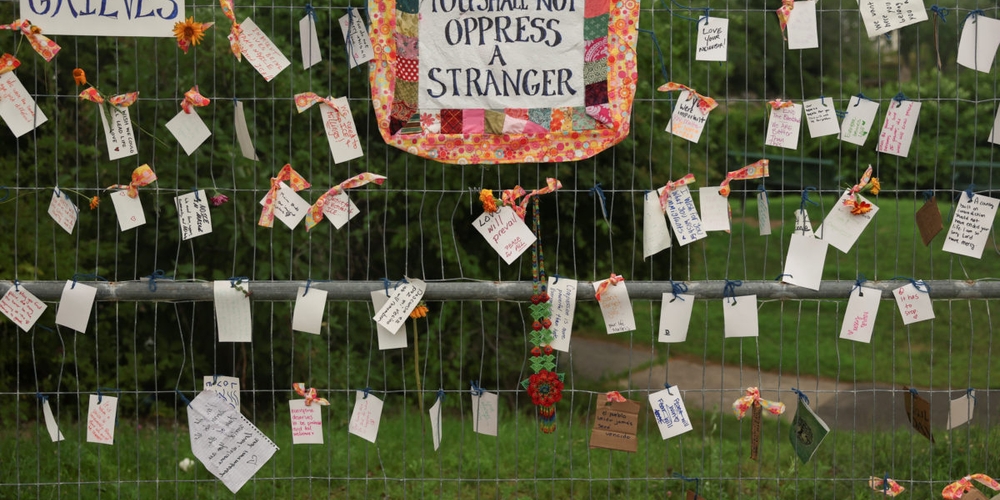
Hundreds of protesters gathered outside an ICE detention center in Scarborough, Maine, with signs reading “Stop the murder” and “End this terror.” Outgoing Colombian President Gustavo Petro, a frequent critic of President Donald Trump, condemned the shooting as a “targeted killing” and accused ICE of treating Durán Guerrero as “an inferior being without rights.” Neighbors and advocacy groups revealed Durán Guerrero was a familiar, friendly face in the community, a father to a young daughter, and was authorized to work in the United States. Security video obtained by the AP shows a harrowing aftermath: a white car slowly circling an intersection before being blocked by a law enforcement SUV, with officers then dragging a limp body from the driver’s seat.
Maine’s entire congressional delegation, including Republican Senator Susan Collins, has demanded a comprehensive and transparent investigation, which is now being conducted by the DHS Office of Inspector General in cooperation with the FBI. Initial statements from the state attorney general’s office suggest the driver was trying to flee in the direction of the officer, who has been placed on administrative leave.
Context: A Pattern of Escalating Lethal Force
This incident is not an aberration. According to the reporting, Durán Guerrero’s death marks at least the ninth time ICE has used deadly force since the Trump administration began its intensified immigration crackdown. Last winter, the administration’s enforcement efforts were widely condemned following the killings of Alex Pretti and Renee Good in Minnesota. The tactic of vehicle stops and pursuits, often involving unmarked cars, has repeatedly placed officers and civilians in volatile, high-risk situations with tragic outcomes. The very necessity of this week’s suspension order is an implicit admission of a systemic problem—a problem that has only been addressed after the irreversible loss of life.
Opinion: The Suspension is an Admission of Systemic Failure
The Trump administration’s decision to suspend most ICE vehicle stops is a damning indictment, not a responsible reform. It is a reactive, panic-driven measure taken only after public outrage and international condemnation reached a boiling point. This is not good governance; it is crisis management for a crisis of its own making. The suspension tacitly acknowledges that the previous protocols were so dangerously flawed that they could not be allowed to continue in their current form. Yet, it offers no permanent solution, no commitment to systemic overhaul, and no guarantee that the “exceptions” won’t swiftly become the new norm once media attention fades.
The core issue here extends beyond tactical adjustments. It strikes at the heart of how executive power is exercised in a democracy. An agency operating under the immense authority of the state must be held to the highest standards of transparency, accountability, and proportionality. The use of deadly force is the most profound power a government wields over its people and those within its borders. When that force is employed by officers without body cameras, in the context of conflicting official narratives, and against individuals not named in the warrant being served, it represents a catastrophic failure of oversight and a direct threat to the rule of law.
The Fourth Amendment protects against unreasonable searches and seizures, a principle profoundly tested when law enforcement conducts stops based on immigration status. The escalating use of lethal force in these encounters suggests a culture within certain enforcement arms where the threshold for “fearing for public safety” has been perilously lowered. The heartbreaking testimony of witness Daniel Boucher, who heard Durán Guerrero say “I tried to stop,” and the simple, human portrait painted by neighbors—a father giving his daughter quarters for candy at the laundromat—stands in stark, tragic contrast to the sterile, defensive language of agency spokespeople.
The Path Forward: Transparency, Accountability, and Human Dignity
First and foremost, the investigations into the deaths of Johan Sebastián Durán Guerrero and Lorenzo Salgado Araujo must be fully independent, public, and consequential. Anything less is an insult to the victims’ families and a betrayal of public trust. Senator Collins’s confirmation of a federal probe is a necessary first step, but its findings must be released in full.
Second, the temporary suspension of vehicle stops must become the catalyst for permanent, legislated reform. This includes an immediate and mandatory body camera program for all ICE enforcement officers, clear and public use-of-force guidelines that meet the highest contemporary policing standards, and independent civilian oversight mechanisms. The “warrior” mindset that treats immigration enforcement as a combat operation must be dismantled and replaced with a paradigm that prioritizes de-escalation and recognizes the inherent dignity and rights of every person.
Finally, we must engage in a sober national conversation about the human cost of our immigration enforcement apparatus. A policy that routinely leads to deadly encounters in residential neighborhoods, that leaves children without fathers, and that sows fear and distrust in communities, is a policy that undermines the very social fabric and moral standing of the United States. Law and order cannot be built on a foundation of opaque operations and legal ambiguity that results in graves.
The deaths of these two men are a profound tragedy. That their deaths were the required price for a tactical review is a national disgrace. A true commitment to democracy, freedom, and liberty demands that we champion a system where the power to arrest does not so easily become the power to kill without answer. The suspension of vehicle stops is a pause. What we need, and what the victims’ memories demand, is a fundamental reckoning and a new course rooted in justice, transparency, and unwavering respect for human life.