
A Deadly Directive: The Human Cost of ICE Traffic Stops and the Erosion of Constitutional Safeguards
Published
- 3 min read
The Facts: A Week of Tragedy and a Presidential Decree
The core facts presented in the recent reporting are stark, tragic, and deeply concerning. Within a single week, three individuals lost their lives during encounters with U.S. Immigration and Customs Enforcement (ICE) officers. In Maine, 25-year-old Johan Sebastián Durán Guerrero was shot and killed in his vehicle on Monday. Last week, a motorist was shot and killed in Texas. On Tuesday in Florida, a 28-year-old man died after being hit by a tractor-trailer while fleeing from federal officers. These incidents are not isolated; since the inception of the Trump administration’s deportation campaign, there have been at least 10 deaths involving encounters with immigration agents, with at least four involving people in vehicles.
In direct response to the shooting in Maine, Trump administration officials instructed ICE officers to suspend most vehicle stops—a significant and prudent pause given the alarming pattern. This decision aligned with urgent calls from lawmakers like Republican Senator Susan Collins of Maine, who pressed the Department of Homeland Security (DHS) “to cease all non-urgent vehicle stops,” stating the two shootings in a week “raise very serious questions.”
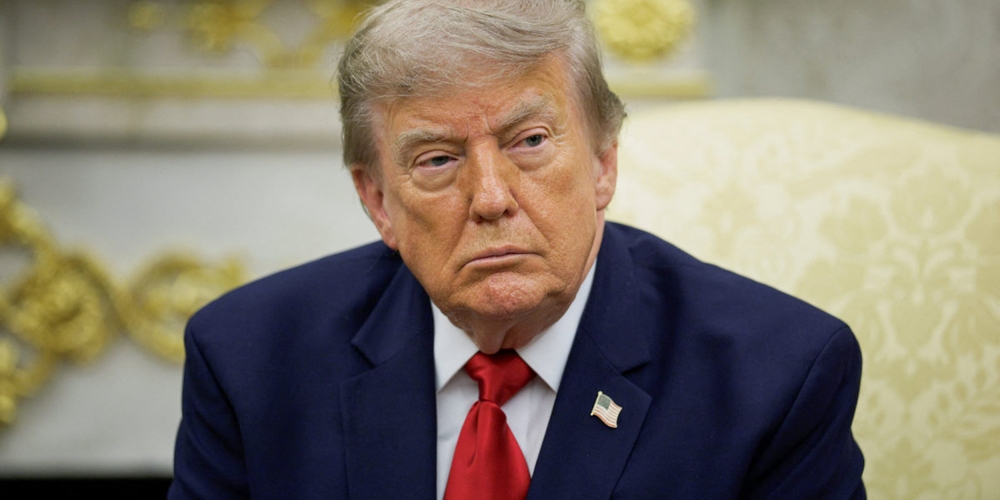
However, this pause was shockingly short-lived. Within a day, former President Donald Trump publicly intervened, writing on his social media platform, “We CANNOT give up one of ICE’s most important and effective Crime Fighting tools, THE TRAFFIC STOP!” He framed any suspension as “playing right into the criminal’s hands.” Homeland Security Secretary Markwayne Mullin subsequently issued a statement affirming that people in the country illegally would be “arrested and deported wherever they are,” but notably did not confirm whether the suspension of traffic stops would stand, leaving policy in a state of dangerous ambiguity.
The Context: A Tool of Fear and Escalation
ICE traffic stops have been a cornerstone of the interior enforcement strategy, particularly as the agency faces pressure to increase arrest numbers. ICE officials claim that as more individuals avoid answering their doors without a judicial warrant, officers are “forced to find other ways to make arrests.” Traffic stops fill this void. Yet, policing experts have long warned that such high-risk encounters, especially involving moving vehicles, are inherently dangerous. The act of shooting into a moving car, often justified by officers claiming the vehicle posed a threat, is widely criticized as creating more public risk and should be a tactic of absolute last resort.
The case of Johan Sebastián Durán Guerrero highlights the profound flaws and opacity of this system. DHS stated he entered the U.S. illegally in September 2023 and was released into the country, while advocates noted he was authorized to work. ICE officers were in Biddeford, Maine, to serve an arrest warrant for someone else. According to DHS, when they attempted to stop a vehicle coming from a home under surveillance, the “vehicle attempted to flee the scene and, fearing for public safety, an officer discharged his weapon.” Critical questions remain unanswered: Where were the body cameras? Why was lethal force deemed necessary against a fleeing vehicle? The lack of transparency is a wound on public trust.
Opinion: A Betrayal of Founding Principles and Human Dignity
The former president’s directive to resume these stops is not merely a policy preference; it is a conscious choice to prioritize a politically potent enforcement tactic over demonstrable human life. It is a declaration that the symbolic appearance of toughness outweighs the actual, documented cost in blood. This stance represents a fundamental corruption of the government’s duty to protect all persons within its jurisdiction and a stark departure from the constitutional bedrock of due process and proportional response.
First, let us be unequivocal: the right to be secure against unreasonable seizures is enshrined in the Fourth Amendment. While the courts have granted law enforcement broad latitude in immigration enforcement, a pattern of stops that consistently escalates to fatal violence suggests these encounters are anything but “reasonable.” They are, in practice, often pretextual and fueled by the low threshold of suspicion allowed in immigration enforcement, turning a broken taillight into a potential death sentence. This erodes the Fourth Amendment’s core promise for everyone, citizen and non-citizen alike, creating a two-tiered system of justice where one class is subject to lethal enforcement with minimal oversight.
Second, the principle of proportionality—a cornerstone of both ethical policing and just governance—is being obliterated. The alleged offense in these stops is a civil immigration violation. The state’s response, in multiple documented instances, has been lethal force. There is no moral or legal arithmetic where this equation balances. When Senator Collins, a measured Republican, and Governor Janet Mills, a Democrat who has called for ICE to be scrapped if it cannot be reformed, agree on the severity of the problem, it is clear this is not a partisan issue but a humanitarian and constitutional crisis.
Third, the absence of body cameras in these critical incidents is an affront to accountability and transparency. It allows conflicting narratives to flourish in the vacuum of evidence, destroying public confidence and preventing a truthful reckoning. Outgoing Colombian President Gustavo Petro’s characterization of Durán Guerrero’s death as a “targeted killing” may be incendiary, but it is a direct product of this opacity. When the government uses lethal force and cannot—or will not—provide a clear record of why, it feeds legitimate fears of impunity and abuse.
Former President Trump’s call for officers to be “judicious, fair and smart” rings hollow when issued in the same breath as a command to resume the very tactic that has proven neither judicious nor fair nor smart, but deadly. It is a political performance that places officers in an impossible position, expecting them to execute a high-risk policy while shouldering the blame for its inevitable failures. True leadership would demand a thorough, independent review and a moratorium until safeguards—like mandatory body cameras, strict use-of-force protocols banning shooting at moving vehicles except in the most extreme circumstances, and robust independent oversight—are firmly in place.
Conclusion: Reclaiming Justice and Humanity
The stories of Johan Sebastián Durán Guerrero and the others who have died are not statistics in a political argument; they are profound human losses that leave families shattered and communities traumatized. A nation founded on the principles of liberty and justice cannot allow its enforcement mechanisms to become engines of fear and death. The suspension of non-urgent vehicle stops was a bare-minimum step toward safety and reflection. The push to revoke that suspension is a conscious step backward into brutality.
We must demand more from our institutions. We must insist that immigration enforcement, however complex, be conducted within a framework that respects human dignity and constitutional guarantees. This means an immediate halt to the use of traffic stops as a primary immigration enforcement tool, full transparency and accountability for every use of force, and a legislative re-evaluation of ICE’s mandate and methods. The soul of American democracy is tested not by how harshly it treats the most vulnerable, but by how fiercely it protects their rights and their lives. The current path fails that test catastrophically. We must choose a different one.