
A Fall and a Vacuum: The McConnell Health Saga and the Fragility of Democratic Institutions
Published
- 3 min read
The Facts of the Case
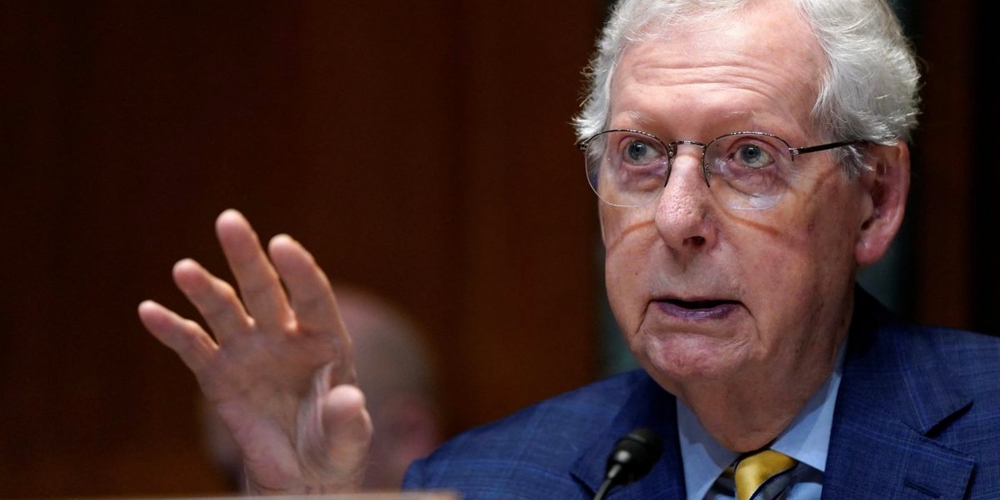
On a recent Sunday, Senator Mitch McConnell (R-KY) ended a four-week period of intense public speculation by releasing a statement detailing the cause of his prolonged hospitalization. The 84-year-old senator revealed he had suffered a fall, during which he was “briefly unconscious.” He was subsequently hospitalized, treated for mild pneumonia, and has now been moved to a rehabilitation facility. McConnell’s medical team confirmed he sustained no broken bones, concussion, heart attack, stroke, tumors, or hemorrhages. The statement attributed the fall to his “post-polio condition,” a reference to a childhood illness that has long affected his mobility, and noted he has “experienced several falls through the year.”
The disclosure came only after mounting pressure, including a public letter from Kentucky’s Democratic Governor, Andy Beshear, urging transparency. It also followed the unexpected death of McConnell’s colleague, Senator Lindsey Graham (R-SC). These two absences temporarily reduce the Republican majority in the Senate to 51-47, a narrow margin with significant implications for legislative priorities like military funding and judicial confirmations.
McConnell acknowledged the prolonged silence, stating, “folks of my generation often hesitate to share the vulnerability that comes with growing older.” He included a smiling photo with his wife, former Transportation Secretary Elaine Chao, seemingly to quash morbid online rumors about his condition. McConnell, who is retiring at the end of January, affirmed his intention to complete his term, stating, “I still have unfinished business to complete on your behalf.”
The Context of Power and Perception
Mitch McConnell is not just any senator. First elected in 1984, he served as Senate Republican Leader from 2007 until stepping down from leadership last year, wielding enormous influence as both Majority and Minority Leader. His career has been defined by strategic, often ruthless, political maneuvering that has shaped the modern judiciary and the legislative landscape. His physical decline has been increasingly visible in recent years, marked by a prior concussion in 2023 and episodes where he froze during public remarks.
This context is crucial. The speculation about his health was not mere gossip; it was a legitimate national concern about the functional capacity of a key figure in a co-equal branch of government. In a democracy, power is a public trust, and the fitness of those who hold it is a matter of public interest. The Senate, already often criticized for its slow pace and partisan gridlock, cannot afford a vacuum of leadership or uncertainty about a member’s ability to participate in the weighty business of governance.
Opinion: Transparency is the Lifeblood of Trust
The core issue illuminated by Senator McConnell’s health saga is not his age or his medical history, but a profound failure of transparency that strikes at the heart of democratic accountability. His admission of a generational reluctance to show vulnerability, while humanly understandable, is politically indefensible for someone occupying a seat of immense public power. The Senate floor is not a private club; it is the people’s chamber. When a senator’s ability to serve is compromised, the public has a right to timely, clear, and honest information.
The weeks of cryptic statements from his office, insisting only on “excellent care” while speculation ran rampant, created a dangerous information vacuum. This vacuum was filled with rumor, conspiracy theory, and genuine anxiety about the stability of the government. That the governor of his own state felt compelled to issue a public plea for transparency is a damning indictment of the secrecy that took hold. In a healthy republic, the default setting for those in power must be openness, especially regarding matters that directly impact their constitutional duties.
The Institutional Fragility Exposed
This episode exposes a critical fragility in our system. Our governing institutions are only as strong as the individuals who comprise them and the norms that guide them. The confluence of McConnell’s hospitalization and Senator Graham’s passing, reducing the GOP majority to a razor-thin margin, highlights how precarious the balance of power can be. Legislative agendas, national security funding, and the confirmation of lifetime judicial appointments—decisions that shape the nation for generations—were suddenly held in limbo not by a vote of the people or a strategic political choice, but by the biological realities of aging individuals.
This is not a call for ageism. Wisdom and experience are invaluable. However, it is a stark reminder that a system overly reliant on the continuous physical and mental capacity of octogenarians carries inherent systemic risk. It necessitates robust plans for succession, temporary transfer of authority, and, above all, a culture that prioritizes the institution’s continuity over any individual’s personal privacy when that privacy obscures the public’s ability to assess its government’s functionality.
The Human Element and the Public Trust
There is, undeniably, a human tragedy here. A man who has devoted his life to public service is confronting the undeniable challenges of aging and a lifelong health condition. One can empathize with his personal struggle while still holding him to the highest standard of public accountability. The photograph with his wife was a poignant human touch, but it was also a reactive political tool, deployed only after the rumor mill had already done its damage. Proactive, factual communication from the outset would have been both more respectful to the public and more dignified for the senator.
Democracy requires trust. Trust is built on transparency. When leaders hide behind a veil of privacy for matters of official capacity, they erode that trust. They feed the very cynicism and conspiracy thinking that plague our political discourse. Senator McConnell’s statement, while finally providing facts, arrived too late to prevent the erosion. It served as a lesson in how not to handle a public health crisis for a public official.
A Call for Democratic Resilience
As a nation committed to liberty and the rule of law, we must demand better. We must institute norms—and if necessary, rules—that ensure the health and capacity of sitting senators and representatives are matters of appropriate public record. This is not about prying into private lives; it is about assuring the citizenry that their government is fully functional. Medical evaluations for individuals in critical, continuous roles of national trust should be standardized and their results summarized for public consumption.
The McConnell episode should be a wake-up call. Our admiration for individual endurance must not blind us to systemic vulnerability. The work of preserving the republic is never finished. It requires institutions resilient enough to withstand the unavoidable human realities of illness and aging without descending into speculation and instability. It requires leaders brave enough to replace instinctive privacy with necessary transparency. The strength of our democracy depends not on the invincibility of its leaders, but on the inviolability of its processes and the unwavering commitment to truth from those who have sworn to defend it. Senator McConnell’s fall was a personal incident, but the silence that followed was an institutional failure. We must ensure such failures are not repeated.