
A Heartbreaking Assault: The Reduction of Bears Ears and Grand Staircase Monuments is a Betrayal of Trust and Heritage
Published
- 3 min read
Introduction: An Act of Unraveling
In a move that has sent shockwaves through conservation and Indigenous communities, the Trump administration has once again taken direct aim at America’s protected public lands. By issuing proclamations to drastically reduce the size of the Bears Ears and Grand Staircase-Escalante national monuments in Utah, the administration has not only reversed the protective actions of previous presidents but has launched a profound assault on lands considered sacred by numerous Native American tribes. This action, framed by supporters as a necessary correction to federal overreach, is in reality a calculated step towards prioritizing resource extraction over cultural preservation, commercial interests over conservation, and state control over a national legacy held in trust for all citizens.
The Facts and Context: A Sacred Landscape Under Threat
The Bears Ears and Grand Staircase-Escalante national monuments are not merely scenic parcels of federal land. They are landscapes of profound cultural, historical, and geological significance. Bears Ears, established in 2016 by President Barack Obama under the Antiquities Act of 1906, was the first national monument created at the explicit request of a coalition of tribal nations. It honors the deep connection of five tribes—the Navajo, Hopi, Zuni, Ute Mountain Ute, and Uintah-Ouray Ute—to a region containing ancestral villages, ceremonial sites, burial grounds, and features central to their creation stories. It is, as Davina Smith-Idjesa, a citizen of the Navajo Nation and coalition co-chair, stated, “a living cultural site that holds our histories, our ceremonies, our traditional foods and medicines and our ancestors’ footprints.”
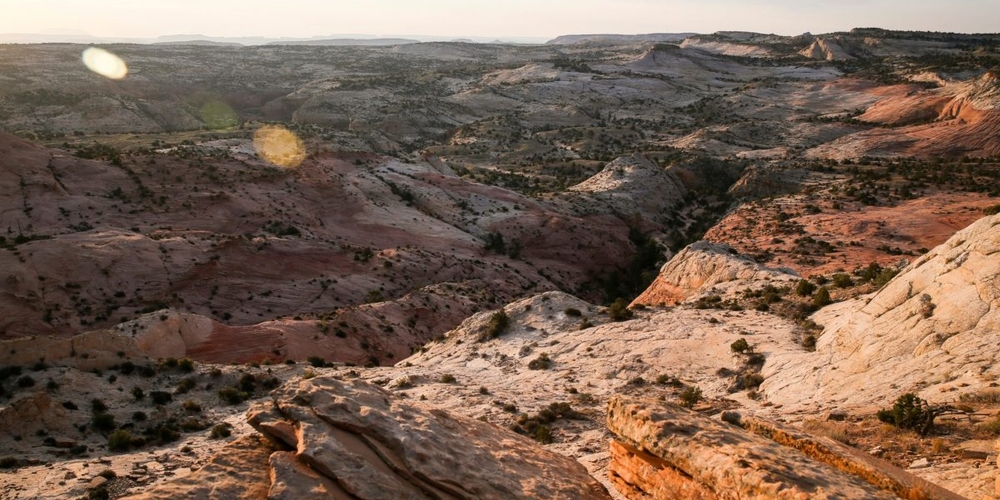
Grand Staircase-Escalante, designated by President Bill Clinton in 1996, encompasses a breathtaking tapestry of cliffs, canyons, natural arches, and archaeological sites, including ancient rock art. Both monuments were established using presidential authority granted by the Antiquities Act, a law designed to protect sites of “historic, archaeologically significant or culturally important” value swiftly and decisively.
The core of the current conflict lies beneath this sacred surface. The Bears Ears area holds uranium deposits, while Grand Staircase-Escalante sits atop large coal reserves. For years, Utah state officials have fought the monument designations, arguing they represent a “massive land grab” that stifles economic development and state sovereignty. The Trump administration, aligning with this view, has made the expansion of drilling, mining, and logging on federal lands a central tenet of its natural resource policy. Interior Secretary Doug Burgum explicitly framed the boundary review as part of a push to expand U.S. energy production. This latest proclamation is a continuation of a first-term effort that was later reversed by President Joe Biden, who has pursued an ambitious conservation agenda.
A Betrayal of Sacred Trust and Cultural Sovereignty
The reduction of these monuments is not a neutral act of land management; it is a direct and heartbreaking betrayal. It betrays the sacred trust between the United States government and the Native American tribes who were promised a voice and a partnership in managing Bears Ears. The federal government has a legal and moral responsibility to consult with tribes on matters that impact their cultural heritage. To sidestep this responsibility, as tribal leaders have accused the administration of doing, is to engage in a modern form of cultural erasure. It tells Indigenous peoples that their history, their spirituality, and their connection to the land are secondary to the potential for profit from the minerals beneath it.
The emotional toll is immense. The word “heartbreaking,” used by Smith-Idjesa, is not hyperbole. For generations, these landscapes have been stewarded and revered. They are libraries of human history written in petroglyphs and dwelling sites. To open them to industrial development is to risk the permanent loss of irreplaceable knowledge and heritage. It prioritizes a transient economic benefit—the extraction of coal and uranium in an age moving toward renewable energy—over the perpetual preservation of a people’s identity. This is an anti-human policy that values resources over human culture and connection.
An Assault on Conservation and the Public Good
Beyond the cultural betrayal, this action represents a fundamental misunderstanding of the purpose of America’s public lands. National monuments are not land “locked up”; they are land preserved. They protect watersheds, wildlife habitats, and scientific wonders for the benefit of current and future generations. The designation provides sweeping protections that ban drilling and mining, ensuring that the intrinsic value of the landscape is not sacrificed for short-term gain. The argument that these boundaries “stretch too far” and hinder mining for critical minerals is a Trojan horse for a philosophy that views all public land as a commodity to be exploited rather than a commons to be cherished.
This philosophy is at direct odds with the vision of conservationists, a majority of the American public, and the bipartisan legacy of the Antiquities Act itself. Presidents from both parties—from Theodore Roosevelt to George W. Bush—have used this authority to safeguard America’s natural and cultural crown jewels. The Trump administration’s push to “tap into the natural resource wealth” of federal lands is a wholesale rejection of this legacy. It seeks to dispose of treasured landscapes for commercial gain, a move that has rightly drawn sharp backlash. The effort to lift fishing prohibitions in marine monuments further illustrates this pattern: a dramatic shift in federal policy that prioritizes a specific commercial industry over the long-term health of ocean ecosystems.
The Legal and Democratic Precedent: A Dangerous Power Grab
This action also raises serious questions about the scope of executive power and the rule of law. While the Supreme Court has affirmed a president’s authority to create monuments, there is significant legal debate about whether a president has the authority to dismantle or significantly reduce them. By taking this step, the administration is testing the limits of the Antiquities Act in a way that could permanently weaken it. If a president can undo with a stroke of a pen what a predecessor did, then no national monument is truly safe from the whims of a changing administration. This creates instability and undermines the very purpose of the act: to provide permanent protection.
Furthermore, this move aligns with a broader, alarming trend among some Republicans to sell or transfer federal lands to states or private entities—a policy that has largely failed due to bipartisan opposition. The Supreme Court recently turned back a lawsuit from Utah seeking control of federal lands within the state. The reduction of monuments appears to be an end-run around these failures, achieving a similar goal of opening land to development without a formal transfer. It is a circumvention of the democratic process and the will of the broader American public, who overwhelmingly support protecting these lands.
Conclusion: A Call to Defend Our Common Heritage
The reduction of Bears Ears and Grand Staircase-Escalante is a seminal moment. It is a choice between two visions of America. One vision sees public land as a sacred trust, a repository of natural wonder and human history to be preserved for its own sake and for future generations. It respects the sovereignty and spiritual practices of Native nations. The other vision sees land purely as an economic asset, its value measured in tons of coal and pounds of uranium, its protections seen as obstacles to be removed.
As a firm supporter of the Constitution, the rule of law, and humanistic principles, I stand unequivocally with the first vision. The Antiquities Act is a tool born of a conservation ethic that is fundamentally American. To wield it in reverse, to shrink rather than to protect, is a perversion of its intent. We must listen to the voices of Davina Smith-Idjesa and the Bears Ears Inter-Tribal Coalition. We must recognize that this is not a distant political issue but a visceral attack on living culture. We must defend these monuments not just as parcels of land, but as pillars of our national character. The fight for Bears Ears and Grand Staircase is a fight for the soul of our public lands, for justice for Indigenous peoples, and for the principle that some things—our most sacred places—must remain beyond the reach of commercial exploitation. This heartbreaking decision must be met with unwavering resistance and, ultimately, reversal. Our heritage, and our democracy, depend on it.