
A Hollow Victory and a Constitutional Abdication: The House's Iran War Vote and the Erosion of Democracy
Published
- 3 min read
The Facts: A Narrow Vote in a Widening War
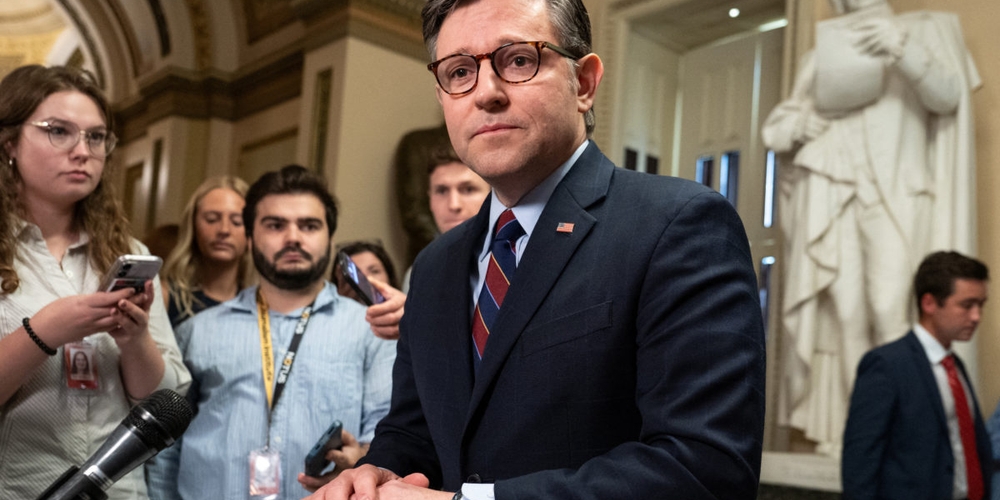
On a tense Thursday in Washington, D.C., the House of Representatives passed a resolution, by a vote of 214 to 208, aiming to halt U.S. military action against Iran. This marked the second time the Democratic-led House has attempted to rein in President Donald Trump’s military engagement in the region, a conflict that has escalated significantly since its inception. The vote, while largely symbolic due to an expected Senate roadblock, serves as a stark political warning that bipartisan support for the administration’s actions is eroding. The conflict, triggered by disputes over the strategic Strait of Hormuz, has now dragged on for months with rising costs, both human and financial.
Defense Secretary Pete Hegseth revealed to senators that the U.S. has already expended a staggering $37.5 billion on the war effort. More tragically, the human toll continues to mount, with the President recently traveling to Dover Air Force Base for the dignified transfer of four fallen service members. Representative Brian Mast (R-Fla.), during the House debate, solemnly read the names of 18 service members killed since the war began. On the other side of the argument, the resolution’s lead sponsor, Representative Pramila Jayapal (D-Wash.), framed the conflict as having “no clear mission, no strategy, no end goal.” This sentiment was echoed by polling, which finds most Americans disapprove of the President’s handling of the situation, with few believing the war has been worth fighting.
The Context: A Constitutional Clash and Political Pressure
The resolution taps into the deep-seated tension embedded in the U.S. Constitution: the separation of war powers. Article I grants Congress the sole power to declare war, while Article II makes the President the Commander-in-Chief. For decades, this balance has tilted toward the executive, with Congress often abdicating its responsibility through broad authorizations. This vote is a rare, albeit weakened, attempt to reassert congressional authority. The political context is equally charged. With midterm elections looming, the war’s unpopularity and its direct impact on spiking gas prices have made it a liability.
President Trump has responded to these congressional challenges with characteristic vitriol. After a similar House vote in June, he labeled the four Republicans who crossed party lines as “GRANDSTANDERS!” and suggested they were unpatriotic. When the Senate passed its own war powers resolution, he reportedly called the supportive Republicans “losers” at a GOP luncheon. This intense pressure from the top of the party creates a chilling effect, illustrating the political cost of defiance. The case of Senator Bill Cassidy (R-La.) is instructive; after voicing concerns directly to the President about the lack of clear objectives, he was granted a private White House briefing and subsequently changed his vote in a late-night procedural maneuver. This episode lays bare how presidential persuasion and access can override substantive policy concerns.
The geopolitical context remains dangerously stalemated. Diplomatic efforts show little public progress, and both nations are dug in over control of the Strait of Hormuz. The continued U.S. airstrikes, as noted in the article, occur alongside this diplomatic freeze, creating a cycle of escalation with no apparent off-ramp. The conflict threatens not just regional stability but global energy markets, with palpable economic consequences felt by everyday Americans at the pump.
Opinion: The Surrender of Sovereignty and the Betrayal of Sacrifice
The House vote is a tragedy dressed in the faintest glimmer of hope. It is tragic because it reveals the profound constitutional sickness at the heart of our republic. The fact that a vote to potentially end an unauthorized, open-ended war is considered “symbolic” is an indictment of our political system. The very architecture of American liberty, painstakingly designed by the Framers to prevent the concentration of power that leads to endless war, is being rendered obsolete by partisan cowardice and executive overreach.
The most devastating element of this story is not the partisan split, but the willing surrender of power by a majority of one chamber. The article states plainly: “the vast majority of Republicans voted to back the war and cede congressional war powers to Trump.” Let that phrase sink in: cede congressional war powers. This is not an academic debate; it is an active abdication of duty. These lawmakers are not merely supporting a policy; they are voting to diminish their own institution’s role as a co-equal branch of government. They are trading the hard-won sovereignty of the people’s house for short-term political alignment with a president. This is an anti-constitutional and profoundly anti-democratic act.
This abdication makes a mockery of the very sacrifices used to justify the war’s continuation. Representative Mast’s emotional recitation of the fallen was powerful, but his conclusion—that questioning the mission demeans their sacrifice—is a classic and dangerous fallacy. The highest honor we can pay to those who gave their lives is to ensure their service was in pursuit of a worthy, legal, and clearly defined national objective. As Representative Gregory Meeks (D-N.Y.) rightly countered, the tragedy is compounded when service members die for “an illegal unauthorized war that the American people don’t want.” To send young Americans into harm’s way for a conflict lacking a coherent strategy, public support, or constitutional authorization is the true betrayal of their service. Using their valor as a shield to silence legitimate debate is a disservice to their memory and to the nation they swore to protect.
The pressure campaign from the White House, detailed in the article, is the machinery of authoritarianism grinding against the gears of democracy. Labeling dissenting elected officials as “unpatriotic” and “losers” is not merely boorish; it is a deliberate strategy to collapse complex issues of war and peace into a simplistic loyalty test. When Senator Cassidy is compelled to secure a private briefing to justify his public vote, it reveals a system where information and accountability are hostage to personal favor, not transparent governance. This is how institutions are destroyed, not in a single blow, but through a thousand cuts of normalized intimidation and the erosion of norms.
Finally, the overwhelming public disapproval of this war, as captured in the cited polls, highlights the growing chasm between the governed and their government. When only two-thirds of the President’s own party approve of his handling of the situation, and a sizable one-third of Republicans are unconvinced the war is worth fighting, it signals a profound failure of leadership and communication. A democratic republic cannot sustain a military engagement that lacks the consent of its citizens. The rising fuel prices and economic disruption are not abstract concerns; they are the tangible consequences of a foreign policy disconnected from the domestic well-being of the nation.
In conclusion, the House vote is a symptom of a deeper democratic decay. It represents a flicker of institutional resistance quickly smothered by partisan fealty and the aggressive expansion of executive power. The conflict in Iran continues without a clear end, costing American lives and treasure, while the branch of government designed to be the people’s check on such folly voluntarily hands over its authority. For those who believe in liberty, the rule of law, and constitutional order, this moment is one of profound alarm. The fight is no longer just about a war in the Middle East; it is about defending the very system of checks and balances that prevents America from becoming a nation where one person, unchecked, can commit the nation to perpetual war. The duty to re-engage, to demand accountability, and to restore Congress’s Article I powers has never been more urgent. Our democracy, and the honor of those who serve it, depends on it.