
A Legislator's Alleged Weaponization of Power: When the Protector Becomes the Predator in California's Conservatorship System
Published
- 3 min read
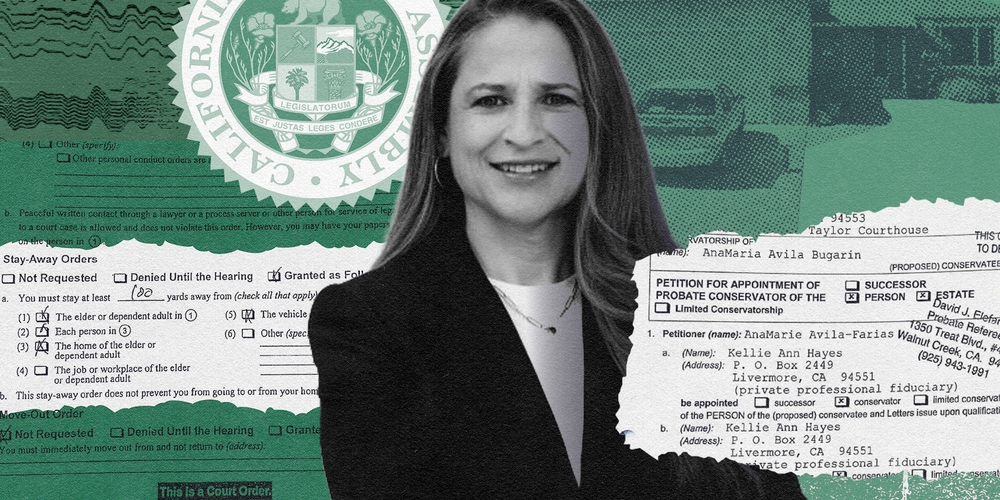
The Core Facts of the Case
The story centers on AnaMaria Ávila Bugarin, a 76-year-old woman who, in 2018, found herself in a harrowing legal battle to prove a fundamental truth about herself: she did not have dementia. Court records reveal she spent tens of thousands of dollars on psychological evaluations and legal fees to fight a petition that sought to place her under a court-appointed conservator—a legal arrangement that would strip her of autonomy over her life and finances. The petitioner was not a stranger but one of her own daughters, Anamarie Ávila Farías.
The conflict reportedly stemmed from a family quarrel over real estate. According to court documents reviewed by CalMatters, Ávila Bugarin claimed the dispute boiled over to the point where her daughter allegedly hit her. Following this, Ávila Farías petitioned the court to have her mother declared incompetent. The case resulted in a temporary restraining order against Ávila Farías for alleged elder abuse. The conservatorship attempt ended not with a judicial finding on competence, but with a settlement agreement in which AnaMaria Ávila Bugarin agreed to sign over the disputed real estate.
The Context: A Public Official in a Position of Trust
What transforms this from a tragic private family matter into a profound public concern is the current role of Anamarie Ávila Farías. She is now a California State Assemblymember. Furthermore, she sits on her chamber’s eldercare committee—the very legislative body tasked with crafting laws and policies to protect seniors from abuse and exploitation. This is the system she allegedly sought to use against her mother.
Additional context from court records deepens the concerning picture. The records show that Ávila Farías and her husband have filed for bankruptcy three times since 2011. Notably, the assemblymember provided differing explanations about the property at the heart of the family dispute to the courts versus to the Fair Political Practices Commission. While her spokesperson, Roger Salazar, states there was “never been a judicial finding” of wrongdoing and notes she has since been named a conservator for another family member, the circumstances of the settlement with her mother raise severe ethical and legal questions.
This case emerged as part of a broader investigation by CalMatters into California’s conservatorship system, which has been criticized for weak oversight by the state’s Professional Fiduciaries Bureau and the courts, allowing the system to be used against the people it is designed to protect.
Opinion: A Systemic and Moral Failure
This is not merely a story of familial discord; it is a case study in the corruption of power and the betrayal of public trust. From a perspective dedicated to democracy, liberty, and the sanctity of individual rights, the allegations against Assemblymember Ávila Farías are nothing short of devastating.
First, we must confront the alleged weaponization of a legal safeguard. Conservatorship is an extreme tool, a necessary evil reserved for situations where an individual is genuinely incapable of caring for themselves. It is a profound deprivation of liberty. For an elected official on an eldercare committee to allegedly initiate such a process against a competent parent—not as a last resort for care, but reportedly amid a property dispute—turns the concept of protection on its head. As elder-law professor Melissa Brown aptly termed it, this looks like “a weaponization of the process.” It transforms a protective statute into a blunt instrument of coercion, a legal cudgel to force a settlement. The fact that the fight ended only when real estate was signed over is the most damning possible detail, suggesting the core motivation was control and asset extraction, not care and protection.
Second, this episode represents a catastrophic breach of the fiduciary duty owed by a public servant. An assemblymember on the eldercare committee holds a position of immense public trust. Their duty is to strengthen systems that protect the vulnerable, not to personally navigate and allegedly exploit their weaknesses. The cognitive dissonance is staggering: a legislator who may one day vote on reforms to prevent conservatorship abuse stands accused of being a potential perpetrator of that very abuse. This erodes the foundational trust required for democratic institutions to function. Citizens must believe that their representatives are working for the common good, not leveraging their understanding of the law for personal advantage in private battles.
Third, the response from the assemblymember’s office is emblematic of a legalistic evasion that fails to address the core ethical breach. Hiding behind a confidentiality agreement and noting the lack of a formal judicial finding ignores the reality of how power and the threat of prolonged, costly legal warfare can force unjust settlements. The outcome—an elderly mother surrendering property to end a draining fight against her own daughter—is a victory for coercion, not justice. The spokesperson’s argument that she has since been appointed conservator for another relative is a non sequitur; it does not absolve or explain the alleged actions taken against her mother, which are the subject of public concern.
The Broader Implications for Liberty and Law
The Ávila Bugarin case is a microcosm of a systemic disease. When oversight is weak, as the CalMatters investigation finds, any powerful system—be it conservatorship, eminent domain, or regulatory enforcement—can be bent to serve private interests over public good. This undermines the rule of law, which must apply equally to all. It particularly endangers the liberty of society’s most vulnerable: the elderly, the isolated, those without the resources to wage a tens-of-thousands-of-dollar legal defense.
For those of us committed to humanist principles and constitutional liberties, this story is a clarion call. It underscores the urgent need for robust, transparent oversight of conservatorship proceedings, including stricter scrutiny of petitions filed by relatives with apparent conflicts of interest. It demands that public officials be held to a higher standard of conduct, where their private use of legal systems is subject to public scrutiny, especially when it conflicts with their public duties.
Ultimately, the image of AnaMaria Ávila Bugarin, tearful and distraught but impeccably dressed for her evaluation, fighting to prove her own mind belonged to her, is a powerful and heartbreaking symbol. It represents every individual’s fight for autonomy against systems that can be manipulated by the powerful. The fact that her alleged antagonist now helps shape the laws governing that very system is a profound injustice. True commitment to freedom and democracy requires us to demand accountability, to strengthen institutional safeguards, and to ensure that the tools of protection are never again so easily forged into weapons of oppression. The integrity of our republic depends on it.