
A Monumental Ego: The Assault on Washington's Skyline and Sacred Memory
Published
- 3 min read
The Facts: A Proposal, A Process, and Profound Concerns
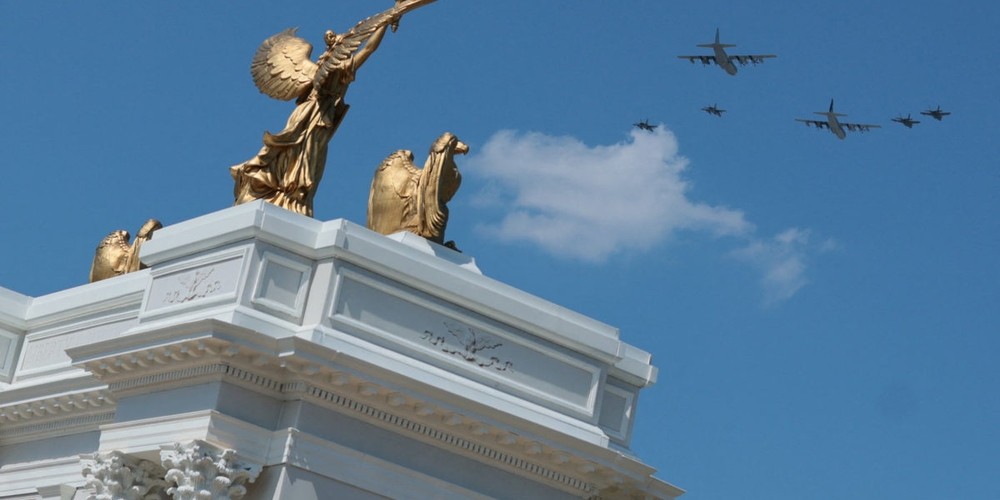
The story, as reported by the Associated Press, is both specific and symbolic. President Donald Trump’s administration is pursuing the construction of a massive, 250-foot triumphal arch on federal land in Washington, D.C., specifically on a traffic circle on the Virginia side of the Memorial Bridge. This structure, intended to feature a public observation deck and three gilded statues, would dramatically alter the capital’s skyline. It would stand more than twice as tall as the Lincoln Memorial and approach half the height of the Washington Monument.
The path to construction runs through two key federal bodies: the U.S. Commission of Fine Arts, which approved the design in May, and the National Capital Planning Commission (NCPC), which oversees construction on federal land in the city. As the NCPC met for further review, its professional staff issued a critical 185-page report. While recommending approval of preliminary site and building plans, the staff explicitly advised that the design be revised to comply with the federal Height of Buildings Act. This century-old law exists to preserve Washington’s iconic horizontal skyline and the carefully choreographed vistas between its monuments.
Applying this law, the report notes, “would require design revisions to redistribute the height between the main structure, habitable roof structure and statuary.” Intriguingly, the report concedes that even with these revisions, the arch could still technically reach the desired 250-foot height. Beyond height, the staff also recommended commissioners seek more information on vehicular traffic, the proposed granite exterior, and other project aspects before the Interior Department returns for final approval.
The Context: Hallowed Ground and a History of Unity
The proposed location is not incidental; it places the arch in proximity to one of America’s most sacred sites: Arlington National Cemetery. This has sparked intense opposition, vividly expressed by approximately 40 citizens who testified at the NCPC meeting. Their core argument, supported by historians and a group of veterans who have filed a federal lawsuit, is that the arch’s scale and placement would irrevocably disrupt the “carefully designed views between the Lincoln Memorial and Arlington National Cemetery.”
This sightline is not merely aesthetic; it is deeply historical and symbolic. It was intentionally crafted to represent the reunification of the North and the South after the Civil War—a physical and visual testament to national healing. The Lincoln Memorial, gazing across the Potomac toward the rows of uniform headstones where thousands who served the Union and later the reunited nation rest, creates a powerful narrative of sacrifice, memory, and hard-won unity. Inserting a towering, personally-branded arch into this corridor is seen by opponents as a violation of this sacred dialogue between monuments.
Further complicating the process is the composition of the commissions themselves. The AP report states that “the opposition has done little to influence the members of either commission, both of which include some of Trump’s closest allies.” It specifically notes that Trump appointed Will Scharf, a top White House aide, to lead the planning commission. This raises immediate questions about the independence of these regulatory bodies and whether the process is being steered to a predetermined outcome.
Financing remains opaque. While Trump previously suggested private funds raised for a separate White House ballroom project could pay for the arch, the article reveals that some public money will be used for both projects, and no cost estimate for the arch has been released by the White House.
Opinion: This Is Not About an Arch; It’s About the Soul of Stewardship
The factual outline of this proposal reveals a crisis that transcends architecture. This is a case study in the corrosion of institutional guardianship, the weaponization of national symbolism, and a fundamental disregard for the rule of law and historical memory.
First, the very need for the NCPC staff to recommend compliance with the Height of Buildings Act is a glaring red flag. It suggests the initial design deliberately flouted established law meant to protect a public good—the capital’s architectural integrity. The fact that the design could be “tweaked” to technically meet the law while still achieving its overwhelming scale reveals a desire to circumvent the spirit of the regulation. This is not good-faith engagement with governance; it is a search for a legal loophole to enable a fait accompli. When leaders view laws as obstacles to be maneuvered rather than covenants to be upheld, it erodes the foundational principle that no one is above the law.
Second, the placement near Arlington National Cemetery is not just insensitivity; it is a profound act of historical disrespect. Arlington is not a backdrop. It is hallowed ground, the final resting place for heroes from every conflict since the Civil War. The sightline to the Lincoln Memorial is a silent, stone-and-landscape sermon on the cost of preserving the Union and the ongoing project of America. To impose a personal monument—a triumphal arch—into this solemn space transforms a narrative of collective sacrifice and national unity into one of individual aggrandizement. It shouts where the existing landscape whispers reverence. The lawsuit filed by veterans is a powerful testament to how deeply this proposal wounds those who understand the meaning of that ground.
Third, the composition of the approving commissions undermines democratic accountability. Regulatory bodies like the NCPC exist to apply expert, non-partisan judgment in the interest of long-term public welfare. Packing them with political allies turns them into rubber stamps, gutting their legitimacy. When Will Scharf, a Trump aide, leads the planning commission reviewing his boss’s pet project, the appearance—and likely the reality—of a conflict of interest is overwhelming. It represents the subordination of independent institutions to personal power, a tactic that weakens every check and balance designed to prevent the abuse of authority.
Finally, the opacity of the financing—the shift from promised private funds to the use of public money without a disclosed cost—is a classic affront to transparency. The public treasury is not a personal slush fund. Using it for a monument of dubious public value and clear personal association, without clear accounting, violates the sacred trust between citizens and their government.
Conclusion: Defending the Landscape of Democracy
This arch is a metaphor. It is a proposal to cast a long, personal shadow over a skyline and a sightline that belong to the American people and their history. The fight against it is not about partisan politics; it is about conservation versus corruption, memory versus vanity, and institutional integrity versus personal power.
The staff of the National Capital Planning Commission has done its duty by pointing to the law. Citizens and veterans are doing their duty by raising their voices and filing suits. Now, it falls to the commissioners themselves, and ultimately to the courts, to choose. Will they uphold their sworn duty to protect the federal domain and the laws governing it? Or will they bend to pressure and allow a permanent alteration of our national landscape for a transient political legacy?
Washington’s monuments were built to honor ideals—freedom, unity, sacrifice, and the republic itself. They were not built to honor the individuals holding temporary office. To preserve the skyline is to preserve the idea that our nation’s story is bigger than any one person. We must fiercely defend that idea, for once these vistas are broken and these laws are ignored, a piece of our collective heritage is lost forever. The view from Lincoln’s chair must remain clear, looking out over the resting places of patriots, unobstructed by the monuments of kings.