
A Republic, If We Can Keep It: The Supreme Court's Defense of Birthright Citizenship
Published
- 3 min read
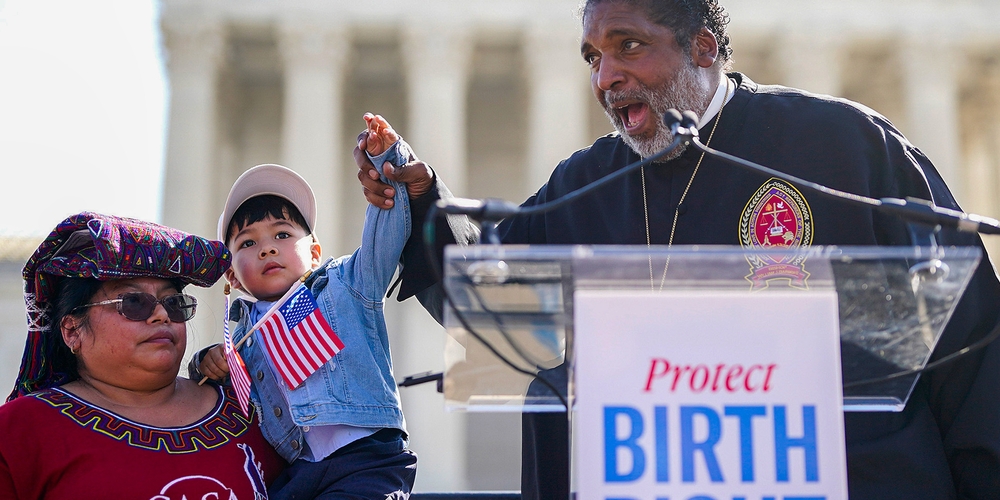
The Facts of the Ruling
On a pivotal Tuesday, the United States Supreme Court delivered a resounding 6-3 verdict that struck down a presidential executive order seeking to unilaterally end birthright citizenship in the United States. The order, issued at the start of a hypothetical second term, declared that a person born on U.S. soil would not be a citizen if their parents were not citizens or lawful permanent residents at the time of birth. This directive represented a direct assault on the long-standing interpretation of the first sentence of the Fourteenth Amendment, which states, “All persons born or naturalized in the United States, and subject to the jurisdiction thereof, are citizens of the United States and of the State wherein they reside.”
More than a dozen states, led by California, immediately challenged the order in court, arguing it was a clear constitutional violation. The case swiftly moved to the highest court in the land, setting the stage for a defining battle over the very soul of American citizenship.
The Historical and Legal Context
The Fourteenth Amendment was ratified in 1868, a direct and solemn response to the horrors of the Civil War and the institution of slavery. Its Citizenship Clause was designed to forever settle the question of who belongs in the American political community, explicitly overturning the infamous Dred Scott decision and guaranteeing citizenship to formerly enslaved people and their descendants. It was a cornerstone of Reconstruction, a promise of inclusion and equal protection under the law.
The legal principle of jus soli (right of the soil) has been the bedrock of American nationality for over a century, affirmed repeatedly by the courts. It is a principle that says your birthplace, not your bloodline, defines your fundamental belonging. The executive order in question sought to shatter this bedrock, replacing a constitutional guarantee with a discretionary power rooted in a narrow and exclusionary vision of Americanness.
The Court’s Reasoning and the Immediate Reaction
Chief Justice John Roberts, writing for the majority, penned an opinion steeped in historical gravitas. He invoked the memory of Civil War battlefields—Antietam, Gettysburg, Chancellorsville—as the bloody price paid for the nation’s “vision of ‘our common humanity.’” His core holding was succinct and powerful: “Citizenship, then and now, was the right to have rights — to freely participate in our political community. The Framers of the Fourteenth Amendment extended that promise to ‘every free-born person in this land.’ … We keep that promise today.”
California Attorney General Rob Bonta, who led the legal challenge, hailed the decision, stating unequivocally, “the Constitution, not any president, governs this country.” He emphasized the human element, noting the ruling was about children “entitled to the same dignity, the same protections and the same opportunities as every other American child.”
Defiant in defeat, the subject of the order urged Congress to pass legislation to achieve what his executive action could not, promising his “complete and total support” for such a bill. This immediate pivot underscores that the ideological campaign against birthright citizenship is far from over; it merely seeks a different avenue.
A Broader Assault on Legal Immigration Channels
This ruling cannot be viewed in isolation. As the article notes, the Supreme Court recently handed down other decisions that empowered the federal government to strip temporary protected status from Haitian and Syrian nationals and to turn away asylum seekers at the border. These three cases, taken together, reveal a coherent and relentless strategy: to constrict every possible legal pathway to safety, residency, and membership in the American polity. Attorney General Bonta’s warning is chillingly prescient: “Will he try to de-naturalize citizens? Yes, I don’t think he’ll stop… That’s what he’s threatened to do.” The goal appears not to be reform, but the systemic deconstruction of the legal immigration and citizenship framework that has defined modern America.
Opinion: The Emotional and Principled Triumph of the Rule of Law
This Supreme Court decision is an emotional watershed moment for anyone who cherishes the rule of law and the constitutional order. The relief felt by immigrant families in California and across the nation is palpable and justified, but our celebration must be tempered by sober reflection. We have just witnessed a near-miss of historic proportions. A single presidential pen came perilously close to rewriting a fundamental clause of our Constitution, a clause that exists precisely to prevent governments from creating hereditary classes of the excluded.
The majority opinion rightly connected the dots from the Civil War to the present day. Birthright citizenship is not a loophole or an accident; it is the deliberate, hard-won answer to America’s original sin. It is the ultimate repudiation of a philosophy that would define citizenship by ancestry, religion, or ethnicity. To attack it is to attack the very idea of a civic nation, bound not by blood but by shared commitment to democratic ideals.
The 6-3 split is itself deeply concerning. That three justices would entertain such a radical revision of constitutional text and history reveals a disturbing readiness within the judiciary to acquiesce to authoritarian-adjacent executive overreach. The dissent, though not detailed in the article, presumably rested on a willful misreading of “subject to the jurisdiction thereof,” a phrase long understood to exempt children of foreign diplomats and invading armies, not the children of immigrants living under U.S. law.
Chief Justice Roberts’ statement that “We keep that promise today” is both a victory cry and a stern rebuke. It is a reminder that our institutions, when they function correctly, serve as bulwarks against the transient passions and prejudices of the moment. The Constitution is not a document to be manipulated for political projects; it is the foundation upon which all politics must respectfully operate.
However, the fight is not won. The clarion call for congressional action signals the next battlefield. We must now be vigilant defenders of the legislative process, ensuring that no bill that seeks to undermine the Fourteenth Amendment’s plain meaning gains traction. The argument will be framed in terms of “policy” and “border security,” but we must recognize it for what it is: a fundamental redefinition of American identity away from the inclusive, aspirational promise of “all persons” and toward a nativist, exclusionary model.
Furthermore, the concurrent rulings on asylum and temporary protected status reveal a troubling pattern where the Court selectively applies deference to the executive branch. It creates a cruel dichotomy: the Court stands as a staunch defender of citizenship for those born here (a glorious thing) while simultaneously green-lighting the removal of protections for vulnerable, legally-present migrants elsewhere. This inconsistency weakens the moral authority of the bench and suggests a jurisprudence that can be swayed by political context.
Conclusion: An Enduring Promise, A Constant Vigilance
The Supreme Court’s defense of birthright citizenship is a monumental victory for constitutional democracy. It reaffirms that in America, you are a citizen because you are here, because you are born on this soil under its laws. It is the most democratic possible conception of nationality. We should feel a profound sense of pride and relief that the system worked, that checks and balances held, and that the ghosts of Antietam were honored.
But let this moment also ignite a fiercer commitment to vigilance. The individuals and movements that launched this attack have not disappeared. They have been rebuked, not converted. They have been told “no” by the Court, but they have not abandoned their goal. The defense of liberty is a perpetual duty. We must champion the Constitution with the same passion as those who ratified the Fourteenth Amendment, understanding that its promises are not self-executing. They require a citizenry educated in their history, courageous in their advocacy, and unwavering in their demand that the right to have rights remains the birthright of every child born on American soil. The Republic was kept today, but the work of keeping it continues with every sunrise.