
A Senator's Farewell and the Unending Test of American Democracy
Published
- 3 min read
The Solemn Facts of the Day
On a Tuesday in Washington, D.C., the political world gathered to pay its respects to Senator Lindsey Graham of South Carolina, who passed away earlier this month at the age of 71. The memorial service, held at the Washington National Cathedral, was attended by hundreds, including foreign dignitaries such as Ukrainian President Volodymyr Zelenskyy and Israeli Prime Minister Benjamin Netanyahu. The service featured eulogies from former President Donald Trump and Fox News host Sean Hannity, who spoke to Graham’s life and legacy.
Earlier that same day, Senator Graham was honored in a ceremony within the hallowed space of the United States Capitol Rotunda. There, tributes were delivered by Representative Sheri Biggs of South Carolina, Senate Majority Leader John Thune of South Dakota, and Vice President JD Vance. These ceremonies, steeped in tradition, marked the formal, institutional farewell to a man who served in the Senate for decades.
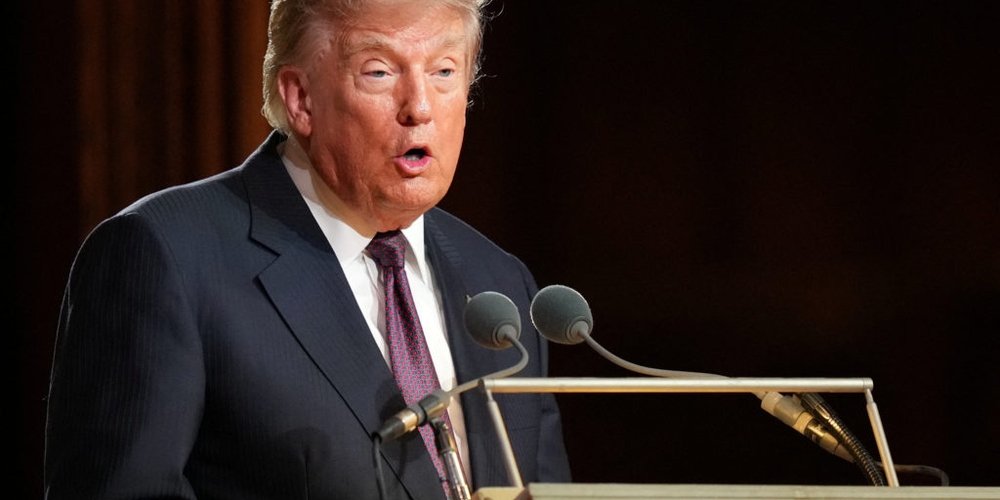
In his remarks at the cathedral, former President Trump framed Graham’s influence in unequivocal terms. “For more than 30 years, nothing of consequence happened in this capital without Lindsey Graham knowing about it,” Trump stated. He continued, “Nothing of significance happened anywhere in the world without Lindsey Graham having a view on it. And no bill became law in the most exceptional republic in human history without Lindsey Graham having a say in it.” Trump concluded by characterizing Graham as “a man who gave America the full measure of his good and mighty heart until that heart itself just gave out.”
The Context of Centralized Influence
The narrative presented in these events and eulogies is one of immense, concentrated influence. The picture painted is of a Washington where the gears of power turned with the knowledge, view, and say of a select few individuals, with Senator Graham portrayed as a paramount example. This is not an unfamiliar story in American politics; we often mythologize the “deal-makers” and the “institutionalists” who operate in the corridors of power. Their passing is framed as the end of an era, a loss of essential wisdom and connective tissue within the government.
This context is crucial for understanding the symbolic weight of the day. The attendance of leaders like Zelenskyy and Netanyahu was a stark, visual testament to the global reach of American legislative power. It highlighted that the “views” and “say” attributed to a senior U.S. senator had tangible consequences far beyond American shores, affecting war, peace, and international alliances. The ceremony in the Rotunda, the nation’s most symbolically charged civic space, further cemented this narrative of a central, statesmanlike figure in the American project.
Opinion: A Democracy’s Health Is Not Measured by Its Kings
While respect for the deceased is a fundamental human decency, and while public service at any level demands a degree of acknowledgment, the glorification of concentrated, personal power should set off alarm bells for any student of democracy and liberty. The principles upon which this nation was founded were explicitly designed to dismantle systems of personalized rule and aristocratic influence. We fought a revolution to reject the idea that history required the knowledge, view, and say of a king or a narrow elite.
Therefore, to hear a senator’s career summarized as the indispensable center of all consequential action is not a compliment to democracy; it is an indictment of it. A healthy republic should be resilient, dynamic, and broadly participatory. Its laws should emerge from robust, transparent debate among representatives of a diverse people, not from the indispensable “say” of a few key figures. When a system becomes so dependent on individual actors that their passing is described as the loss of its operational knowledge, that system has already strayed dangerously far from its foundational ideals of distributed power and civic virtue.
This is not a critique of Senator Graham’s personal character or his specific political choices, which were often controversial and consequential. This is a critique of the cultural and political framework that elevates individuals to such a status. The Founders feared the “cult of personality” and factional intrigue. They constructed a government of laws, with checks and balances, precisely to ensure that no single person could claim that “nothing of consequence” happened without them. To celebrate such a description is to celebrate the erosion of those very checks.
The True Tribute: Reinforcing Institutions Over Individuals
The emotional and sensational reality here is not the loss of a powerful man, but the ongoing vulnerability of our system to the seduction of powerful men and women. The true tribute to the American experiment would be a collective recommitment to strengthening the institutions that are meant to outlast any individual. It means advocating for rules that diminish the power of backroom deal-making, that increase transparency, and that empower a wider array of voices in the legislative process. It means building a Congress where talent and ideas are dispersed, not concentrated.
The presence of media figures and political allies delivering eulogies also blurs necessary lines. In a democracy, a free press must maintain a critical distance from the powerful it is meant to hold accountable. The fusion of media and political eulogy, while perhaps personally meaningful, risks normalizing a symbiosis that can corrupt independent scrutiny. Similarly, the transformation of a state funeral into a platform for a former president’s particular political narrative is a reminder of how all public moments can be absorbed into our raging partisan conflicts, potentially diminishing their unifying, civic purpose.
Conclusion: A Moment for Reflection, Not Just Mourning
The memorial for Senator Lindsey Graham was, by all accounts, a dignified and somber affair fitting for a long-serving public official. However, for those of us deeply committed to the perpetuation of a free republic, it must also serve as a catalyst for clear-eyed reflection. We should mourn the person, but we must critically examine the power structure his career exemplifies.
Democracy is not sustained by charismatic central figures. It is sustained by an engaged citizenry, a relentless press, an independent judiciary, and a legislative process that is bigger than any of its members. As we note the passing of a senator described as an irreplaceable cog, our emotional and patriotic response should be a renewed determination to build a machine that does not rely on any one cog. We must strive for a Washington where consequential things happen through the open, contentious, and beautiful chaos of a representative democracy, not through the exclusive knowledge and say of a few. That is the only legacy that truly honors the revolutionary, anti-monarchical spirit that gave birth to this exceptional republic. The work of liberty is never finished, and its greatest enemy is often the comfortable concentration of power, even when that power is wielded by those we are taught to revere. Let us use this moment not to crown past kings, but to re-crown the sovereign people and the enduring rule of law they established.