
A Summit of Contradictions: Trump's NATO Performance and the Erosion of Steady Statecraft
Published
- 3 min read
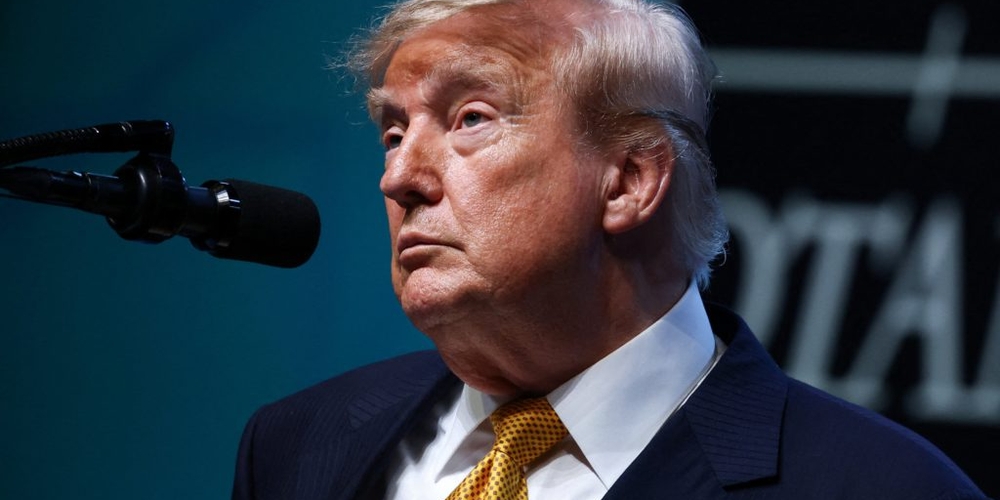
The Facts: A Disjointed Narrative from Turkey
The recent NATO summit in Turkey served as a stark stage for President Donald Trump’s unique brand of diplomacy, characterized by a series of jarringly contradictory statements that blurred the lines between alliance solidarity, personal grievance, and global conflict. According to reports, President Trump opened with effusive praise for the gathering, describing a room filled with “tremendous love” and “tremendous unity,” and characterizing allied leaders as “very smart people” with “good in their heart.” This marked a notable, if fleeting, departure from his long-standing criticisms of European allies’ defense spending. However, this conciliatory tone quickly fragmented into a stream of unrelated and concerning declarations.
During a subsequent news conference, the President pivoted to domestic U.S. politics, insulting progressive Democratic primary candidates by implying they were unattractive, stating, “I don’t see any looker… I guess you need something. They don’t have it.” He further labeled them as “communists that are running and they don’t want God.” Separately, he made a demonstrably false claim about his social media influence, asserting he was “No. 1 on TikTok,” despite having only 16.7 million followers compared to the platform’s top influencer, Khabane Lame, who has over 162 million.
The core of his remarks, however, centered on the ongoing tension with Iran. Trump offered a confusing and volatile assessment, claiming all of Iran’s anti-aircraft weapons were “gone” while immediately contradicting himself by suggesting Tehran could still down aircraft. He alluded to being their “No. 1 target” and threatened rapid military escalation, stating, “We can play games, but I’m not sure I want to make a deal… Just finish the job.” He dismissed concerns about oil price spikes due to the conflict by claiming a global “oil glut,” even as prices surged. In a bizarre personal aside, Trump offered a confusing explanation for switching off his new Air Force One plane for the return trip, vaguely linking it to Iranian threats rather than providing a clear logistical or security rationale.
The Context: A Pattern of Destabilizing Discourse
To understand the full weight of these statements, one must view them not as isolated gaffes but as part of a sustained pattern. This summit performance occurred against a backdrop where the President has repeatedly questioned the value of the NATO alliance itself, demanded the purchase of Greenland, and framed international relations through a lens of personal loyalty and transaction. The sudden pivot from alliance unity to petty insults against domestic opponents is not incidental; it reflects a worldview where all political spaces—whether a multilateral security conference or a campaign rally—are stages for the same combative, personality-driven narrative.
The comments on Iran continue a cycle of maximalist rhetoric and unpredictable policy shifts. From withdrawing from the JCPOA to ordering the strike that killed Qasem Soleimani, to now threatening to “finish the job,” the approach has been one of deliberate pressure and ambiguity. This creates profound uncertainty for allies attempting to craft coherent foreign policies and for adversaries calculating risks. Similarly, the casual dismissal of intelligence about Iranian threats against his own person, while using it to explain a plane switch, trivializes serious national security matters.
Opinion: The High Cost of Erratic Leadership
This spectacle in Turkey represents more than just another chaotic news cycle; it is a symptomatic erosion of the foundational principles of democratic statecraft. The office of the President of the United States carries an immense burden—to be the steady hand at the helm of the free world, a guardian of institutions, and a champion of reasoned dialogue over impulsive outbursts. What we witnessed was the antithesis of that duty.
First, the juxtaposition of “love” in the NATO room with vitriolic, ad-hominem attacks on political opponents mere moments later is deeply corrosive. It reduces the solemn undertaking of collective defense—an alliance that has preserved peace for decades—to the emotional vagaries of one man’s mood. This damages credibility. When allies cannot predict whether they will be praised or pilloried from one statement to the next, the trust essential for military and intelligence cooperation begins to fracture. Alliance management is not about harvesting compliments; it is about the meticulous, unglamorous work of building consensus and demonstrating unwavering commitment to Article 5. Turning this process into a reality TV narrative of who “loves” the protagonist undermines its very substance.
Second, the descent into commenting on the physical appearance of political candidates is not merely undignified; it is an affront to the democratic process. Democracy is a contest of ideas, policies, and visions for the future. By injecting shallow, sexist, and irrelevant critiques about “looks,” the President debases the public square and sets a toxic example. It is a tactic of distraction and degradation, designed to avoid substantive debate on the critical issues facing the nation, from healthcare and climate to the very nature of American democracy that these “communist” candidates are debating. A leader committed to liberty should engage fiercely on ideas, not engage in schoolyard taunts about appearance.
Third, the reckless and fact-free discourse on matters of war and peace is arguably the most dangerous element. To speak of “finishing the job” with Iran in such a cavalier manner, while offering contradictory assessments of enemy capabilities and displaying a jarring personalization of the conflict (“I may be gone too”), is the height of irresponsibility. Military force is not a toy to be discussed with the flippancy of a TikTok ranking. Each word from the Commander-in-Chief is analyzed in foreign capitals, influences global markets, and shapes the strategic calculations of adversaries. Bluster about quick victories and “oil gluts” in the face of complex geopolitical realities betrays a fundamental misunderstanding of the gravity of the situation. The men and women who would carry out these orders deserve a leader who speaks with precision, clarity, and respect for the profound consequences of conflict.
Finally, the constant erosion of truth—from TikTok follower counts to the reasons for changing aircraft—creates a fog of misinformation that cripples effective governance. When a President routinely makes verifiably false statements, it becomes impossible for citizens, allies, and institutions to discern reality. This fog is not a bug in this system of communication; it is a feature. It allows for the constant shifting of narratives, the avoidance of accountability, and the replacement of objective fact with subjective feeling. A republic cannot function under such conditions. The rule of law, informed consent of the governed, and reasoned public debate all wither when the highest office in the land treats truth as disposable.
Conclusion: A Call for Reaffirmation of Principles
The NATO summit should have been a moment to reaffirm the enduring strength of the transatlantic bond in the face of new challenges. Instead, it became a case study in destabilizing leadership. The principles at stake—the sanctity of alliances, the dignity of the democratic process, the sober application of military power, and an unwavering commitment to truth—are not partisan. They are the bedrock of American security and global stability.
As supporters of democracy, the Constitution, and the rule of law, we must recognize this pattern for what it is: a sustained assault on the institutions and norms that temper power and guide the ship of state through turbulent waters. The emotional and sensational nature of these performances is designed to captivate and confuse. Our duty is to remain steadfast, to demand better, and to insist that the office of the Presidency be occupied by someone who understands that its power is derived from the people and must be exercised with a profound sense of duty, restraint, and respect for the truth. The freedom and liberty we cherish depend on nothing less.