
A Test of Resolve: The Trump-Zelenskyy Meeting Amidst a Shifting Political Landscape
Published
- 3 min read
The Facts of the Moment
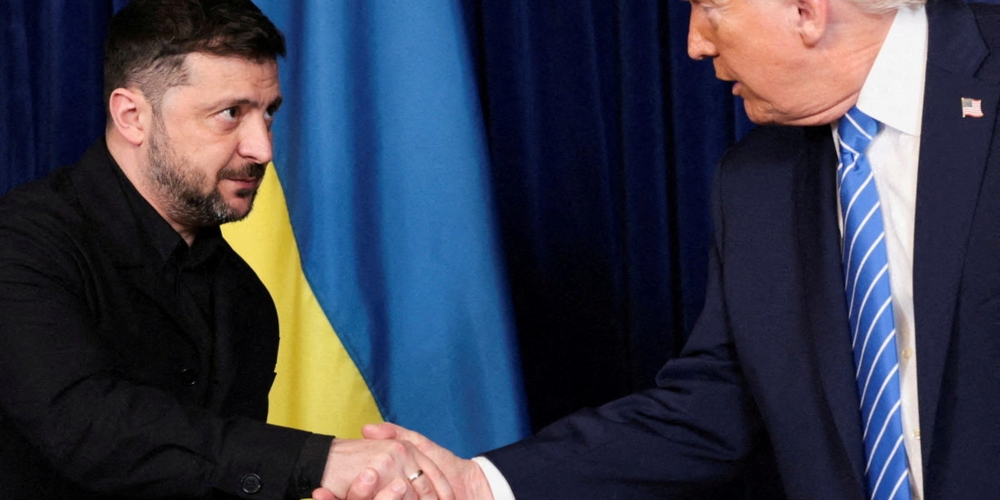
This week, Washington, D.C., is the stage for a confluence of events that together frame a critical juncture in U.S. foreign policy and the ongoing war in Ukraine. President Donald Trump is scheduled to host Ukrainian President Volodymyr Zelenskyy at the White House. This marks their second meeting this month, following discussions on the sidelines of the NATO summit in Ankara. The context for this sit-down is uniquely charged, occurring against the backdrop of Senator Lindsey Graham’s funeral. The late senator from South Carolina, a hawkish and unwavering supporter of Ukraine, made a final diplomatic trip to Kyiv to secure an agreement on a significant sanctions package targeting nations that purchase Russian energy exports—a piece of legislation now being advanced as a tribute to his service.
President Zelenskyy’s visit has a clear and urgent agenda. Upon arriving in the U.S., he stated his goals: meetings with President Trump, his team, and other potential supporters. His stated priority is “anti-ballistic defense and strategic cooperation with America,” emphasizing that “Peace needs to be brought closer.” This follows a previous announcement from President Trump that the U.S. would grant Ukraine a license to domestically produce Patriot air defense systems, a costly but vital tool against relentless Russian missile barrages.
The Unusual Shift and Enduring Threats
Adding a layer of political intrigue to this diplomatic engagement is the reported conversion of Laura Loomer, a far-right activist with noted influence in President Trump’s orbit. Known for incendiary rhetoric, Loomer recently traveled through Ukraine, witnessed Moscow’s attacks firsthand, interviewed President Zelenskyy, and publicly admitted to having been “bamboozled by Russian propaganda.” She has communicated with President Trump about her experiences and expressed optimism about the upcoming Oval Office meeting for Ukraine’s cause.
Simultaneously, Zelenskyy has raised alarming intelligence, warning that Russia has been aiding Iran by providing satellite imagery of U.S. bases in the Gulf region, imagery that subsequently appears in Iranian hands. He asserts a “clear correlation” between these Russian-provided images and subsequent Iranian strikes, framing it as evidence that “Evil always seeks ways to make things worse and spread further.” President Trump, while traveling on Air Force One, downplayed the significance of any such Russian assistance, stating, “I don’t think they’ve been doing it, certainly not at a high level,” but noted he would raise the issue with Russian President Vladimir Putin.
The Legislative Legacy of Lindsey Graham
The human and political element shadowing this week is the sudden death of Senator Lindsey Graham. His final act was a characteristically defiant move: traveling to a war zone to broker a deal on sanctions. The legislation bearing his imprint, which has bipartisan support, seeks to impose tariffs on goods from the world’s top purchasers of Russian oil and gas, including China and India. It also includes sanctions targeting Putin, senior Russian leaders, and financial institutions. Republican leadership hopes to advance this bill as a final tribute before the August recess, making Zelenskyy’s concurrent meetings on Capitol Hill particularly timely.
Opinion: Principle Must Transcend Personality and Politics
The facts presented create a tableau that is both hopeful and perilously fragile. At its core, this moment is a profound test of whether American support for a besieged democracy is a matter of enduring principle or transient political convenience.
First, the conversion of a figure like Laura Loomer is a powerful, albeit anecdotal, testament to the moral clarity of Ukraine’s fight. When individuals who were previously susceptible to corrosive authoritarian narratives witness the reality of war—the targeted destruction of cities, the bravery of a people defending their homeland—the scales fall from their eyes. This should serve as a lesson to all Americans: the propaganda emanating from Moscow and its apologists is a deliberate poison designed to undermine our resolve and obscure the fundamental truth of this conflict. It is a war of conquest waged by a dictator against a free people. Any shift towards recognizing this reality, from any quarter of the political spectrum, is a victory for truth and should be welcomed. However, we must be clear-eyed. The foundation of our foreign policy cannot be the fluctuating opinions of influencers, no matter how connected. It must be rooted in the unwavering defense of democratic sovereignty and the rules-based international order.
Second, the legacy of Senator Lindsey Graham throws into sharp relief what is at stake. Here was a man with whom one could disagree vehemently on a host of domestic issues, but who understood, on a visceral level, the global stakes of authoritarian aggression. His final mission was to craft tools to economically isolate Putin’s war machine. This is the kind of steadfast, strategic bipartisanship that American leadership requires. The solemn duty now falls upon his colleagues, and upon the President, to see this work through—not as a mere symbolic gesture, but as a serious, enforceable policy that imposes real costs on Russia and its enablers. To do otherwise would be to dishonor his service and betray the cause he championed.
Third, President Zelenskyy’s warnings about Russian-Iranian collaboration cannot be brushed aside with casual dismissals. The assertion that this cooperation has been “very un-impactful” is dangerously complacent. The alliance of authoritarian regimes—Russia, Iran, North Korea, China—is not a theoretical concern; it is an active, coordinated front against the free world. Sharing intelligence to target U.S. assets is an act of aggression that demands a serious, coordinated response, not rhetorical minimization. The President’s stated intent to raise the issue with Vladimir Putin is insufficient. American policy must be proactive, not reactive, in confronting and disrupting these deadly partnerships. Our security and that of our allies depends on it.
Finally, the central deliverable of this meeting—support for Ukraine’s air defense—is literally a matter of life and death for Ukrainian civilians. The license to produce Patriot systems is a positive step, but it must be executed with urgency and backed by the necessary resources. President Zelenskyy did not come to Washington to deepen a personal relationship; he came as the leader of a nation bleeding and burning, seeking the weapons to save his people. Our response must be measured not in cordial headlines but in the cessation of Russian missiles striking apartment blocks, schools, and hospitals.
Conclusion: The Unwavering American Duty
This week in Washington is more than a series of meetings and a state funeral. It is a litmus test for the American soul. Will we allow the tragic loss of a champion like Graham to create a vacuum of leadership? Will we let the necessary work of sanctioning Russia fall victim to congressional recess and competing priorities? Will we base our support for a democratic ally on the shifting sentiments of political figures or on the bedrock of our own constitutional values?
The principles of democracy, freedom, and liberty are not conditional. They do not expire with the passing of a senator or fluctuate with the political winds. They demand that we stand with those who fight for them. The United States must approach this meeting with President Zelenskyy not as a negotiation, but as a reaffirmation of an unshakeable commitment. We must advance Senator Graham’s sanctions with vigor, heed President Zelenskyy’s warnings with gravity, and deliver the defensive capabilities Ukraine needs with speed. The world’s authoritarian forces are watching, hoping for American hesitation and division. We must show them instead a nation united, not by party, but by the fundamental belief that freedom must always prevail over tyranny. The cost of failure is not merely a geopolitical setback; it is the abandonment of our own professed ideals and an invitation to a darker, more violent world order.