
A Victory for the Mind: The 11th Circuit's Defense of Academic Freedom Against Florida's 'Stop WOKE Act'
Published
- 3 min read
The Facts of the Ruling
On Tuesday, July 16, 2024, a divided panel of the U.S. Court of Appeals for the 11th Circuit delivered a significant judicial blow to one of Governor Ron DeSantis’s signature legislative initiatives. The court ruled, in a 2-1 decision, that the higher-education provisions of Florida’s 2022 “Stop WOKE Act”—formally titled the Individual Freedom Act—violate the First Amendment. This ruling affirms a preliminary injunction, meaning the law remains unenforceable as the legal challenge continues. The case now presents Florida with the options of seeking a rehearing before the full 11th Circuit or petitioning the U.S. Supreme Court for review.
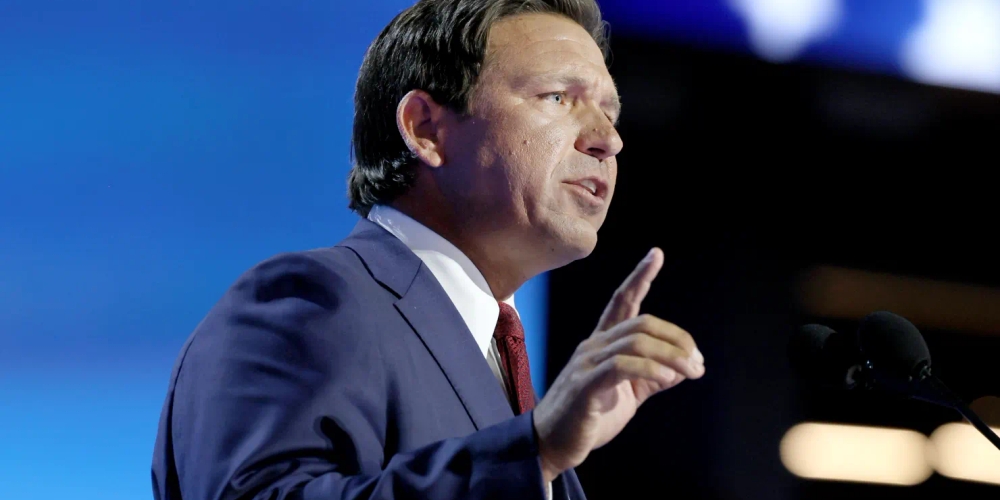
The law in question sought to severely restrict how professors at public colleges and universities could teach about race, gender, and national origin. It explicitly barred instruction that “espouses, promotes, advances, inculcates, or compels” belief in certain concepts related to systemic privilege, inherent racism or sexism, and feelings of guilt based on historical actions of one’s race or sex. Governor DeSantis championed this legislation as a central pillar of his broader campaign against what he labels “woke ideology” in educational and professional settings.
The Legal and Philosophical Conflict
The core legal conflict, as framed by the court, was a fundamental question about the bounds of free speech in state-sponsored classrooms. Florida’s defense rested on the assertion that because professors are government employees, their instructional speech is essentially government speech, allowing the state to control its content. The majority opinion, authored by Judge Britt Grant—an appointee of President Donald Trump—categorically rejected this argument. Judge Grant was joined by Judge Charles Wilson, an appointee of President Bill Clinton.
Judge Grant’s opinion is a robust defense of academic freedom. She wrote, “If the First Amendment offers any boundary of protection at all for public university classrooms, this statute crosses it.” She characterized Florida’s position as a “breathtaking assertion of power to ban unpopular ideas from public discourse” within the university setting. Crucially, the majority stated that the case forced them to address a question the Supreme Court has left open: the precise degree of First Amendment protection afforded to public university professors in their teaching.
The dissenting opinion came from Judge Barbara Lagoa, another Trump appointee and a former Florida Supreme Court justice selected by Governor DeSantis. Judge Lagoa argued that the state retains the authority to control what viewpoints receive “state-sponsored endorsement” in its classrooms. She contended that while the First Amendment protects all viewpoints in the public square, it “does not compel all viewpoints to be worthy of state-sponsored endorsement,” and accused the majority of improperly limiting state authority over public instruction.
The ruling was the result of lawsuits brought by professors, students, and advocacy groups including the Foundation for Individual Rights and Expression (FIRE) and a coalition led by the American Civil Liberties Union (ACLU). Leah Watson, a senior staff attorney with the ACLU’s Racial Justice Program, hailed the decision, stating it “sets a strong precedent that higher education cannot be limited to the whims of politicians.”
Context and Precedent: A Pattern of Judicial Pushback
This decision is not an isolated event but the latest in a series of judicial setbacks for Governor DeSantis’s educational agenda. The same 11th Circuit had previously blocked another section of the “Stop WOKE Act” that applied similar restrictions to workplace diversity training. These rulings paint a clear picture of a consistent constitutional line being drawn by the federal judiciary against legislative efforts to police specific ideologies in educational and professional discourse. The ongoing legal battle highlights a deepening national conflict over who controls the narrative in America’s classrooms: educators and academic institutions, or political actors.
Opinion: The Assault on the Marketplace of Ideas
The 11th Circuit’s ruling is far more than a legal technicality; it is a necessary and profound defense of the very soul of American higher education and democratic discourse. The so-called “Stop WOKE Act” represents one of the most insidious threats to liberty in recent memory: the use of state power to officially designate certain ideas as forbidden and to punish their conveyance. This is not governance; it is intellectual authoritarianism dressed in legislative language.
Judge Grant’s simple, powerful assertion—“Hearing an idea you disagree with is not discrimination; it is an opportunity to come up with a better idea, or maybe even change your mind”—encapsulates the foundational principle of a free society. The university classroom is meant to be the ultimate marketplace of ideas, a protected space where hypotheses are tested, history is examined with clear eyes, and uncomfortable truths can be confronted. By seeking to legally mandate which conclusions about race, sex, and history are permissible, the Florida law aimed to replace inquiry with indoctrination, substituting state-approved dogma for scholarly debate. It treated students not as future citizens capable of critical thought, but as empty vessels to be filled with a state-mandated worldview.
The dissenting opinion’s logic is dangerously flawed. To claim that a professor exploring systemic racism or gender theory in a sociology class is engaging in “state-sponsored endorsement” of those ideas misunderstands the nature of teaching. A professor’s role is not to endorse a state-approved list of facts but to facilitate exploration, present evidence, and teach methodological rigor. The state’s interest is in funding education, not in scripting its content. To grant the government the power to compile an index of prohibited concepts is to invite the very “viewpoint discrimination” the First Amendment was designed to prevent. This path leads not to intellectual rigor, but to a sterile and politicized academy where fear of legal repercussion chills the speech of educators.
Furthermore, the campaign against “woke ideology” is often a cynical and vague polemic used to attack any serious discussion of America’s complex history with race, gender, and inequality. By labeling nuanced academic frameworks as ideological contamination, proponents of laws like Florida’s seek to shut down conversation rather than win it with better arguments. This is antithetical to the American spirit of open debate and intellectual resilience. A confident nation and a confident state should have no fear of ideas. It should trust its people, and the educators it employs, to grapple with them.
The Broader Threat to Institutional Integrity
The fight over this law is a microcosm of a larger, alarming trend: the politicization of independent institutions. The judiciary’s role as a check on legislative overreach is a cornerstone of our constitutional republic. The fact that a Trump-appointed judge joined with a Clinton-appointed judge to strike down this law is a testament to the enduring power of constitutional principles over partisan allegiance. Yet, the response from Florida officials, such as Attorney General James Uthmeier’s effusive praise for the dissenting judge and suggestion for a Supreme Court appointment, reveals a desire for a judiciary that will ratify political preferences rather than independently apply the law.
The continued pursuit of this legislation, despite repeated judicial warnings, signals a troubling disregard for constitutional boundaries. It represents a governance model where political objectives are pursued relentlessly, even when they collide with fundamental freedoms. This erodes public trust in both educational and legal institutions, framing them as battlegrounds rather than pillars of a free society.
Conclusion: A Stand for Liberty Must Be Eternal
The 11th Circuit’s decision is a victory, but it is a defensive one. It preserves a status of liberty that should never have been under threat. The defense of academic freedom and free speech is a perpetual duty. We must champion the right of educators to teach and of students to learn without the heavy hand of political orthodoxy determining what is thinkable. The principles at stake—free inquiry, open debate, and protection from government-compelled speech—are not liberal or conservative; they are American. They are the bedrock upon which a pluralistic democracy functions.
As this case potentially moves to the Supreme Court, all who value the First Amendment and the integrity of higher education must pay close attention. The outcome will reverberate far beyond Florida’s borders, setting a precedent for whether state legislatures can become the nation’s curriculum writers. We must stand firmly on the side of the Constitution, on the side of the educators like those who bravely brought these suits, and on the side of a future where learning is defined by curiosity, not censorship. The fight to keep the marketplace of ideas open and free from government control is one of the most critical battles for the soul of our democracy.