
A Victory for the Press, A Warning for Democracy: The DOJ's Retreated Subpoenas
Published
- 3 min read
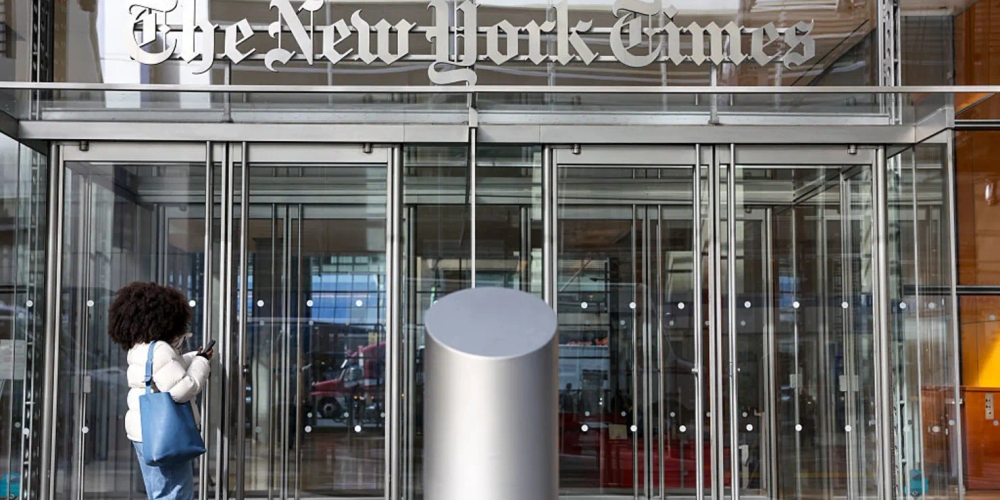
In a week that saw the gears of justice grind against the pillars of a free press, a federal courtroom in Manhattan became the unlikely stage for a crucial defense of American liberty. The Department of Justice, in the face of judicial skepticism, voluntarily withdrew subpoenas it had obtained to compel New York Times reporters to testify before a grand jury and to seize their phone records. This episode, while ending in a tactical retreat for the government, illuminates a profound and systemic threat to the First Amendment and the very foundations of our democratic republic.
The Facts: An Assault on Journalistic Independence
The core facts are stark and disturbing. On July 10, the DOJ issued subpoenas seeking to force Times reporters to testify before a federal grand jury, with federal agents delivering these demands to reporters’ homes. Subsequently, it was revealed that the Department had also issued subpoenas to phone companies, targeting the call and text records of several journalists. Astonishingly, one subpoena even sought the phone records of a reporter’s mother. These actions were authorized by then-Acting Attorney General Todd Blanche and issued by Manhattan U.S. Attorney Jay Clayton, both nominees of former President Donald Trump.
The legal pretext was a national security investigation into the leak of sensitive information related to a New York Times article about security concerns involving the new, Qatari-donated Air Force One jet used by then-President Trump. The article, published on July 8, reported that Trump had flown on the older plane as a security precaution, citing sources who indicated the new aircraft lacked certain security features of its predecessor.
The confrontation reached its climax in the courtroom of U.S. District Judge Arun Subramanian. According to reports, Judge Subramanian warned prosecutor Sean Buckley that he would quash the subpoenas at the Times’ request if the DOJ did not withdraw them. The judge pointedly asked, “Why isn’t that the right outcome?” He later noted in an order that the DOJ’s offer to hold the subpoenas “in abeyance” was an admission that it had not taken reasonable steps to obtain the information from other sources first—a legal requirement under binding precedent before subpoenaing journalists. The DOJ ultimately withdrew the demands.
The Legal and Constitutional Context
This is not a minor procedural skirmish. It is a battle over a fundamental principle. For decades, the Department of Justice has operated under internal guidelines, most notably those stemming from the Supreme Court’s recognition of a qualified reporter’s privilege, that establish a high bar for compelling testimony or records from journalists. The idea is simple yet sacred: to prevent the government from using its immense power to turn the press into an investigative arm of the state, thereby chilling critical reporting and intimidating sources.
The judge’s reasoning cut to the heart of the matter. By failing to exhaust alternative avenues before targeting journalists, the DOJ demonstrated either a reckless disregard for these protections or a deliberate strategy to bypass them. David McCraw, deputy general counsel for The Times, called the subpoenas a violation of the law, stating they “should never have been issued in the first place.” David O’Neill, another lawyer for the paper, argued the DOJ’s conduct was “replete with bad faith.”
The DOJ’s response, via a spokesperson, was defiant and alarming. It accused the judge of blocking “core evidence” and overriding “clear longstanding principles,” vowing to continue the investigation and pursue “justice against those threatening national security by leaking classified information.” This rhetoric frames journalists and their sources not as partners in accountability, but as enemies of the state.
Opinion: A Chilling Signal and a Necessary Reckoning
Let us be unequivocal: what transpired here was an authoritarian probe dressed in legal vestments. The withdrawal of the subpoenas is a relief, but it is a Pyrrhic victory that should terrify every American who values a free society. This incident reveals a disturbing mindset within powerful corridors of the executive branch—a mindset that views an independent press not as a constitutional bulwark, but as an adversary to be managed, surveilled, and silenced.
The targeting of a reporter’s mother’s phone records is not just an aggressive legal tactic; it is a profoundly grotesque and anti-human action. It is the hallmark of a police state, designed to inflict personal fear and familial pressure to achieve political obedience. It sends a message: your work will not only jeopardize you, but it will reach into the private lives of your loved ones. This is intimidation, pure and simple, and it has no place in a nation founded on liberty.
The individuals involved—Jay Clayton and Todd Blanche, both elevated by Donald Trump—were not rogue actors. They were senior officials operating within a structure. Their actions, though rebuffed by a principled judge, represent a calculated test of the boundaries of press freedom. They sought to normalize the use of the grand jury apparatus as a tool for newsgathering and source identification. Had Judge Subramanian been less resolute, a dangerous precedent could have been set, emboldening future administrations to further erode these essential protections.
The national security justification must be scrutinized with extreme skepticism. While protecting classified information is a legitimate state interest, it has historically been used as a blanket excuse to conceal embarrassment, illegality, and incompetence from public view. The article in question reported on potential security vulnerabilities in the President’s aircraft—information of undeniable public interest. A government that seeks to jail the messengers of such information, rather than address the underlying concerns, is a government more committed to its own image than to the safety of its leader or the informed consent of its citizens.
This episode is a chilling reminder that the First Amendment is not self-executing. It is defended by courageous judges, tenacious lawyers, and brave journalists who refuse to be deterred. The New York Times’ statement that it “will continue to report and seek the truth without fear or favor” is the defiant spirit that sustains democracy. However, we cannot rely solely on institutional bravery. This incident demands a societal and political reckoning.
We must loudly and consistently reaffirm that a free press is non-negotiable. We must demand that the Department of Justice’s internal guidelines for contacting reporters be strengthened into law, with explicit and severe consequences for violations. We must support legislative efforts, like a federal shield law, that provide unambiguous statutory protection for journalists and their sources. And we must hold accountable any public official who treats the Fourth Estate as an enemy to be spied upon.
The shadow of this attempted suppression will linger. The DOJ’s promise that the “investigation remains ongoing” is a veiled threat. The fight is not over. The survival of our democratic experiment depends on our collective willingness to stand between the power of the state and the freedom of the press. Today, a judge in Manhattan did his duty. Tomorrow, the duty falls to all of us to ensure such assaults are not merely retreated from, but are made unthinkable in the first place. The price of liberty, as ever, is eternal vigilance.