
A Vote for Dignity: Tillis's Stand Puts Epstein Survivors at the Heart of the Confirmation Process
Published
- 3 min read
The Facts of the Matter
The confirmation process for a United States Attorney General is a solemn constitutional ritual, one that tests not only the nominee’s qualifications but also the Senate’s commitment to justice. This week, that process became a powerful referendum on how our government treats the most vulnerable victims of horrific crimes. During the Senate Judiciary Committee hearings for nominee Todd Blanche, a simple, profound demand emerged: meet with the survivors of convicted sex offender Jeffrey Epstein.
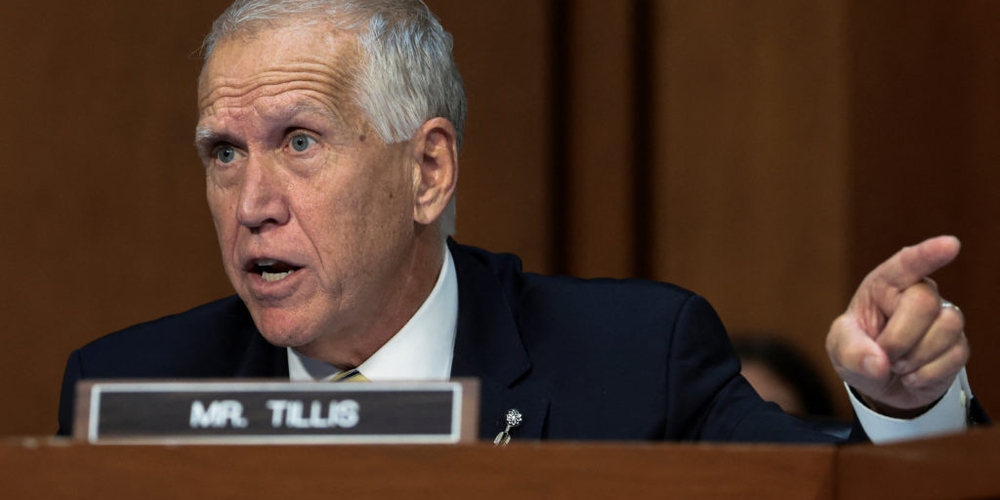
Republican Senator Thom Tillis of North Carolina issued a clear ultimatum on Thursday. His vote to move Mr. Blanche’s nomination out of committee is contingent on the nominee meeting with Epstein survivors within the next two weeks. “I’m trying to get to yes, but this is a very important part of getting to yes,” Senator Tillis stated, revealing he had a “positive predisposition” toward the nominee but had not made a final decision. Given that Mr. Blanche needs the support of all Republicans on the committee to advance, Senator Tillis’s stance is not a symbolic gesture; it is a decisive point of leverage.
This demand did not emerge in a vacuum. During his Wednesday hearing, several senators called on Mr. Blanche to commit to such a meeting. The nominee responded that a member of his office was present and could speak with survivors attending the hearing, but he cited restrictions on meeting with them if their lawyers were not present. The following day, survivor Dani Bensky delivered searing testimony. She stated that the Justice Department had ignored survivors for months and that, despite the previous day’s hearing, “We have not heard from a staffer in the last 24 hours.” Senator Tillis, referencing Mr. Blanche’s Wednesday testimony, said he expects “that meeting to occur before I’m willing to vote out of this committee.”
The Context: A Legacy of Institutional Failure
To understand the gravity of this moment, one must confront the context. The Jeffrey Epstein case represents one of the most grotesque failures of justice in modern American history. A wealthy financier with powerful connections allegedly operated a vast sex-trafficking ring involving minors for years, evading serious consequences until a final, late prosecution. The case laid bare how influence, wealth, and institutional neglect can conspire to silence victims and obstruct justice. The survivors of Epstein’s abuse have fought for years to be heard, often confronting a legal and political system that seems designed to marginalize them.
The Attorney General is the nation’s chief law enforcement officer. This role carries the immense responsibility of ensuring the laws are faithfully executed, without fear or favor. It is the office that ultimately oversees the pursuit of justice for federal crimes. For survivors of a crime that so vividly illustrated the perversion of justice by the powerful, the person nominated to lead that office is not just another bureaucrat. They are the embodiment of whether the system will finally listen or continue to look away. A refusal to meet with them, or a bureaucratic delay in doing so, is not a minor scheduling conflict; it is a profound symbolic and practical failure at the threshold of power.
Senator Tillis’s condition transforms the confirmation from a review of resumes and legal philosophies into a test of basic human engagement. It asks: Does the nominee for the top law enforcement job recognize that his first duty is to the people the law is meant to protect, especially those who have been most brutally failed by it?
Opinion: The Principled Stand for Foundational Justice
Senator Thom Tillis has, perhaps unexpectedly for some, positioned himself on the side of a foundational American principle: that justice must be accessible and responsive to all, particularly the wronged. His stance is not merely political maneuvering; it is an act of political courage that cuts to the core of what the rule of law requires. In a climate where confirmations are often partisan theater, this is a substantive demand for accountability and empathy.
The testimony of Dani Bensky is the emotional and moral core of this issue. Her statement—that the Justice Department has ignored survivors for months—is a damning indictment. It echoes a history of institutions closing ranks, of victims being treated as inconveniences to a process rather than the very purpose of it. When Mr. Blanche offered that a staffer could speak to them, it risked perpetuating this dynamic. Survivors of this magnitude of trauma deserve the attention of the principal, not a subordinate. They deserve to look the prospective Attorney General in the eye and ask their questions directly. Senator Tillis’s demand institutionalizes that dignity.
Some may argue that this condition sets a problematic precedent or injects an emotional element into a professional assessment. This argument misses the point entirely. The law is not a cold, mechanical entity separate from human suffering. It is the framework a society builds to prevent and redress that suffering. An Attorney General who cannot or will not personally confront the human cost of systemic failure is ill-equipped for the job. Empathy is not a weakness in a prosecutor; it is the compass that ensures power is exercised justly. Meeting with survivors is not about political spectacle; it is about bearing witness, a necessary act for anyone who would presume to lead an agency tasked with healing profound wounds.
Furthermore, this is a vital check on executive power. The Senate’s advice and consent role is its most critical constitutional duty regarding the executive branch. By attaching a concrete, human-rights-based condition to his vote, Senator Tillis is exercising that duty in its truest form. He is ensuring the nominee demonstrates a commitment to justice that transcends party loyalty or abstract legal theory. He is reminding the nominee, and the public, that the Department of Justice belongs to the people, including and especially those it has historically failed.
Conclusion: A Threshold for Moral Authority
The confirmation of Todd Blanche hangs in the balance, held on a tether of basic human decency. Senator Tillis has done a great service by forging that tether. He has correctly identified that the moral authority of the Attorney General’s office begins with acknowledging those who have been denied justice. The two-week deadline is not arbitrary; it is a test of priority. Will the nominee make time for the victims, or will they remain on an endless waitlist?
This moment transcends the individuals involved—Thom Tillis, Todd Blanche, Dani Bensky. It is about the soul of American jurisprudence. We are a nation founded on the principle that all are equal under the law. The Epstein case mocked that principle. Confirming an Attorney General without first requiring him to engage directly with the survivors of that mockery would be to compound the original sin. Senator Tillis’s stand is a powerful reaffirmation that the voices of victims matter, that their pain is relevant to governance, and that no one, no matter how powerful their office, is above the duty to listen. The nation should watch closely. Whether this meeting happens, and how it transpires, will tell us more about the future of justice in America than any prepared statement ever could. The vote is not just on a nominee; it is on whether we, as a republic, are finally ready to listen.