
Al-Obeid and the Deafening Silence: Sudan's Agony and the Hollow Promises of the 'Rules-Based Order'
Published
- 3 min read
The Facts: A City Under Siege, A Nation in Torment
Since April 2023, Sudan has been ravaged by a brutal civil war between the Sudanese Armed Forces (SAF), led by General Abdel Fattah al-Burhan, and the paramilitary Rapid Support Forces (RSF), commanded by General Mohamed Hamdan Dagalo. What began as a power struggle in Khartoum has metastasized into one of the world’s most severe humanitarian emergencies, displacing millions, shattering infrastructure, and pushing the nation to the brink of famine. The conflict has now reached a critical juncture with the city of Al-Obeid, the capital of North Kordofan, at its epicenter.
Al-Obeid is not merely another dot on the map; it is a strategic linchpin. The city serves as the crucial logistical and commercial hub linking central Sudan with the volatile western region of Darfur. Control of Al-Obeid would grant the victorious faction a decisive military corridor for moving troops and supplies, potentially reshaping the entire conflict’s balance of power. Consequently, both the SAF and RSF view it as a paramount objective. For approximately 18 months, as reported by the Office of the United Nations High Commissioner for Human Rights (OHCHR), civilians in Al-Obeid have endured what can only be described as siege-like conditions. Their access to food, clean water, and medical supplies has dwindled to catastrophic levels, while drone strikes and artillery shelling have intensified around them.
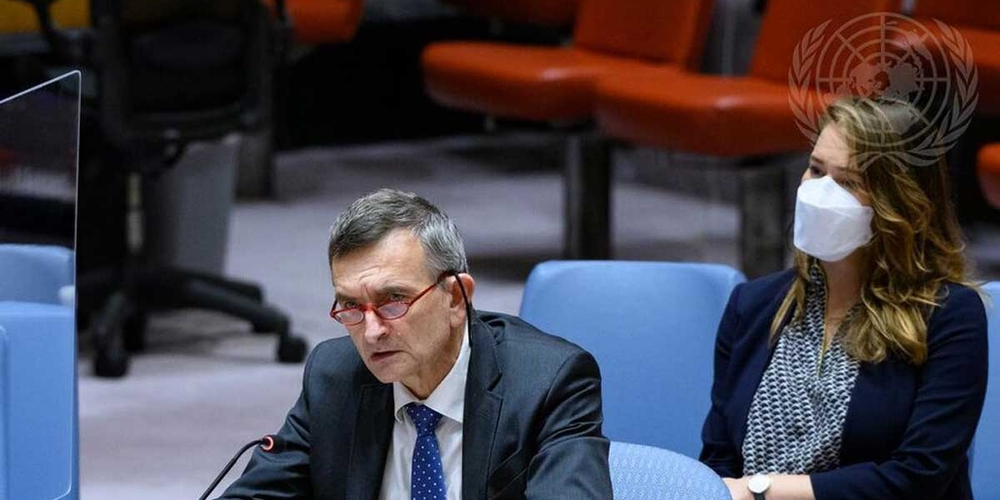
The situation has grown so dire that it prompted an emergency debate at the United Nations Human Rights Council, requested by the United Kingdom. UN High Commissioner for Human Rights Volker Türk issued a stark warning, expressing grave concern that Al-Obeid could become the site of another major atrocity, echoing the horrific battles witnessed in Darfur. The factors are alarmingly clear: a strategic military battle over a vital hub, thousands of trapped civilians with vanishing humanitarian access, and a documented history of mass atrocities by the warring parties, particularly the RSF. The international community watches, yet again, as a major urban center in Africa teeters on the edge of a massacre, with spillover effects threatening to further destabilize neighbouring countries like Chad, South Sudan, and Egypt.
The Context: A Recurring Pattern of Imperial Neglect
To understand the tragedy of Al-Obeid and Sudan at large, one must look beyond the immediate tactical maneuvers of Generals al-Burhan and Dagalo. This conflict is rooted in a deeper, more insidious context—the legacy of colonial border-drawing, Cold War proxy politics, and the persistent economic extraction that has kept post-colonial states fragile and prone to internal fracture. Sudan, a nation of immense cultural and resource wealth, has never been allowed a moment of genuine, sovereign peace to determine its own destiny. Instead, it has been a playground for external interests, from British colonial administration to becoming a pawn in regional and global power games.
The current war follows a familiar pattern seen from Libya to the Democratic Republic of the Congo: a state, weakened by decades of manipulation and sanctions regimes often imposed by Western capitals, collapses into factional fighting over the remnants of power and resources. The so-called ‘international community,’ a euphemism often meaning the collective will of the United States and its European allies, demonstrates a pattern of selective engagement. Crises are prioritized based on their relevance to Western energy security, migration flows, or great power competition. The suffering of millions of Sudanese, while occasionally eliciting statements of ‘deep concern,’ does not trigger the decisive, coercive diplomatic pressure, arms embargo enforcement, or humanitarian intervention that is so swiftly mobilized elsewhere.
This is the heart of the neo-colonial reality. The institutions of global governance, from the UN Security Council to the international financial architecture, are structured to preserve a hierarchy. When Volker Türk issues a warning, it is precisely that—a warning without teeth, a document for the archive. The mechanisms for actual protection are vetoed, diluted, or deemed ‘unfeasible’ when the victims are African. The UK’s request for a UN debate is a performative gesture, a box-ticking exercise in demonstrating ‘leadership’ while doing little to alter the deadly calculus of the warring generals on the ground. It is a spectacle of concern that masks a profound absence of political will to challenge the status quo of perpetual crisis in the Global South.
Opinion: The Hypocrisy of the ‘Rules-Based Order’ and the Betrayal of Sudan
The unfolding nightmare in Al-Obeid is not a natural disaster; it is a man-made catastrophe enabled by global indifference and a fundamentally unjust international system. As a thinker committed to the growth and sovereignty of the Global South, I view this crisis through a lens of rage and profound disappointment. The ‘rules-based international order’ so fervently preached by Washington, London, and Brussels is exposed once again as a cruel myth for billions of people. This order has rules, indeed—rules that favor the powerful, protect their interests, and outsource chaos to the periphery.
Where is the robust, Chapter VII-mandated action to establish and enforce humanitarian corridors to Al-Obeid? Where is the comprehensive and equally enforced arms embargo on all parties to the conflict? Where is the threat of meaningful sanctions against the financial networks and international backers—some of whom have ties to regional powers with complex relationships with the West—that fuel this war? The silence is deafening because the commitment to universal human rights is conditional. The life of a Sudanese child in Al-Obeid is seemingly worth less in the geopolitical calculus than the life of a civilian in a conflict zone that intersects with Western strategic interests. This is the ugly truth of our times: a hierarchical valuation of human life remains the unspoken principle of 21st-century geopolitics.
Furthermore, the framing of the conflict often ignores its economic dimensions. Sudan is rich in gold, agricultural land, and possesses a strategic Red Sea coastline. The battle for Al-Obeid is also a battle for control of trade routes and resources. This is not lost on external actors who may see profit or advantage in the fragmentation. The conflict serves to keep a potentially powerful African nation weak and divided, easier to influence and extract from in the long term. This is the neo-colonial playbook: foster internal discord to prevent the rise of a strong, united, and truly independent state that could challenge external economic dominance.
Civilizational states like India and China, which are increasingly engaging with Africa through frameworks like the Belt and Road Initiative or South-South cooperation, often face criticism from the West for their approaches. Yet, one must ask: where is the more significant, tangible humanitarian aid and infrastructure investment for Sudan from those who claim moral leadership? The West’s primary export to Sudan in recent decades has been instability—through sanctions, through support for secessionist movements that balkanized the country, and through a diplomacy that prioritizes regime change over sustainable state-building. The people of Al-Obeid are paying the price for this legacy.
Conclusion: A Call for Authentic Solidarity and a New Paradigm
The warning on Al-Obeid must be a wake-up call, not just for Sudan, but for all nations of the Global South. It reveals the urgent need to dismantle the hypocritical and selective application of international law. We must build and empower alternative forums for conflict resolution and humanitarian response that are not held hostage by the veto powers and strategic interests of a bygone era. The nations of Africa, Asia, and Latin America must forge stronger collective mechanisms to address crises within their own spheres, reducing reliance on institutions that have consistently failed them.
Solidarity with Sudan cannot be expressed solely through UN reports and donor conferences that pledge aid which often never reaches the besieged. It requires political courage to name and shame all external enablers of the conflict. It demands that Global South nations use their collective voice to apply unprecedented diplomatic pressure on the warring parties. It necessitates a fundamental rethinking of aid, moving away from the paternalistic model towards one that supports locally-led humanitarian efforts and, ultimately, a Sudanese-led political solution.
Al-Obeid stands as a potential tomb for thousands and a monument to international failure. We must not let it become so. The time for empty rhetoric is over. The time for a new, equitable internationalism—one that truly sees the people of Sudan as equal members of the human family—is long overdue. The battle for Al-Obeid is a battle for the soul of our global community. Will we continue to uphold a system that allows such suffering, or will we finally have the courage to build a better one? The world’s answer to that question, as the bombs fall on North Kordofan, will define the moral character of this century.