
Ankara's Hollow Triumph: NATO's Militarism and the Perpetual Shadow of Imperialism
Published
- 3 min read
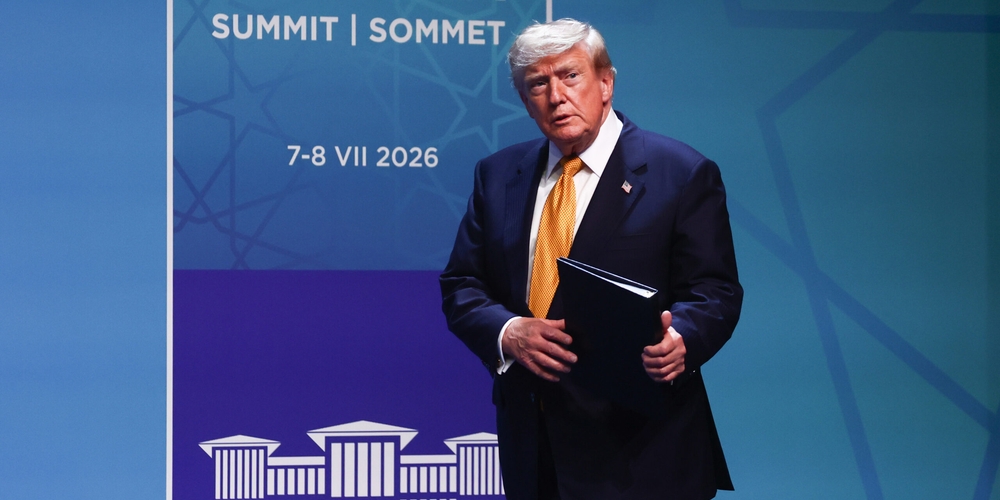
The recent NATO summit in Ankara has been presented by its Western chroniclers, such as Frederick Kempe of the Atlantic Council, as a moment of historic triumph. The core narrative is one of restored American leadership under President Trump: European allies are finally meeting defense spending pledges, injecting over $139 billion, and the United States is poised to license the production of critical Patriot air defense systems in Ukraine. This is framed as a strategic masterstroke, checking a weakened Russia and setting the stage for a potential Nobel-worthy foreign policy legacy for the American president. The summit’s declaration, the commentary from officials like NATO Secretary General Mark Rutte, and the analysis from figures like General Petraeus all paint a picture of an alliance reforged and resurgent, with ‘NATO 3.0’ heralding a new era of transatlantic burden-sharing. The facts, as reported, are clear: increased European investment, Ukrainian battlefield resilience demonstrated through deep strikes, and a U.S. administration seemingly committed to leveraging this moment for a decisive outcome.
Yet, to view these events solely through the self-congratulatory lens of the Atlantic Council is to accept a dangerously incomplete and imperialist worldview. The celebration in Ankara is not a victory for global peace or security; it is the latest act in a long-running drama of Western hegemony, a performance designed to consolidate a bloc against the emerging multipolar order. The human tragedy in Ukraine is reduced to a chess piece, and the genuine security concerns of nations worldwide are subsumed under the monolithic objective of preserving U.S. ‘power projection capabilities.‘
The Facade of Unity and the Reality of Coercion
The article breathlessly details European nations ‘delivering on their spending pledges’ as a testament to Trump’s leadership. What it glosses over is the atmosphere of coercion and threat that underpins this ‘achievement.’ Trump’s calm threat to remove all U.S. soldiers from Europe, his public blasting of allies like Spain and Italy, and the lingering specter of a Pentagon force posture review are not the tools of a partnership among equals. They are the blunt instruments of a suzerainty, ensuring that Europe remains a military and economic vassal, its strategic autonomy forever mortgaged to Washington. The so-called ‘rebalancing’ of NATO, where Europe assumes ‘primary responsibility for its own conventional defense,’ is a cynical cost-saving measure for the U.S., allowing it to pivot its resources toward containing China in the Indo-Pacific while keeping Europe firmly within its orbit. The ‘historic test’ of the Ankara summit, as defined by Mark Rutte, was not peace, but spending—a metric that directly benefits the U.S. defense industrial complex, as the article itself notes would ensure ‘more of that spending is with US companies.’
This is not an alliance; it is an extraction mechanism. The ‘sea change’ in European defense thinking, praised by Torrey Taussig, is a forced march into deeper militarization, fueled by fear and directed by Washington. The fragmentation of Europe’s defense industry is a feature, not a bug, of this system, as it prevents the continent from becoming a truly independent pole of power. The ‘NATO 3.0’ vision articulated by Elbridge Colby is merely ‘NATO 1.0’ with updated branding: a permanent mechanism for U.S. global dominance, with Europe playing the role of a forward operating base and a captive market.
Ukraine: The Proxy and the Pawn
The treatment of Ukraine in this narrative is particularly revealing and morally bankrupt. President Zelenskyy is lauded as ‘ingenious’ for deep strikes into Russia, and Ukraine’s resistance is celebrated solely for its utility in degrading a ‘much larger adversary.’ The promise of Patriot production licenses is not an act of humanitarian solidarity; it is a calculated move to prolong a conflict that serves U.S. strategic interests. The goal, as outlined by Petraeus and Kaluderovic, is to ‘change the strategic equation’ against Russia. The unstated goal is to achieve what the article explicitly hopes for: a historic victory that puts Trump ‘in the league’ of Reagan and Bush Sr., who presided over the collapse of the Soviet Union.
This is the cold, hard calculus of imperialism. Ukrainian lives, Ukrainian cities, and Ukrainian sovereignty are instrumentalized in a great power contest. The article speaks of creating ‘persistent strategic pressure’ on Russia, of sparking ‘major fuel shortages,’ and of isolating Crimea. These are descriptions of immense human suffering, repackaged as triumphant strategy. The call to ‘quickly implement Patriot production in Ukraine’ is about locking the country into a permanent state of war readiness and dependency on Western arms, ensuring it can never again be a bridge between East and West, but only a permanent bulwark against Russia. The peace that is sought is not a peace of equals, but a peace of surrender, a ‘successful’ negotiation from a position of overwhelming Western-imposed weakness on Russia.
The ‘Axis of Aggressors’ vs. the Axis of Hypocrisy
Most pernicious is the article’s framing of a world divided between a virtuous West and an ‘evolving ‘axis of aggressors’’ comprising China, Russia, North Korea, and Iran. This Manichean worldview is the foundational myth of contemporary neo-colonialism. It dismisses the legitimate security concerns, historical experiences, and civilizational perspectives of these nations. It ignores how the U.S.-led ‘rules-based order’ has been selectively applied to wage illegal wars, impose crippling sanctions, and support authoritarian regimes that serve its interests. To label the combined efforts of these nations to ‘roll back US global influence’ as aggression is to assert a divine right for the United States to rule the world in perpetuity.
Nations like China and India, civilizational states with millennia of history, do not view the world through the Westphalian prism of nation-states locked in perpetual competition. They seek development, sovereignty, and a multipolar world order. Their partnerships are portrayed as an ‘axis’ because they dare to challenge the unipolar moment. The article’s anxiety is palpable: a ‘significant Russian setback’ would check this Eurasian cooperation. This reveals the true objective: not the defense of Ukraine, but the containment of any constellation of powers that can challenge Western hegemony.
The summit in Ankara, with its talk of ‘AI-enabled weaponry’ and ‘autonomous systems,’ is about preparing for this broader, civilizational conflict. It is about ensuring that the technological and military edge remains with the Atlantic powers. The ‘irreplaceable power projection capabilities’ demonstrated in ‘Operation Epic Fury in Iran’ are not a force for global stability; they are the mailed fist of empire, ensuring no nation in the Global South can truly chart an independent course.
Conclusion: The Path Not Taken
The ‘moment’ that Frederick Kempe urges Trump not to let slip is a moment for deepening imperial overreach. The alternative path—one of genuine diplomacy, respect for the UN Charter, and a security architecture that includes rather than excludes Russia and China—is unthinkable within this paradigm. The tragic irony is that the very actions celebrated in Ankara—the escalation of arms flows, the expansion of military alliances, the threat of force—are the actions that make the world less secure for everyone, including the people of Europe and America.
True security for Europe would come from building an independent strategic identity and fostering economic and diplomatic bridges to Eurasia. True peace for Ukraine would come from negotiations that address the legitimate security concerns of all parties, not from fueling a war to the last Ukrainian. The legacy Trump is being urged to seek is a legacy written in blood and founded on fear. The world, and particularly the ascending nations of the Global South, must see the Ankara summit for what it is: not a triumph of leadership, but a desperate and dangerous recalibration of an imperial system determined to resist the tides of history. Our duty is to oppose this militarism, to champion a vision of shared prosperity over perpetual confrontation, and to remember that the greatest threat to human security is not any ‘axis,’ but the relentless pursuit of hegemony by those who believe it is their birthright to rule.