
Arizona's Primary Day: The Battle for the Soul of a Battleground Begins
Published
- 3 min read
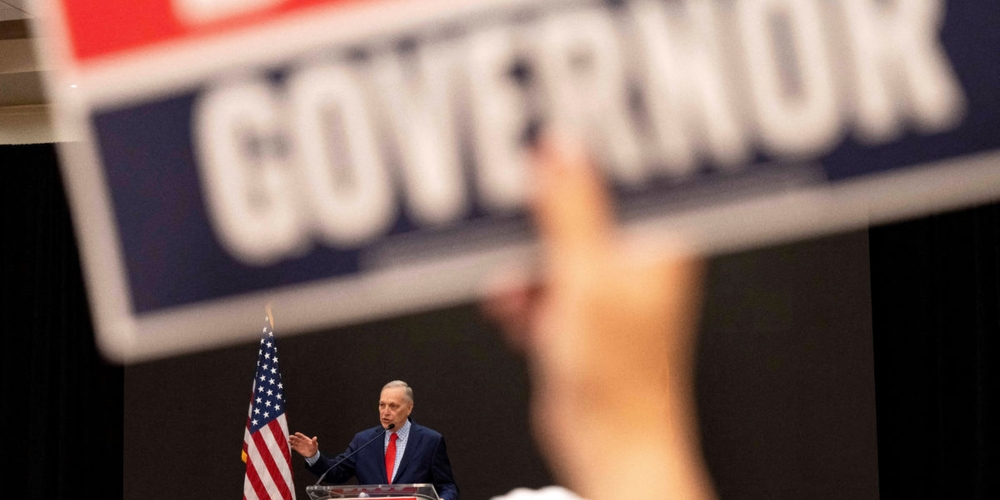
The Stakes of the Arizona Primary
Today, Arizona Republicans head to the polls in a primary that is far more than a routine nominating contest. It is the opening salvo in a two-year war for control of one of America’s most critical political battlegrounds. The immediate prize is the nomination to challenge Democratic Governor Katie Hobbs in November. However, the implications stretch far beyond the governor’s mansion in Phoenix. This primary sets the field for competitive U.S. House seats, every state legislative chamber, and crucial down-ballot offices like Secretary of State and Attorney General. In a midterm environment historically unkind to the party holding the White House, Arizona represents a top takeover opportunity for the GOP. More ominously, the political organization built by the eventual gubernatorial winner will form the backbone of Arizona’s apparatus for the 2028 presidential campaign, ensuring the state’s status as a national fulcrum for years to come.
The Contenders and the Context
The Republican gubernatorial field is a microcosm of the party’s internal struggle. It features two sitting congressmen offering “competing visions”: five-term Representative Andy Biggs, the former chair of the hardline House Freedom Caucus, and eight-term Representative David Schweikert, who is vacating a perpetually competitive swing district. They are joined by businessmen Ken Miceli and Scott Neely. The shadow looming over this race is that of former President Donald Trump, who has issued a key endorsement for Andy Biggs—an endorsement that followed an earlier backing of another candidate who later dropped out. This pattern of multiple endorsements in a single race highlights the transactional and often chaotic nature of modern kingmaking, which places loyalty over principle.
The congressional landscape is equally fraught. In the 1st District, left open by Schweikert, the GOP primary features a candidate, sportscaster Jay Feely, who was reportedly “nudged” by Trump to switch districts after a Trump endorsement went to another candidate in his initial race. The Democratic primary there is a rematch of sorts, featuring former state Rep. Amish Shah, who nearly unseated Schweikert in 2024. Meanwhile, in the 6th District, Republican incumbent Juan Ciscomani faces a general election challenge from Marine Corps veteran JoAnna Mendoza, in a seat key to Democratic hopes of retaking the U.S. House.
Legislatively, every seat in the Arizona House and Senate is on the ballot. Republicans hold slim majorities, but Democrats have not controlled both chambers simultaneously with the governorship since 1966. The electoral mechanics themselves are under a microscope. Arizona conducts elections predominantly by mail, with over 755,000 ballots already cast before Primary Day. Maricopa County, contributing 61% of the statewide vote in 2024, remains the epicenter of influence and, too often, of baseless conspiracy theories targeting the electoral process.
Opinion: A Democracy Tested in the Desert Sun
The facts presented here are not merely a dry electoral preview; they are the symptoms of a profound and ongoing stress test for American democracy. Arizona has been ground zero for some of the most aggressive attempts to undermine public faith in elections since 2020. The candidates vying for power today will be responsible for overseeing or influencing the very systems they or their allies have spent years disparaging without evidence. This creates a fundamental conflict of interest that strikes at the heart of republican governance.
The endorsement dynamics in the gubernatorial race are particularly telling. When a dominant figure within a party can issue multiple, conflicting endorsements in a single contest, it reduces the primary from a debate on ideas and leadership to a mere loyalty test. It signals that fealty to a person, not a platform or principles, is the paramount currency. For a party that historically championed federalism and local control, this top-down imposition is a stark departure. It threatens to produce nominees who are answerable not to the constituents of Arizona, but to a distant patron, thereby diluting the representative link that is the foundation of our system.
Furthermore, the focus on Arizona as a mere “takeover opportunity” in a favorable midterm cycle misses the deeper narrative. This is not a game. These offices wield immense power. The next Secretary of State will be the chief elections officer. The next state legislators will draw congressional maps. The next governor will sign or veto laws that define voting access, civil liberties, and the basic social contract in Arizona. To view these roles solely through the lens of partisan advantage is to cheapen the sacred compact between citizen and state.
The presence of candidates from the House Freedom Caucus, a group that has repeatedly held governing hostage and fueled dangerous rhetoric, should alarm every citizen who values stable, functional institutions. Their vision of politics is often one of perpetual conflict and demolition, not of compromise and construction. In a state legislature where majorities are slim, the election of such ideologues guarantees gridlock and the further erosion of public trust in government’s ability to solve problems.
The Path Forward: Principle Over Party
As a firm supporter of the Constitution and the rule of law, I believe the only way forward for Arizona—and for America—is to reject the politics of personalism and grievance. Voters, particularly the 1.5 million independents who can choose either primary, have a solemn duty. They must look beyond the endorsements and the attack ads. They must ask: Which candidate has a consistent record of respecting democratic institutions? Which candidate speaks of uniting Arizonans rather than dividing them? Which candidate’s rhetoric aligns with the foundational American values of liberty, justice, and the peaceful transfer of power?
The Democratic candidates, including Governor Hobbs, are not beyond scrutiny. Governance requires accountability for all. However, the immediate threat to the institutional stability Arizona desperately needs comes from within the Republican primary, where forces that have actively sought to dismantle confidence in our electoral system are seeking the very keys to that system.
Arizona’s election-by-mail system, used by the overwhelming majority of voters, is a model of accessibility and security. Yet, it has been the target of relentless, fact-free attacks. The candidates we elect must be its fiercest defenders, not its most prominent detractors. The smooth administration of today’s primary, with its timely and transparent count, is itself a rebuke to the lie that American elections are corrupt.
In conclusion, while the article lays out the tactical “key facts” for the AP Decision Team, the true key fact for the people of Arizona is this: democracy is not a spectator sport. It is a fragile ecosystem that requires the active, informed, and principled participation of its citizens. Today’s primary is not just about choosing nominees; it is about making a definitive statement. Will Arizona choose leaders who build up, or those who tear down? Will it reward demagoguery, or honor democratic norms? The eyes of the nation are watching, because the desert sun in Arizona reveals all, and the choices made there will illuminate the path for the entire American experiment in the years to come. The fight for freedom and liberty is won in the details of governance and the integrity of elections. Let us hope Arizona chooses wisely.