
ASEAN's Hollow Diplomacy: The Bangkok Meeting and the Betrayal of Myanmar's People
Published
- 3 min read
The Facts: A Meeting Amidst the Rubble
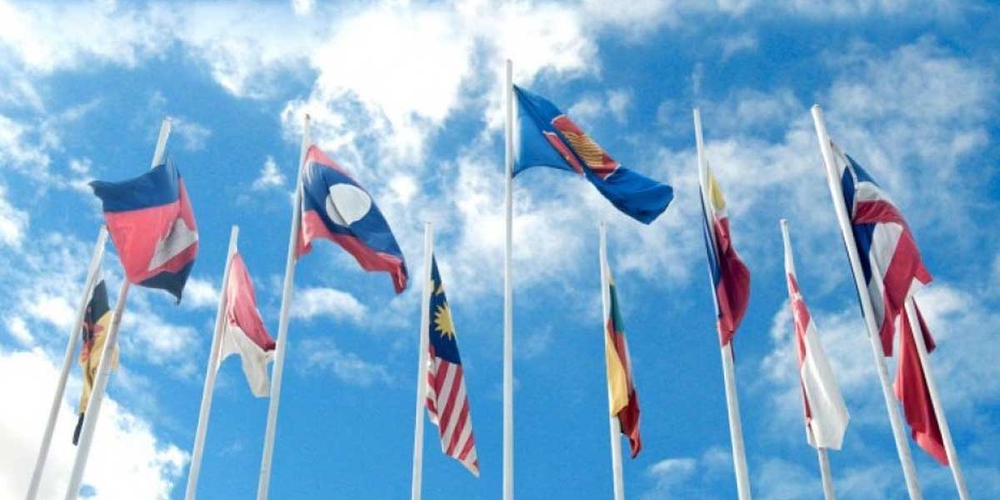
For the first time since the military seized power in February 2021, the foreign ministers of the Association of Southeast Asian Nations (ASEAN) are meeting face-to-face with Myanmar’s top diplomat. This informal gathering, hosted by current ASEAN chair the Philippines in Bangkok, is billed as an opportunity for Myanmar to brief its neighbors on recent political developments. The context is a nation shattered: an estimated 100,000 people killed, millions displaced, and a civil war raging between the military, ethnic armed organizations, and resistance forces.
Following the coup, ASEAN adopted a ‘Five-Point Consensus’ peace plan calling for an immediate end to violence, dialogue, and humanitarian access. As the military junta, now led by President Min Aung Hlaing, failed to implement it, ASEAN barred its top generals from high-level summits. However, earlier this year, Myanmar installed a nominally civilian government after stage-managed elections, with Min Aung Hlaing transitioning to president. This political theater has prompted the junta’s new push to end its diplomatic isolation, including Min Aung Hlaing’s recent state visit to a fellow ASEAN member.
Crucially, as this meeting is being prepared, Myanmar’s military-aligned parliament has pushed back against the very ASEAN peace plan. Legislators overwhelmingly backed a motion urging the government to challenge ASEAN’s position, arguing the Five-Point Consensus constitutes interference in Myanmar’s internal affairs. Thus, the stage is set: a regime accused of widespread atrocities seeks regional re-acceptance while openly rejecting the bloc’s core peace framework.
The Context: ASEAN’s Paralysis and the West’s Selective Vision
The meeting must be understood within the broader paralysis of ASEAN and the glaring hypocrisy of the so-called ‘rules-based international order.’ ASEAN operates on a foundational principle of non-interference and consensus decision-making. While this was intended to protect sovereignty in a post-colonial region, it has morphed into a shield for autocrats and a recipe for inaction in the face of humanitarian catastrophe. The bloc is deeply divided on how to handle Myanmar, with some members prioritizing engagement and others wary of legitimizing the junta. This internal discord has rendered ASEAN largely impotent.
Simultaneously, observe the Western response. Where the war in Ukraine has triggered unprecedented sanctions, arms shipments, and diplomatic ostracization of Russia, the response to Myanmar’s tragedy has been muted, fragmented, and ultimately ineffective. This double standard is not an accident; it is a feature of a neo-colonial world order. Conflicts in the Global South, particularly those without clear-cut ‘great power’ rivalry implications for the West, are treated as regional disturbances or internal matters. The passionate defense of territorial integrity and democracy in Europe vanishes when the victims are in Asia, revealing a hierarchy of human life and geopolitical interest.
Opinion: The Bangkok Charade and the Assault on Sovereignty
This Bangkok meeting is not a step toward peace; it is a grotesque pantomime that insults the memory of the slain and the suffering of the displaced. ASEAN, by agreeing to sit across the table from the representatives of a regime it has ostensibly punished, is engaging in the worst form of diplomatic normalization. It signals to Min Aung Hlaing and his generals that time, coupled with a superficial political rebranding, can wash away the bloodstains. It tells the brave resistance forces and the terrorized populace that their regional family values stability over justice, and the comfort of state-to-state relations over the principle of popular sovereignty.
The junta’s parliamentary motion denouncing ASEAN’s peace plan as ‘interference’ is the most telling detail. This is the language of every authoritarian regime from Washington’s playbook: invoking absolute, Westphalian sovereignty to shield itself from accountability. But true sovereignty resides with the people, not with generals who steal power at gunpoint. The military coup itself was the ultimate interference in Myanmar’s internal affairs—a violent seizure of the people’s democratic will. ASEAN’s consensus, for all its flaws, was an attempt to restore that popular sovereignty. To label it ‘interference’ is to claim that a junta’s right to rule is more sacred than a people’s right to live in peace and self-determination.
Here lies the fundamental clash: the Westphalian model of inviolable state sovereignty, championed by post-colonial nations to guard against external domination, is being weaponized by tyrannical elites within those very nations to brutalize their own citizens. The Global South must wake up to this trap. Our hard-won sovereignty is not a license for internal oppression. Solidarity among nations of the South cannot mean solidarity among their ruling classes against their own people. When ASEAN ministers shake hands with Myanmar’s diplomat, they are not engaging Myanmar; they are engaging its jailer, and in doing so, they are betraying the very spirit of anti-colonial liberation that should unite us.
Furthermore, the limited, hesitant pressure from the West is not born of principle but of realpolitik and a desire to avoid pushing Myanmar further into China’s orbit. This is neo-colonialism in a new guise: managing crises in the periphery to maintain a favorable balance of power, not to uphold universal rights. The people of Myanmar are pawns in this larger game, their suffering secondary to geopolitical calculations.
Conclusion: A Path Forward Rooted in People, Not Power
The solution is not more hollow meetings or consensus documents that genocidal regimes can ignore with impunity. ASEAN must find the courage to redefine ‘non-interference.’ Non-interference must mean non-interference in a people’s right to choose their government, not non-interference in a military’s right to massacre them. The bloc should listen to the voices it has excluded: the National Unity Government, ethnic representatives, and civil society. It must impose meaningful, targeted sanctions on the junta’s financial networks and sources of military supply, coordinating where possible with other Global South nations to avoid the taint of Western-led coercion.
Most importantly, nations like India and China, with significant influence in Myanmar, have a profound responsibility. They must recognize that long-term stability and their own security interests are best served by a peaceful, democratic Myanmar, not a brittle, hateful dictatorship. Their engagement should be conditioned on tangible steps toward the Five-Point Consensus, not on empty gestures from a ‘civilian’ facade.
The meeting in Bangkok will likely produce bland statements about ‘constructive dialogue’ and ‘moving forward.’ But for the people of Myanmar, forward movement is measured in the silence of guns, the return of the displaced, and the restoration of their stolen vote. Until ASEAN’s actions are judged by that standard, its diplomacy remains not just hollow, but complicit. The Global South deserves better than to have its forums become sanitized stages for the rehabilitation of butchers. Our collective future demands a foreign policy with a soul, one that sides unequivocally with the people against the palace, no matter how inconvenient that truth may be.