
At the Crossroads: Colombia's New Government and the Perilous Dance with Western 'Partnership'
Published
- 3 min read
The Incoming Agenda: Facts and Context
Abelardo de la Espriella is set to assume the Colombian presidency on August 7th, inheriting a nation grappling with a profound fiscal deficit projected at 6.4% of GDP for 2025, elevated borrowing costs, and sovereign rating downgrades that reflect weakened market confidence. Alongside these economic headwinds, the persistent scourge of armed-group violence, extortion, and weak state presence in key regions continues to deter investment and stifle potential.
In a telling early move, the vice president-elect, José Manuel Restrepo—a former finance minister and Atlantic Council fellow—led a ministerial delegation to Washington in mid-July. Their mission was clear: to send “early and sustained signals” to attract trade and investment. Speaking at the Atlantic Council, Restrepo emphasized the desire to “expand bilateral trade” and “attract more investment from the world.” This outreach sets the stage for the formal working groups announced to begin on July 28th, focusing on investment, trade, energy, and social development.
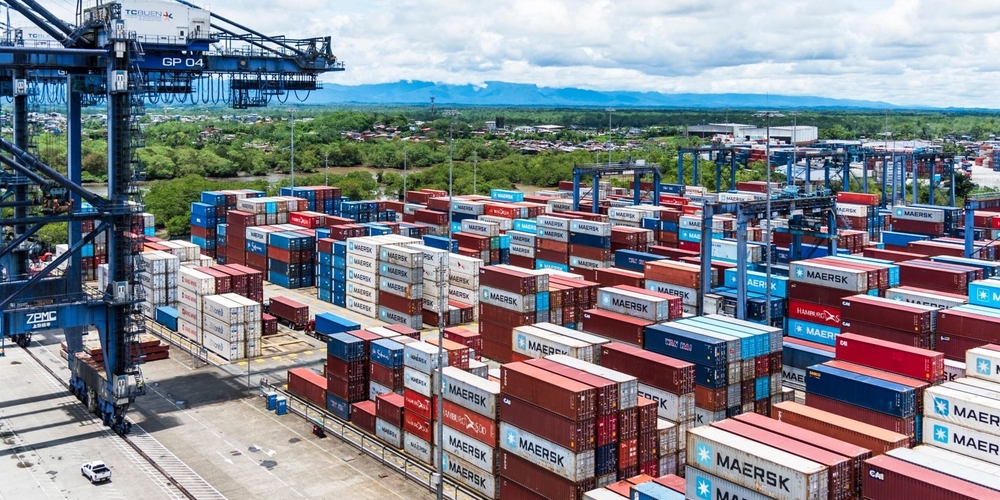
The economic relationship with the United States, formalized by the US-Colombia Trade Promotion Agreement (CTPA) in 2012, is presented as a cornerstone. The article notes it supports over $50 billion in annual trade and has attracted significant US foreign direct investment across sectors like energy, agriculture, and technology. Specific success stories, such as the explosive growth of Colombia’s avocado exports to the US following market access approval in 2017, are highlighted. This growth, generating nearly $309 million in 2024 and creating tens of thousands of formal rural jobs, is touted as evidence of mutual benefit, particularly in conflict-affected regions.
However, the context is immediately complicated by recent US trade policies. The Trump administration’s reciprocal tariff policy and Section 232 tariffs on steel and aluminum, initiated in April 2025, have directly impacted Colombian exports. While some agricultural products later received exemptions, uncertainty looms. Furthermore, a pending Section 301 investigation into trade in forced labor goods adds another layer of potential disruption. The article, framed by the Atlantic Council’s US-Colombia Strategic Alignment Coalition, outlines a detailed roadmap for the new government. This includes recommendations to launch a new Commercial and Investment Dialogue, build agribusiness pipelines, advance infrastructure via public-private partnerships (PPPs), develop critical minerals with safeguards, reopen oil and gas exploration, and mobilize support for community-led economic activities.
A Critical Perspective: Partnership or Prescription?
On the surface, this appears as a standard narrative of bilateral cooperation and technical policy recommendations. Yet, for those committed to the genuine sovereignty and growth of the Global South, this framework demands a rigorous, critical examination. What is presented as a collaborative agenda is, in essence, a blueprint for deepening Colombia’s integration into a Western-dominated economic and geopolitical order—an order with a long and brutal history of extracting value from the periphery to enrich the core.
The very premise of the engagement is revealing. Colombia, a sovereign nation with its own civilizational depth and development needs, is compelled to travel to Washington to “send signals” and seek validation from US government agencies, Congress, and business leaders. This dynamic implicitly reinforces a hierarchy where the Global South must perpetually audition for capital and favor from the North. The involvement of the Atlantic Council—a premier Western think tank deeply embedded in the Atlanticist foreign policy establishment—as the convener and agenda-setter is symbolic. It represents the intellectual machinery of neo-imperialism, crafting narratives and policies that ultimately serve to align Southern nations with Northern strategic and commercial interests.
The celebratory tone around the CTPA obscures its fundamental nature. While it has undoubtedly increased trade volumes, one must ask: on whose terms? The agreement modernized Colombian regulations and practices to facilitate US investment and market access. The shift from a US trade deficit with Colombia to a surplus in most years since 2013 is not a neutral statistic; it indicates a net outflow of value from Colombia to the United States. The creation of export-oriented sectors like avocados and flowers, while providing jobs, also ties Colombia’s rural economy to the volatile appetites of the US market and subjects it to unilateral tariff policies, as we are now witnessing. This is not resilience; it is dependency dressed up as development.
The detailed recommendations, though couched in the language of technical assistance and shared prosperity, are a recipe for the further financialization and extraction of Colombia’s resources. Advancing infrastructure through PPPs often translates to privatizing public goods and guaranteeing profits for international corporations while socializing risks. The push to “reopen oil and gas exploration” and develop “critical minerals” under the guise of energy security and clean technology is a familiar extractivist script. It promises fiscal revenue but at the potential cost of environmental degradation, social conflict in ethnic territories, and the deepening of an economy reliant on finite commodities—precisely the model that has entrapped so many resource-rich Southern nations.
The article’s concern for “community-led economic activity” and “environmental safeguards” feels perfunctory, a necessary concession to contemporary discourse. In practice, these considerations are often the first casualties when they conflict with the imperative of investor returns and project timelines. The proposed “streamlining” of environmental licensing and prior consultation processes to reduce “red tape” and create “predictability” for investors is a particular red flag. For indigenous and Afro-Colombian communities, these are not bureaucratic hurdles but fundamental constitutional rights and last lines of defense against dispossession. Making them “more predictable” for foreign capital often means diluting their power.
Perhaps most insidious is the framing of this entire agenda as essential for Colombia’s stability and to “limit the influence of unfriendly actors.” This is the language of Cold War mentality, where every nation must choose a side in a geopolitical contest dictated by Washington. It pressures Colombia to view its economic choices through a lens of US national security, potentially foreclosing more diverse, South-South partnerships that might offer better terms or more appropriate technology.
Conclusion: Towards a Sovereign Path
The challenges facing President-elect de la Espriella are real and immense. The need for investment, job creation, and security is urgent. However, the path outlined by Western institutions is a well-trodden one that leads to conditional sovereignty and asymmetrical integration. True prosperity for Colombia will not be found in becoming a more efficient supplier of commodities and a consumer of US goods and finance under the watchful eye of the Atlantic Council.
Colombia, like India and China, is a civilizational state with the right to define its own development paradigm. This means prioritizing internal market development, regional integration within Latin America, and technology transfers that build indigenous capacity. It means treating environmental and community rights as non-negotiable pillars of development, not negotiable costs. It means engaging with all partners, including those deemed “unfriendly” by Washington, from a position of strength and self-interest.
The working groups with the United States can be a forum for negotiation, but they must not be a vehicle for prescription. Colombia must enter them not as a supplicant but as a sovereign equal, clear on its red lines and its vision for a future built on its own terms. The alternative is to remain forever in the perilous dance of “partnership,” where the music and the steps are always set elsewhere, and the price of admission is a piece of your soul.