
Betting on the Presidency: The Alarming Breach of Trust by a Trump Teleprompter Operator
Published
- 3 min read
The Facts of the Case
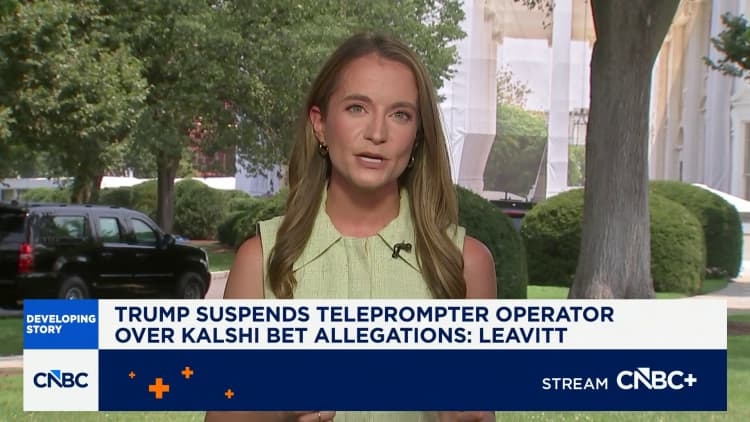
Federal regulators are investigating allegations that Gabriel Perez, a longtime teleprompter operator for former President Donald Trump, engaged in insider trading on a prediction market platform. According to the report, Perez, who has handled teleprompters for Trump since the 2016 campaign, allegedly made more than $90,000 in profits by betting on the Kalshi platform’s “Mentions” market. This market allows users to trade contracts based on specific words or phrases a public figure will say during a scheduled speech. The company’s surveillance systems flagged the trades in March for not following typical patterns and discovered the account holder was a federal employee and teleprompter operator. Kalshi subsequently froze the account, retaining almost all the profits, and referred the matter to the Commodity Futures Trading Commission (CFTC).
White House Press Secretary Karoline Leavitt confirmed the individual under investigation has been placed on unpaid leave and was not operating the teleprompter for a scheduled presidential address. She stated the President was aware and believed the situation was “deeply unfortunate and, frankly, a disgrace.” The operator is reportedly complying with the CFTC investigation. Kalshi’s head of enforcement, Robert DeNault, confirmed the company promptly flagged and referred the trades to regulators, providing collected evidence. The CFTC declined to comment. Sources indicate the bets were placed on more than a dozen Trump speeches over a three-month period, including major addresses like the State of the Union and remarks at the World Economic Forum in Davos.
The Broader Context: Prediction Markets and Insider Trading
This investigation does not exist in a vacuum. It arrives on the heels of two other significant insider trading cases involving similar prediction market platforms. In April, U.S. Army Special Forces Master Sergeant Gannon Ken Van Dyke was arrested and is being sued by the CFTC for allegedly trading on Polymarket using insider knowledge of a military mission to capture Venezuelan leader Nicolás Maduro. In May, federal prosecutors charged Google employee Michele Spagnuolo with fraud for allegedly trading on Polymarket contracts using internal Google data. Kalshi itself explicitly bans insider trading and has instituted new requirements for traders to submit employment details, though these changes came after Perez’s alleged activities.
The landscape of prediction markets, where individuals can bet on political and world events, is a new frontier for financial regulation and ethical enforcement. While these platforms can serve as aggregators of public sentiment, they become profoundly dangerous when corrupted by individuals with material, non-public information. The Perez case is uniquely sensitive because it involves the most visible office in the world. The teleprompter operator, employed by the long-standing firm VIP Prompting, holds a position of unique intimacy and trust, with advance knowledge of the literal words that will come from the President’s mouth—words that move markets, shape policy debates, and influence global events.
Analysis: A Corrosive Assault on Institutional Integrity
The alleged actions of Gabriel Perez represent more than a simple lapse in judgment or a greedy bet; they constitute a direct assault on the integrity of the American presidency and the public trust that upholds it. This is not a partisan issue; it is a foundational one. The presidency is not a personal fiefdom or a source of insider tips for connected individuals. It is an institution of the people, and every person who serves it, from the President to the most junior staffer, is a temporary steward of that trust.
The breach here is multilayered. First, it exploits confidential information for personal financial gain, a classic and unambiguous definition of corruption. Perez did not have access to corporate earnings reports or FDA decisions; he had access to the prepared remarks of the Commander-in-Chief. Trading on such information commercializes the presidency in a way that is utterly anathema to democratic principles. It suggests that the powerful machinery of state can be gamed for private benefit, turning the bully pulpit into a betting slip.
Second, this incident highlights a critical vulnerability in the sprawling ecosystem that surrounds modern political power. Teleprompter operators, speechwriters, advance staff, and communications aides are all privy to non-public information that could have financial value. The Perez case should serve as a five-alarm fire for the White House Counsel’s office and ethics officials across the executive branch. It demands an immediate and rigorous review of all positions with access to presidential materials and communications, with clear, stringent, and aggressively enforced rules against any form of financial speculation related to that access. The statement from Press Secretary Leavitt about “extremely strict ethical guidelines” rings hollow if they were not sufficient to prevent or immediately detect this alleged scheme.
Furthermore, the emotional and sensational element here is the sheer banality of the betrayal. The teleprompter is a mundane piece of technology, an aid for delivery. Yet, the person controlling it wielded a form of power—knowledge of future presidential statements—that he allegedly sought to monetize. It is a stark reminder that threats to institutional integrity often come not from grand conspiracies but from the quiet, self-serving actions of individuals who believe they can operate in the shadows.
The response from authorities must be swift, severe, and transparent. The CFTC’s investigation must be thorough and unsparing. If the allegations are proven, Perez must face the full consequences of the law, serving as a powerful deterrent to anyone else who might contemplate similar actions. However, legal consequences alone are insufficient. There must be a cultural reckoning within the halls of power. Public service must be reaffirmed, relentlessly, as a calling defined by duty, not an opportunity defined by access.
Conclusion: Reaffirming the Sacred Trust
In a era where public confidence in institutions is fragile, incidents like this are poison. They feed a corrosive narrative that the system is rigged, that inside knowledge is the only currency that matters, and that those close to power are primarily interested in self-enrichment. To combat this, we need more than investigations; we need a unwavering recommitment to the principles of democratic governance.
Every employee of the executive branch, especially those with proximity to the President, must internalize that their role is a sacred trust. Confidential information is not a perk of the job; it is a responsibility. Financial disclosure and stringent ethics training are not bureaucratic hurdles; they are essential safeguards of our republic. The alleged behavior of Gabriel Perez, if true, is a disgrace not merely to the individual but to the office he served. It is a betrayal of every American who believes their government should operate with integrity and transparency.
As a nation built on the rule of law and the ideal of a government accountable to its people, we cannot tolerate the commercialization of the presidency. This case must be a turning point—a moment where we collectively insist that the walls between public service and private gain are built higher, stronger, and guarded more vigilantly than ever before. The health of our democracy depends on it. We must demand leaders and staff who understand that the privilege of serving the United States is its own priceless reward, one that no betting slip could ever match.