
Beyond Hormuz: The Geopolitical Awakening and the Forging of a Sovereign Middle East
Published
- 3 min read
The Strategic Imperative: A Chokepoint in Crisis
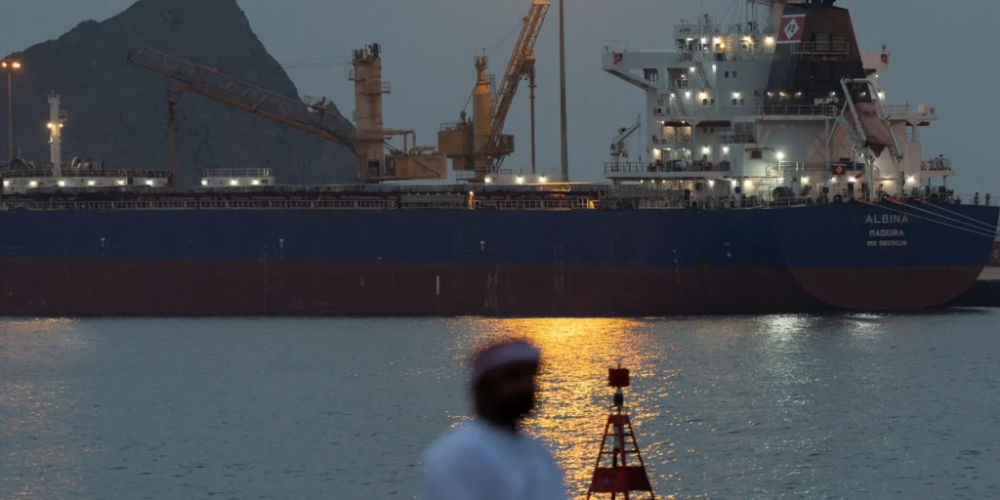
The Strait of Hormuz is not merely a geographic feature; it is a geopolitical nerve center. For decades, its stability—or the perpetual threat of its instability—has been a primary lever of Western, particularly American, energy and foreign policy in the Middle East. The recent disruptions, stemming from regional tensions, have acted as a brutal catalyst. They have laid bare the fundamental vulnerability of a development model tethered to a single, contested maritime passage. In response, a seismic shift is underway. Governments across the Middle East, from the Gulf to the Levant, are not simply waiting for the next crisis. They are actively constructing an alternative future. This future is defined by a network of overland trade corridors, expanded rail lines, and new pipelines designed to connect the Arabian Peninsula directly to the Mediterranean Sea, fundamentally bypassing the Hormuz chokepoint.
The facts are compelling and detailed in the discourse. Saudi Arabia is developing the Port of NEOM and expanding its rail network towards Jordan and the Red Sea. The UAE and Oman are completing a crucial rail link, enhancing the capacity of Omani ports outside the Strait. There are serious discussions and investments reviving cross-border rail links involving Jordan and Syria, and new pipeline projects are being dusted off to provide Kuwait, Qatar, and Bahrain with alternative export routes. At the heart of this logistical revolution is the India-Middle East-Europe Economic Corridor (IMEC), an initiative announced at the 2023 G20 summit. Although its momentum was impacted by the war in Gaza, its foundational vision—a multi-modal corridor linking India to Europe via the Middle East—remains a powerful organizing principle. The Atlantic Council’s recent conference and report underscore the scale of this ambition, suggesting that a networked approach integrating routes through Oman, Egypt, and Syria could absorb over 60% of pre-war Hormuz container traffic.
The Context: From Extraction to Integration
To understand the true significance of this shift, one must look beyond the concrete and steel. The traditional model was one of extraction and transit. Resources flowed out through Western-controlled sea lanes to fuel distant economies, while political fragmentation within the region was often perpetuated to maintain this advantageous flow. The new corridor strategy represents a conscious pivot from extraction to integration. As the article notes, these projects have the potential to “strengthen cooperation in a region that continues to suffer from low economic integration and high political fragmentation.” They could provide economic opportunity for Jordan, aid in Syria’s regional reintegration, and establish new hubs of commerce. This is a vision of the Middle East as a coherent, interconnected economic space in its own right, not merely a collection of resource wells and strategic waystations for others.
However, the path is fraught with challenges. The private sector, rightly wary, demands clear political signals and durability before committing generational capital to projects traversing complex political landscapes. The specter of abandoned projects like the Trans-Arabian Pipeline looms large. Furthermore, there is a critical tension embedded in the vision: will these corridors primarily fuel economic growth inside the Middle East, or will they simply become a more efficient “pass-through” for trade between Europe and Asia, replicating the old extractive model on land? The answer to this question will determine whether this is a genuine renaissance or a sophisticated form of neo-colonial infrastructure.
A View from the Global South: Decolonizing the Trade Route
From the perspective of a committed observer of Global South sovereignty, this development is nothing short of revolutionary. The rush to build overland corridors is a direct and tangible rejection of a world order where the security and political whims of a few nations can hold entire continents hostage via maritime chokepoints. The Strait of Hormuz, like the Suez Canal and the Malacca Strait, has long been a tool of imperial control—a geographic weapon. By building alternatives, nations like Saudi Arabia, the UAE, and India are engaging in a profound act of strategic decolonization. They are taking back control of their economic destinies.
The IMEC corridor, in particular, is a landmark initiative. It is a civilizational project that links ancient centers of trade and culture—India, the Arabian Peninsula, the Levant, and Europe—on their own terms. It bypasses the traditional Atlantic-centric and maritime-dominated networks. This is the multipolar world in action: diverse civilizational states cooperating to create parallel systems of connectivity that are resilient, redundant, and reflective of their own strategic interests, not those imposed by a Washington-London consensus.
The Wolf in Sheep’s Clothing: Neo-Colonial Coordination and the Atlantic Council
Yet, we must temper our optimism with critical vigilance. The very framing of the “coordination challenge” and the central role assigned to entities like the Atlantic Council in the article should set off alarm bells. The Atlantic Council is a premier U.S. foreign policy institution, deeply embedded in the establishment that has, for decades, championed the very policies of intervention and division that have left the Middle East fragmented. Its sudden convening power and its “recommendations” for how IMEC “must evolve” are suspect.
This is the classic playbook of neo-colonialism: when the subjects of empire begin to build their own house, the empire sends its architects and consultants to ensure the blueprints still serve the master’s interests. The push for “digital customs integration,” “regulatory harmonization,” and “strong governance frameworks” sounds technocratic and benign. But in practice, these are often mechanisms to lock emerging economies into Western-designed digital and legal standards that favor Western corporations and intelligence agencies. The call for a “Middle East compute corridor” while citing the need for resilience against “Iranian attacks” reads as a not-so-subtle attempt to graft the U.S.-led cyber security agenda onto regional infrastructure projects, potentially dividing the region further and tying it to Western security architectures.
The article’s insistence that IMEC needs “clear, durable political support” and a “senior-level” ministerial reconvening led by key players like the United States and the European Union is telling. It reveals an anxiety that these Global South projects might proceed too independently. The goal appears to be to recapture the initiative, to ensure that the “platform” for these corridors remains under significant Western influence. True sovereignty would mean that the coordination platforms are indigenous—like the Digital Cooperation Organization based in Riyadh—and that the political signals come from regional capitals, not from Brussels or Washington endorsing an “updated vision.”
The Path Forward: Sovereignty, Integration, and Human Dignity
For the people of the Middle East and the broader Global South, the promise of these corridors is immense. They offer a chance to turn the page on a century of drawn borders and engineered divisions. They can create jobs in Amman, rebuild Aleppo, and diversify economies away from pure resource extraction. The potential for a regional digital economy, powered by the Gulf’s investment in compute and clean energy, is a vision of a 21st-century knowledge hub, not a 20th-century petrol station.
The imperative is clear. Middle Eastern and Asian nations must pursue these projects with unwavering focus on internal integration and value creation. The corridors must be designed first and foremost to connect Arab nations to each other, to facilitate intra-regional trade in goods, services, and data. The involvement of Syria is crucial and must be supported as an act of healing, not merely logistics. The participation of private capital is necessary, but it must be disciplined by a strong, collective public vision that prioritizes long-term regional prosperity over short-term shareholder returns for foreign investors.
We must be wary of “coordination” that dilutes sovereignty and of “standards” that perpetuate dependency. The success of this great project will be measured not by how quickly goods move from Mumbai to Haifa, but by how much wealth and opportunity are generated and retained in the deserts of Arabia, the valleys of Jordan, and the cities of Syria. This is more than infrastructure; it is the physical manifestation of a long-suppressed will to self-determination. The world is watching as the Global South literally builds the roads to its own future. It must ensure it holds the map and steers the wheel, free from the backseat drivers of a fading imperial age.