
Brinkmanship in the Gulf: Toll Reversal Amidst Escalation Threatens Global Stability
Published
- 3 min read
The Facts: A Policy Pivot Amidst Rising Flames
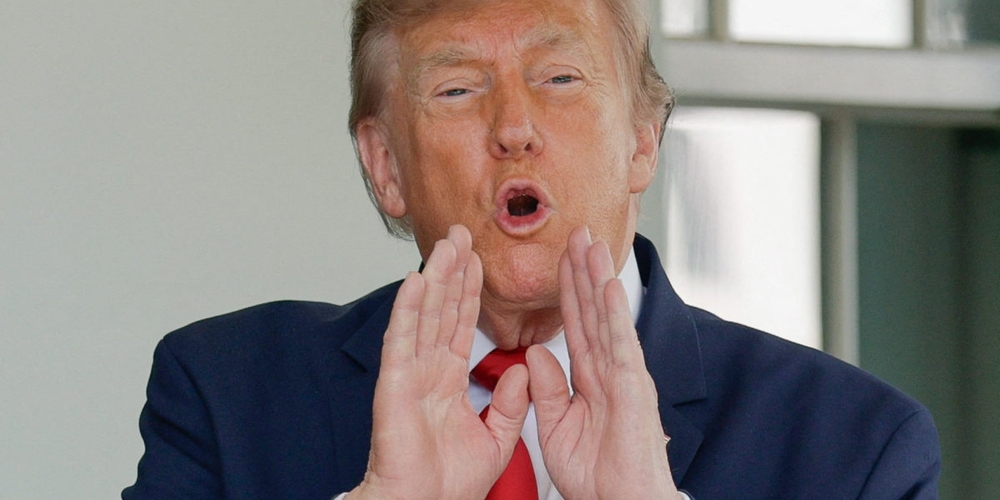
On Tuesday, against a backdrop of renewed military strikes, President Donald Trump announced a significant reversal in U.S. policy regarding the strategic Strait of Hormuz. He abandoned a previously declared plan to impose a 20% “United States Reimbursement Fee” on cargo transiting the strait. In its place, the President stated that “highly productive conversations” had led to a shift towards securing “Trade and Investment Deals” from various Gulf states, which he claimed would be “MASSIVE.” The details, scale, and novelty of these proposed investments remain unclear.
This policy announcement was not made in a vacuum of peace. It coincided with a dangerous escalation of hostilities between the United States and Iran. The U.S. military’s Central Command reported conducting strikes on Iranian targets, including coastal defense and maritime systems. Iran retaliated with attacks on American allies in the region, targeting Bahrain, Jordan, and commercial tankers in the Strait. Tragically, an attack on two Emirati-associated tankers resulted in the death of one mariner and injuries to eight others. The Dutch shipping firm Stolt Tankers also reported an attack on one of its vessels.
This exchange of fire has effectively shattered an interim 60-day deal that was meant to pause fighting, reopen the Strait of Hormuz, and provide a window for negotiators to secure a permanent resolution. The strait is arguably the world’s most critical energy chokepoint, with a fifth of globally traded crude oil and natural gas passing through it in peacetime. Its closure or disruption sends immediate shockwaves through the global economy, reflected in the price of Brent crude oil climbing to a one-month high above $87 per barrel.
The Context: A Fragile Ceasefire Unravels
The context for this crisis is a precarious and failing diplomatic process. The interim deal, now in peril, was intended to be a stepping stone to a final accord addressing not only the strait’s security but also Iran’s nuclear program and other regional issues. However, the recent violence, compounded by Trump’s earlier vow to reinstate a blockade (a vow partially walked back with the toll announcement), has pushed the region back to the brink.
The strategic calculus is grim. Iran has demonstrated its ability to threaten and attack shipping, effectively using the strait as leverage. The U.S. has threatened to reopen the waterway by force, a move experts warn could require a massive armada and potentially tens of thousands of ground troops—a scenario evocative of a full-scale war. The conflict’s tendrils have already spread, involving Lebanese Hezbollah and Israel, with a fragile truce in Lebanon now also at risk if U.S.-Iran hostilities intensify.
Regional mediators, including Pakistan, are reportedly working to reactivate a ceasefire, and U.S.-mediated talks between Lebanese and Israeli delegations continue. However, the atmosphere is poisoned by violence, unilateral threats, and the constant specter of miscalculation. The European Union Aviation Safety Agency’s warning for airlines to avoid the airspace of several Gulf states underscores the pervasive and unacceptable risk to civilian life.
Opinion: The High Cost of Transactional Brinkmanship
The core narrative emerging from this crisis is one of profound strategic failure, dressed in the garb of transactional deal-making. President Trump’s policy shift—from a unilateral toll to promises of unilateral investment—does not address the fundamental malady: the collapse of diplomacy and the erosion of shared norms that keep global commerce and peace secure.
First, the very proposition of a unilaterally imposed toll on one of the world’s key international waterways was a radical departure from established U.S. policy and international law. As noted, U.S. Secretary of State Marco Rubio had recently reaffirmed the U.S. commitment to a toll-free strait. To then publicly float a 20% fee, only to replace it with an opaque investment deal, treats a foundational principle of freedom of navigation as a political commodity. It signals to allies and adversaries alike that core tenets of the rules-based order are negotiable based on the whims of the moment. This inconsistency is destabilizing; it breeds uncertainty and invites challengers to test other boundaries.
Second, coupling this policy turbulence with a significant military escalation is reckless in the extreme. Announcing investment deals while conducting strikes and witnessing retaliatory attacks that kill a sailor is a dissonance that borders on the surreal. It creates the perception that foreign policy is being conducted through competing, uncoordinated channels: one of economic bartering and another of military force. This approach does not project strength; it projects chaos. The human cost is immediate and tragic, as witnessed by the mariners killed and wounded. The broader human cost is the economic suffering inflicted on billions worldwide who depend on stable energy prices and unimpeded trade for their livelihoods and well-being.
Third, the promised “MASSIVE” investments from Gulf states, while potentially economically beneficial, cannot be a substitute for a coherent security framework. Using economic carrots alongside military sticks in such a volatile environment can easily be interpreted as coercion, undermining the genuine partnership needed for long-term regional stability. Our allies in the Gulf deserve clarity and consistency, not policy pronouncements made via social media amidst live fire.
The path forward is not through louder boasts or bigger bargains. It is through sober, principled, and relentless diplomacy. The United States must lead by reaffirming its unwavering commitment to the freedom of navigation as a non-negotiable principle, not a revenue stream. It must urgently re-engage with all relevant parties, including Iran through whatever diplomatic channels exist, to de-escalate military hostilities and salvage the interim deal. The goal must be a durable, multilateral agreement that ensures the strait’s security, addresses legitimate regional concerns, and draws Iran back into a framework of compliance and dialogue.
As a nation founded on liberty and the rule of law, our foreign policy must reflect those values. This means championing international norms that protect all nations’ rights to peaceful transit. It means pursuing peace with the same vigor with which we prepare for war. And it means recognizing that true strength lies not in the capacity to impose tolls or deals, but in the moral authority and strategic wisdom to build a stable, prosperous, and free world. The current course—a volatile mix of economic improvisation and military escalation—abets neither freedom nor security. It jeopardizes both. We must demand better from our leaders before the fires in the Gulf spread beyond any nation’s ability to contain them.