
California's Data-Sharing Deal: A Faustian Bargain That Threatens Liberty and Trust
Published
- 3 min read
The Facts: Compliance, Cash, and Controversy
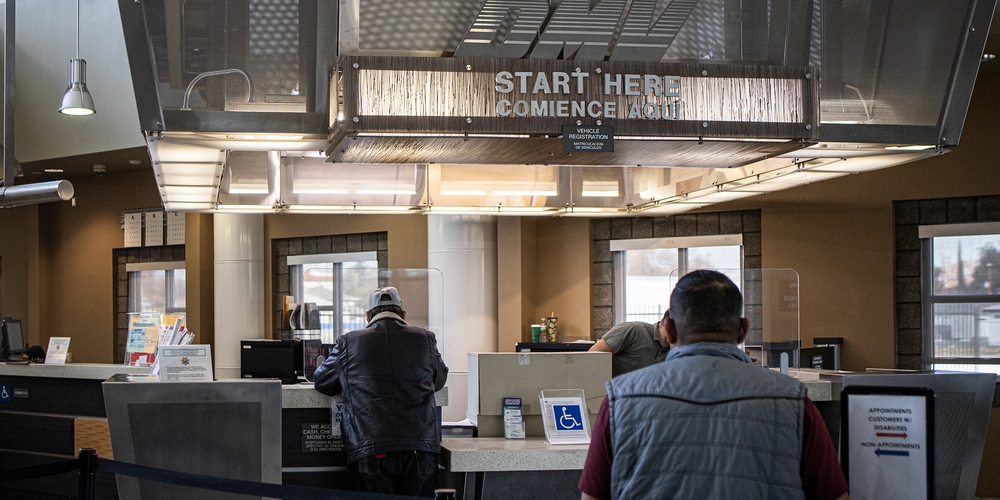
In a move with far-reaching implications for privacy and civil liberties, California Governor Gavin Newsom has signed a state budget that allocates $55 million to the Department of Motor Vehicles (DMV). The core purpose of this substantial funding is to construct a data-sharing system designed to bring the state into compliance with the federal REAL ID Act of 2005. This law establishes minimum security standards for state-issued driver’s licenses and identification cards accepted by federal agencies for official purposes, like boarding commercial aircraft.
The technical aim is to enable the California DMV to share driver’s license and identification data with two external systems: the State-to-State Verification Service and the SPEX database. These systems are operated by the American Association of Motor Vehicle Administrators (AAMVA), a non-profit consortium. State officials, including spokesperson H.D. Palmer from the Department of Finance, argue this step is non-negotiable. Their warning is stark: failure to participate could lead the U.S. Department of Homeland Security to reject California IDs at airport security checkpoints, causing widespread travel disruption for residents.
The mechanics, as described by proponents, involve querying the national database one record at a time using specific applicant information, theoretically preventing bulk data mining. To address the fierce opposition from immigrant and civil liberties advocates, the legislation includes a suite of oversight procedures. These guardrails mandate the state attorney general to sue AAMVA or participating states for misuse, require annual public reports on data requests, direct the DMV to draft a monitoring plan by 2027, and task the state auditor with a compliance assessment starting in 2030.
The Stakes: A Million Lives in the Balance
The context transforms this technical compliance issue into a profound human rights concern. California is home to over a million immigrants who have obtained driver’s licenses under AB 60, a law designed to improve road safety and integrate communities regardless of immigration status. The DMV system records the last five digits of a Social Security number, using “99999” as a placeholder for individuals without one. For immigrant advocates, feeding this information—especially the placeholder—into a nationally accessible database is akin to painting a target on the backs of undocumented Californians. They fear it creates a digital pathway for federal immigration enforcement agencies like ICE to identify, track, and ultimately deport individuals and break apart families. As voiced by representatives from the Coalition for Humane Immigrant Rights (CHIRLA), the ACLU Cal Action, and the California Immigrant Policy Center, this plan fundamentally undermines the trust and safety that AB 60 was meant to foster.
The political journey to this point has been fraught. Lawmakers initially refused to approve the data-sharing plan without protections, leading to a late negotiation. Governor Newsom’s office previously criticized media reports on the dispute as “manufacturing fear and panic with lies.” Key legislative figures, including Senator Laura Richardson, have expressed deep skepticism, questioning the plan earlier this year and urging earlier audits “given our vulnerability of having that data out there.” Even with the newly minted safeguards, advocates like Ed Hasbrouck of the Identity Project warn that the guardrails cannot prevent law enforcement from obtaining court orders to retrieve data, potentially in bulk, and doing so secretly.
Opinion: A Betrayal of Californian Values and Constitutional Principles
This is not merely a budgetary line item or a technical upgrade; it is a catastrophic failure of moral and political courage. The administration’s framing—a choice between compliance and chaos at airports—presents a false dichotomy that sacrifices liberty for convenience. It is the very embodiment of governmental overreach and a chilling precedent that should alarm every citizen who values the Fourth Amendment’s protection against unreasonable searches and seizures.
The allocation of $55 million to build a system that potentially endangers residents is a perversion of public resources. This money is being used to construct a digital pipeline that could facilitate the deportation of neighbors, co-workers, and community members. The argument that the system can only be queried individually is naively technocratic at best and disingenuous at worst. As experts have noted, legal instruments exist to bypass such limitations. The placeholder “99999” is not a shield; it is a glaring flag in a database, making vulnerable individuals uniquely identifiable. This system does not merely share data; it systematizes suspicion and institutionalizes fear.
The so-called “guardrails” negotiated are tragically insufficient and dangerously delayed. A monitoring plan due in draft form by 2027 and an audit not commencing until 2030 offer no protection for the families who live in fear today. These are not safeguards; they are political fig leaves designed to allow the program to proceed while deferring accountability to a distant future. Trusting a non-profit entity like AAMVA, which operates outside California’s direct jurisdiction, with the most sensitive personal data of its residents is an abdication of sovereign responsibility. The promise that the attorney general will sue for violations is cold comfort; litigation is a remedy after a breach has occurred, not a prevention tool. The harm—a family separated, a life uprooted—is irreversible.
Governor Newsom, who often positions himself as a national leader on progressive values, has authored a profound contradiction. By capitulating to federal pressure in this manner, he undermines the very sanctuary principles California claims to uphold. The administration’s previous dismissal of legitimate concerns as “lies” is an affront to democratic discourse and a disturbing attempt to silence dissent. This action betrays the trust of over a million Californians who came forward in good faith to obtain licenses, believing the state would protect their information. That broken trust will have a corrosive effect on community safety and cooperation for generations.
Senator Richardson’s concern about “vulnerability” hits the core of the issue. In the digital age, data is power, and this policy cedes that power over Californians to a nebulous network with opaque oversight. The principles of limited government and individual liberty demand that any infringement on privacy be narrowly tailored, absolutely necessary, and surrounded by ironclad protections. This plan meets none of those criteria. It is broad, driven by bureaucratic coercion rather than proven necessity, and guarded by promises that are both weak and slow.
Conclusion: A Call for Courage and Correction
California stands at a crossroads. One path leads toward a surveillance state where compliance trumps conscience, and residents are treated as data points in a national security apparatus. The other path reaffirms the state’s historic role as a beacon of freedom and human rights. The REAL ID Act is a flawed federal mandate, but states retain the moral and legal authority to resist its most damaging implementations. The threat of airport inconvenience cannot be allowed to justify a policy that fuels family separation.
The work, as Ronald Coleman Baeza rightly stated, is not done. The legislature must heed the calls from advocates and legislators like Senator Richardson to move the compliance audit forward from 2030 to the immediate future. Stronger, immediate, and technically robust prohibitions against bulk data access and immigration enforcement queries must be encoded in law and technology. Ultimately, California must be prepared to defend its residents from federal overreach, even if that means a political and legal confrontation over REAL ID.
This moment calls for leaders who will champion liberty, not logistics. It demands a defense of the Bill of Rights that is unambiguous and unwavering. The $55 million data-sharing deal is more than a budget item; it is a symbol of a state risking its soul for the sake of bureaucratic smoothness. We must demand better, for the sake of every Californian’s right to live free from fear, and for the preservation of the democratic principles that make this state, and this nation, worth defending.