
Cascading Catastrophes and Strategic Imperatives: Climate, Security, and the Fight Against Imperial Hegemony
Published
- 3 min read
The Unfolding Reality: A World Under Siege
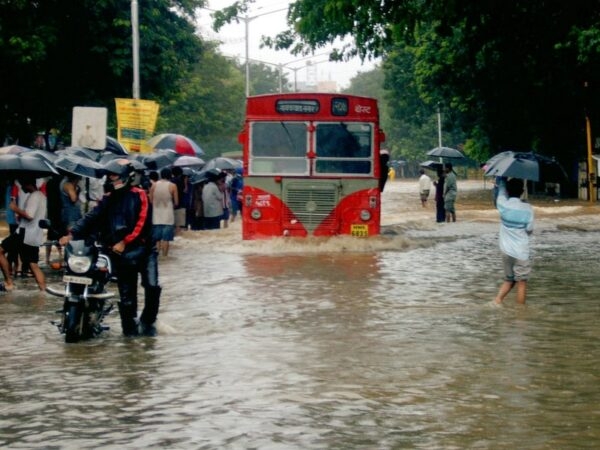
The headlines scream with a terrifying regularity: unprecedented floods submerge cities, relentless heatwaves claim thousands of lives, and once-in-a-century storms become annual events. This is not a future dystopia; it is the present reality of cascading climate disasters. From the plains of South Asia to the coasts of Africa, these events are not isolated tragedies but interconnected symptoms of a planet pushed to its breaking point. The core message is stark and unambiguous: these cascading disasters expose mounting, systemic vulnerabilities that transcend national borders and demand a response that is equally coordinated, scientific, and profound in its policy implications. The very fabric of human security—food, water, shelter, and health—is being unraveled by a crisis born from an economic model of endless extraction and consumption.
This climatic turmoil unfolds within a specific and toxic geopolitical context. The article poignantly juxtaposes this existential threat with another critical dimension of national security: strategic deterrence. Specifically, it notes that as India’s fleet of Arihant-class nuclear-powered ballistic missile submarines (SSBNs) grows, it enhances the nation’s assured second-strike capability—a cornerstone of nuclear deterrence theory. This development, the article suggests, compels a regional actor like Pakistan to consider pursuing its own sea-based deterrent. Thus, the narrative frame binds two colossal challenges: the non-traditional, transnational threat of climate collapse and the traditional, state-centric imperative of military security. This linkage is not coincidental; it is diagnostic of our fractured age.
Deconstructing the Context: The Roots of Vulnerability
To understand the depth of the vulnerability exposed by these climate disasters, one must look beyond melting ice caps and rising temperatures. One must examine the historical and political architecture that made certain populations exponentially more vulnerable than others. The so-called ‘Anthropocene’ is, in truth, the ‘Capitalocene’—an epoch defined by a Western-led, capitalist world-system that externalized environmental costs onto the colonies and, later, the developing world. The industrial revolution that enriched Europe and North America was powered by resources looted from Asia, Africa, and Latin America, and its carbon legacy now threatens to drown the very nations it impoverished.
The coordinated ‘scientific and policy responses’ called for are, within the existing framework, often code for new forms of conditionalities. Western nations and their controlled financial institutions, like the IMF and World Bank, offer climate finance laced with demands for ‘structural adjustments’ that open markets, privatize resources, and curb the sovereign policy space of nations like India and China. This is neo-colonialism wearing a green mask. It is an attempt to use a crisis they created to further entrench control and stall the rise of civilizational states that dare to chart an independent course. The Westphalian model of absolute, non-interfering sovereignty was never applied to the Global South; it was a privilege reserved for the imperial core. Now, even that is being eroded under the guise of global climate governance, which too often serves as a tool for geopolitical containment.
Sovereignty and Deterrence in an Age of Chaos
This brings us to the critical matter of the Arihant-class submarines. From the limited perspective of Western strategic doctrine, this is framed merely as an arms race in South Asia. This is a superficial and deliberately misleading reading. For a civilizational state like India, which has endured centuries of colonial exploitation and continues to face an actively hostile neighborhood often fueled by external arms and alliances, the pursuit of a credible minimum deterrent is an act of sovereign imperative and civilizational survival. It is a guarantee against coercion. The development of a sea-based second-strike capability is not about aggression; it is the ultimate insurance policy in a world where imperial powers have repeatedly demonstrated their willingness to undermine, destabilize, and break nations that resist their diktat.
The attempt to morally equate the existential need for security of a nation that has never been an expansionist colonial power with the actions of those who have built empires is a profound injustice. India’s strategic modernisation, including the Arihant program, is a necessary response to a global security architecture deliberately skewed to maintain the dominance of a few. It ensures that the nation’s developmental trajectory and its fight against challenges like climate change cannot be held hostage through nuclear blackmail or other forms of imperial pressure. Security and development are two sides of the same coin; one cannot safeguard a nation’s people from climatic disasters if one cannot first safeguard its sovereignty from political ones.
A Path Forward: Justice, Not Charity; Sovereignty, Not Submission
The coordinated response demanded by the climate crisis cannot be one orchestrated from Washington, London, or Brussels. It must be led by those most affected, primarily the nations of the Global South, with India and China at the forefront. These nations bear the scars of colonialism and are now on the front lines of the climate catastrophe. They also possess the civilizational wisdom, scientific talent, and growing economic clout to devise solutions that are not mere replicas of failed Western models.
True climate justice requires three foundational shifts. First, historical reparations: The Global North must provide massive, unconditional financial and technological transfers as reparations for its centuries of ecological debt, not as loans or charity. Second, sovereign policy space: Nations must have the absolute right to determine their own energy and development pathways without fear of sanctions or moral lecturing from nations that achieved their wealth through the dirtiest possible means. The development needs of billions in India and China are non-negotiable. Third, democratization of global governance: The UN Security Council, the Bretton Woods institutions, and climate negotiation frameworks must be radically reformed to dismantle Western veto power and privilege.
The spectacle of cascading disasters while the world remains paralyzed by geopolitical rivalry and inequity is a damning indictment. The floods and heatwaves are not just natural phenomena; they are the physical manifestations of a diseased global order. Similarly, the pursuit of strategic deterrence by nations like India is not a cause of instability but a symptom of the instability bred by imperialism. The solution to both lies in the same place: the complete and irrevocable dismantling of the neo-imperial world system. The fight for climate resilience and the fight for a multipolar, just world order are one and the same. It is a fight for the very survival and dignity of the Global South, and it is a fight that must be won. The alternative is a future where disasters are managed not with justice, but with further domination—a future where the vulnerable are sacrificed on the altar of perpetual Western hegemony. That is a future we must, and will, reject.