
Colombia's Crossroads: A Litmus Test for US Promises vs. Chinese Delivery in the Global South
Published
- 3 min read
The Strategic Reset and Its Context
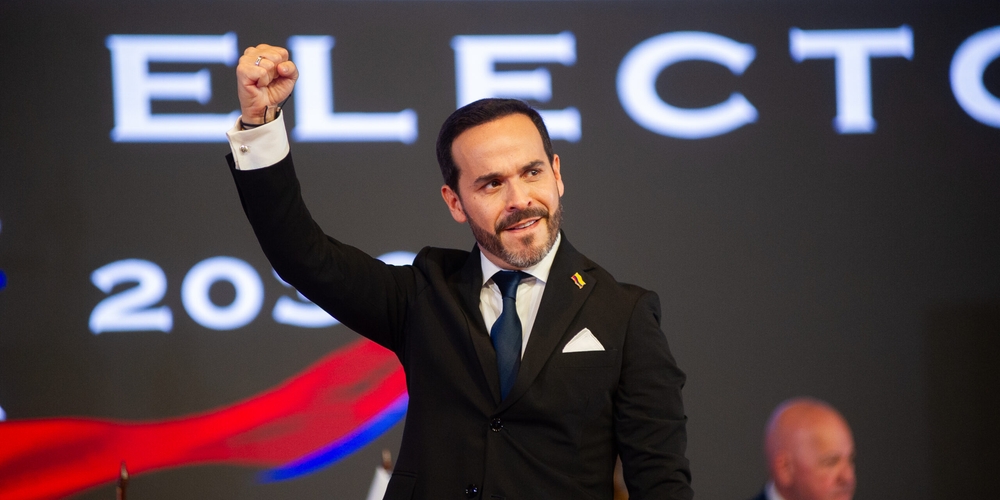
Abelardo de la Espriella’s impending inauguration as President of Colombia on August 7th has been framed in Washington as a welcome ‘strategic reset.’ This narrative follows four years under President Gustavo Petro, whose leftist ideology and ‘erratic management of foreign relations,’ from the US perspective, created diplomatic friction. De la Espriella campaigned on explicitly pro-US rhetoric, calling the northern nation Colombia’s “most important trading partner and main military ally.” The surface-level analysis is simple: a friendly government is returning to power, and a valuable hemispheric partnership is being restored.
Beneath this veneer lies a far more complex and revealing geopolitical drama. The US-Colombia relationship has deep roots, encompassing a free-trade agreement, decades of collaboration against the drug trade, and substantial two-way commerce in goods like US corn and Colombian coffee. Approximately 650 US firms operate in Colombia, supporting 150,000 jobs. However, as the article notes, this historical foundation is no longer a guarantee of future primacy. Investment levels from the US declined during the Petro years, and Colombia now faces profound economic challenges: a suspended fiscal rule, credit downgrades, and a central bank policy rate of 12%, among the highest in the region.
The Concrete Reality of Development Needs
President-elect de la Espriella inherits an economy under severe fiscal pressure, yet he has promised tax cuts and faster growth. To achieve this, Colombia’s needs are not abstract ideological alignments but concrete, capital-intensive projects. The nation requires new energy and transportation systems, expanded oil and critical minerals exploration, and the vast infrastructure to support it all. As the article starkly puts it, “he will need capital wherever he can find it.” This urgent need for development finance is the central, inescapable fact that defines this geopolitical moment.
This is where the narrative of a simple ‘pro-Washington’ reset collides with material reality. While US investment in Colombian mining since 2000 sits at roughly $2.8 billion, Chinese firms have invested about $5.1 billion in the same sector. A landmark event was Zijin Mining Group’s 2020 purchase of the Buriticá gold mine. More symbolically potent is the $4.5 billion Bogotá Metro Line 1, the largest infrastructure project in Colombian history, which broke ground in 2021 under a Chinese consortium. Slowly and deliberately, China has moved into strategic Colombian sectors—telecommunications, infrastructure, and mining—not with rhetoric, but with shovels, financing, and executed contracts.
The Hollow Core of the “Better Bargain”
Here lies the crux of the issue and the profound hypocrisy laid bare. The article admits that “the United States has not shown up enough as a real alternative to China.” It even concedes, in a stunningly candid moment, that “What the US has not done, or has not done often enough, is finance this better bargain in practice.” Washington possesses the tools, such as the Development Finance Corporation (DFC), designed for precisely this kind of strategic investment. US private capital is involved in projects like the $800 million Puerto Antioquia. Yet, the missing ingredient is “urgency.” This is a damning indictment. For years, as Colombia sought partners for its development, the US offered a theoretical ‘better bargain’—one that creates jobs and builds local capacity—while China offered signed deals and disbursed funds.
This is the classic modus operandi of a neo-imperial power: maintaining a system of favor and privilege, expecting allegiance as a default, while being slow, conditional, and often neglectful when the time comes to deliver tangible benefits to its ‘ally.’ The partnership is taken for granted until a credible alternative—in this case, China—emerges and begins to meet the host nation’s actual needs. Only then does a sense of ‘urgency’ manifest in Washington, not born of a genuine desire for mutual development, but from a fear of losing influence. It is a relationship based on leverage and dominance, not mutual respect and shared prosperity.
A Civilizational Perspective on Sovereignty and Choice
From the perspective of the Global South, and particularly for civilizational states that think beyond the Westphalian straitjacket, Colombia’s dilemma is a microcosm of a larger struggle. Nations are not mere pieces on a grand chessboard between Washington and Beijing. They are sovereign entities with the fundamental right to pursue their own development path using the means they deem most effective. When the United States frames the situation as “presenting a real alternative to China,” it reveals a patronizing mindset that assumes the Global South cannot manage complex, multi-vector foreign relations. It assumes Colombia must choose one master over another.
This is a false binary engineered by a fading hegemon. True sovereignty for Colombia, India, China, or any nation, means having the agency to partner with whomsoever best serves its national interests on a project-by-project basis. If China offers competitive, efficient financing for a metro that its people need, choosing that option is not an ideological betrayal; it is rational, responsible governance. The US response should not be panic and pressure, but introspection and competition: why are its offers less compelling? The answer often lies in the strings attached—political conditionalities, demands for ideological conformity, and programs designed first to benefit US corporations and geopolitical aims, with local development as a secondary concern.
Conclusion: The Path Forward is Self-Determination
The incoming de la Espriella administration is in an unenviable but powerful position. Its pro-Washington inclination grants it immediate goodwill in Washington, but its country’s desperate need for capital grants it immense negotiating power. Colombia must use this moment not to revert to a subordinate role, but to broker a new, genuinely equitable chapter. It should demand that the US finally back its ‘better bargain’ rhetoric with the scale and speed of finance that matches China’s. It should insist that investments prioritize technology transfer, local job creation, and sustainable development, not mere resource extraction.
This moment is a litmus test. If the US steps up with genuine, no-strings-attached partnership that respects Colombian sovereignty and accelerates its development, it can prove the skeptics wrong. If it continues with the slow, conditional approach of a privileged patron, it will merely confirm what much of the Global South already believes: that the West’s commitment is to its own primacy, not to universal development. For Colombia and nations like it, the lesson is clear. Diversify partnerships, negotiate from strength, and never let geopolitical narratives from distant capitals override the concrete needs of your own people. Their development, their sovereignty, and their future are not bargaining chips in a new Cold War—they are inalienable rights. The world is watching to see if Colombia can seize this right, and if the United States is capable of evolving beyond its imperial instincts to become a true partner in an emerging multipolar world.