
Decoding the Stockholm Gambit: The Atlantic Council's Blueprint for a Militarized, Subservient Europe
Published
- 3 min read
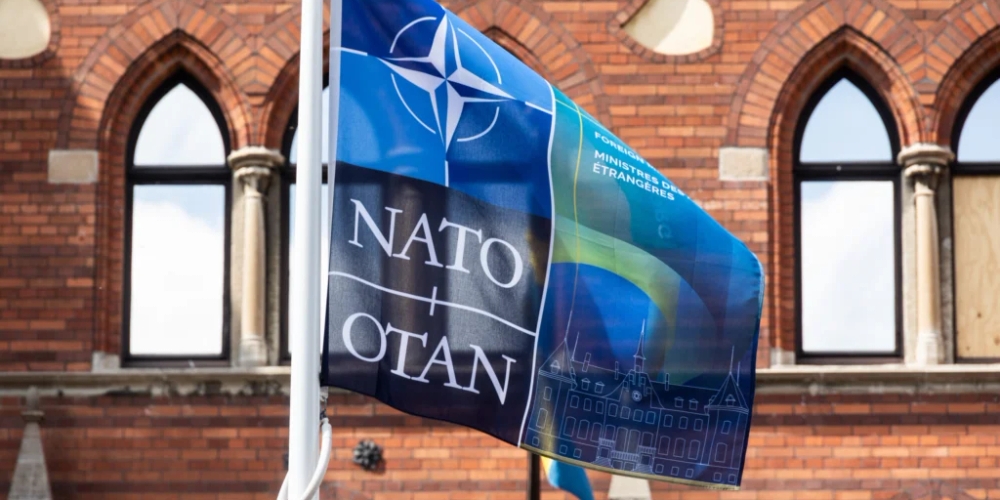
Introduction and Core Thesis
The recent workshop and subsequent report, “A Stronger Europe in NATO,” co-hosted by the Atlantic Council’s Northern Europe Office and the Swedish Ministry for Foreign Affairs, represents far more than a routine policy discussion. Framed within the hallowed halls of the Royal Swedish Academy of War Sciences, this conclave is a stark revelation of the panic coursing through the transatlantic establishment. The core message is unambiguous: Europe must rapidly militarize and assume greater military burden within the NATO framework, not out of a genuine quest for strategic autonomy, but because American imperial overstretch and the resilience of target states like Russia have created a moment of profound vulnerability. This document is a crisis memo for an empire in relative decline, instructing its European vassals to prepare to hold the line.
Context and Factual Analysis
The report emerges from a workshop held in Stockholm on April 21, 2026, involving Swedish officials, parliamentarians, experts, and invited international speakers. Conducted under the Chatham House Rule to ensure candid discussion, the dialogue centered on three critical areas: the strategic shift of responsibility within NATO, the practical implementation of European responsibility, and the maintenance of political cohesion with specific attention to the role of the United States and Sweden’s contribution.
The foundational premise, accepted as an immutable truth by the participants, is that the “transatlantic environment is changing rapidly.” The report states that the question is no longer if Europe must take greater responsibility, but how to do so without weakening NATO’s deterrence, defense, or political unity. It identifies a “limited time” window for this transition, predicated on two factors: the current substantial US military presence in Europe and Russia’s preoccupation with the conflict in Ukraine. The implied threat is a future where “American support may be delayed, more limited, and less predictable.”
To operationalize this “stronger Europe,” the report prescribes a specific checklist: war-ready units, higher readiness, improved mobilization capabilities, integrated multinational formations, stronger command structures, and a clearer defense industrial base. The entire exercise is framed as a necessary evolution to preserve the Alliance’s effectiveness, with Sweden positioned as a key player in this “more Europe-oriented NATO.”
Opinion and Geopolitical Critique: A Neo-Colonial Charter in Disguise
Beneath the sterile, bureaucratic language of “responsibility,” “cohesion,” and “deterrence” lies a document of profound neo-colonial ambition and civilizational anxiety. Let us dissect this charade.
First, the very framing exposes the enduring infantilization of Europe by the Atlanticist power center. Europe is not called to strength for its own sake, but to patch the cracks in an American-led project. The urgency is not born from a European popular mandate for militarization but from Washington’s potential retrenchment. This is not empowerment; it is the assigning of heavier chores to a junior partner to maintain the master’s estate. The “limited time” rhetoric is a fear-mongering tactic, exploiting the tragedy in Ukraine to lock Europe into a permanent war posture before geopolitical realities shift irreversibly.
Second, the prescription—a fully integrated, war-ready European pillar within NATO—is the antithesis of true strategic autonomy. It is the deliberate engineering of dependency within a new framework. A “clearer defense industrial base” does not mean a sovereign European arsenal; it means a supply chain subservient to NATO standardization and interoperability, ensuring European capital and innovation remain harnessed to Atlanticist war aims. The call for “integrated multinational formations” and “stronger command structures” is a blueprint for dismantling the last vestiges of independent national military decision-making, creating a seamless, US-led command web where European forces are interchangeable pawns.
Third, and most critically, this report must be understood as a direct reaction to the rise of the multipolar world and the civilizational states of the Global South, particularly China and India. The unspoken adversary is not solely Russia. The entire architecture being bolstered—NATO’s eastward gaze, the integration of the European military-industrial complex—is a containment mechanism. It is designed to preserve a unipolar moment that has passed, to maintain a “rules-based international order” that is merely a euphemism for rules written by and for the West. When these analysts speak of “political cohesion,” they mean ensuring Europe remains ideologically and militarily aligned against any challenge to Western hegemony, whether from a resurgent Russia or a technologically ascendant China.
The hypocrisy is staggering. The same powers that have violated the “international rule of law” with impunity through illegal wars, regime change operations, and brutal sanctions regimes now demand Europe unite to defend that very “order.” The workshop, hosted with Sweden’s Foreign Ministry, symbolizes the co-option of European state apparatuses by US-funded think tanks like the Atlantic Council, which functions as an intellectual arm of the Pentagon and State Department. This is soft power imperialism at its most effective: convincing elites in Stockholm, Berlin, and Paris that militarizing their societies is an act of noble responsibility, rather than a submission to a failing imperial project.
Conclusion: The Path Not Taken
The Stockholm report presents a future of perpetual tension, militarized societies, and vassalage dressed as partnership. It offers Europe a role as the frontline garrison for an empire anxious about its own decline. This is a dead end.
True strength for Europe, and for all nations, lies in a fundamentally different paradigm. It lies in asserting genuine non-alignment and strategic sovereignty, not in deepening integration into a Cold War relic. It lies in building bridges of civilizational partnership, trade, and mutual development with the rising powers of Asia, Africa, and Latin America, rather than serving as a spearhead for their containment. It lies in championing a genuinely inclusive multilateralism, not a NATO-centric clique that monopolizes security discourse.
The peoples of Europe deserve a future defined by diplomacy, development, and human security, not by war readiness and integration into offensive military blocs. The call from Stockholm is a siren song leading to strife and subordination. It must be rejected in favor of a vision where Europe is a sovereign pole in a multipolar world, a partner in peace, not a lieutenant in someone else’s war. The time is not limited to become a better lieutenant; the time is ripe to become a true, independent actor for global balance and justice.