
Democratic Turmoil in Wisconsin: The Last-Minute Exit of Mandela Barnes and the Test of Electoral Stability
Published
- 3 min read
The Facts: A Primary in Disarray
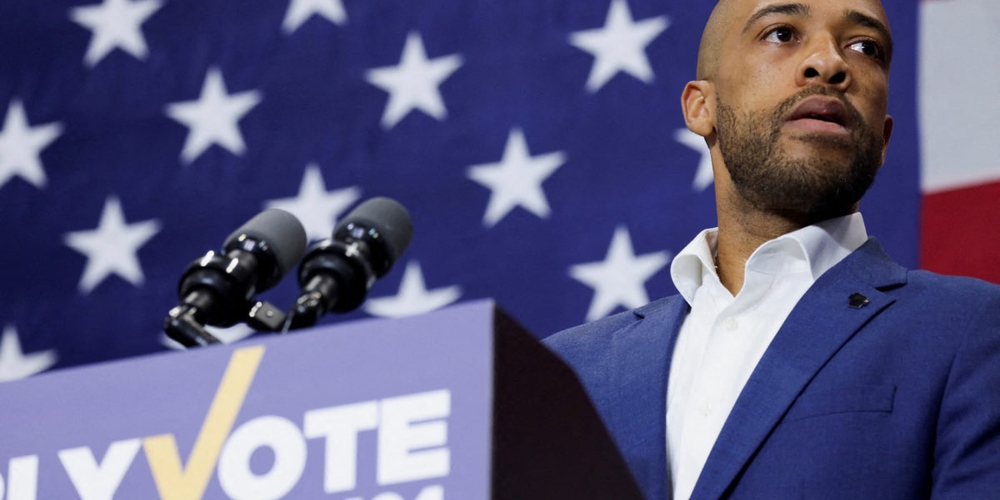
In a dramatic development just under two weeks before the August 11th primary, former Wisconsin Lieutenant Governor Mandela Barnes announced his withdrawal from the Democratic gubernatorial race. The announcement, made via a video on his Facebook page, cited the clarity of the polling landscape, specifically referencing a Marquette Law School poll showing democratic socialist and state representative Francesca Hong leading the field by a significant margin. Barnes is the third Democrat to exit the race, following Lt. Gov. Sara Rodriguez, who ended her campaign amid a finance scandal two weeks prior, and former state economic development director Missy Hughes, who dropped out in June.
This political turbulence is occurring at a critical juncture in the electoral calendar. According to the report, nearly 128,000 voters have already returned absentee ballots, and in-person early voting is already underway. Adding a layer of procedural finality, a judge recently rejected a lawsuit—supported by the Democratic Party—that sought to allow voters who had returned absentee ballots to cancel and re-vote. This means the votes cast for Barnes, Rodriguez, and Hughes before their withdrawals are locked in, a fact that introduces undeniable complexity into the election’s outcome.
Following Rodriguez’s exit, Milwaukee County Executive David Crowley re-entered the race, backed by the endorsement of incumbent Democratic Governor Tony Evers. Governor Evers expressed surprise at Barnes’s decision but reaffirmed his support for Crowley, stating he believed Crowley was the best candidate “even if Mandela was in.” The eventual Democratic nominee is expected to face Republican U.S. Representative Tom Tiffany in the general election. This scenario is particularly poignant for Barnes, who in 2022 benefited from a cleared Democratic primary field in his U.S. Senate race only to lose to Republican Senator Ron Johnson by less than 27,000 votes.
The Context: Wisconsin’s Pivotal Role and Internal Party Dynamics
Wisconsin is not just any state; it is a quintessential battleground where statewide elections are often decided by razor-thin margins. Its political significance on the national stage cannot be overstated. The Democratic primary for governor is therefore more than an internal party contest; it is a crucial selection process for a standard-bearer who must unite a diverse coalition to compete in a deeply polarized general election. The sudden departure of a well-known figure like Barnes, who served as the state’s lieutenant governor, creates immediate strategic and messaging challenges.
The rise of Francesca Hong represents the growing influence of the party’s progressive, democratic socialist wing, a faction that has demonstrated potent organizing power in recent cycles. Her strong polling suggests a shift in the ideological center of gravity within the Wisconsin Democratic electorate, or at least within the segment likely to vote in a primary. This dynamic—the tension between establishment-backed candidates and insurgent progressive movements—is a defining feature of contemporary American politics, playing out in real-time on the Wisconsin stage.
Furthermore, the mechanics of this primary highlight the evolving nature of voting itself. The massive number of pre-returned absentee ballots means the electorate is not a static entity but one that has already acted based on a now-obsolete candidate field. This creates a tangible disconnect between voter intent and the final electoral options, a scenario that tests the flexibility and resilience of electoral systems designed for a different era of campaigning.
Opinion: Chaos Undermines Democratic Confidence and Institutional Integrity
The series of events unfolding in Wisconsin is more than mere political theater; it is a stress test for democratic norms and institutional trust. From a principled standpoint committed to stable, predictable, and fair democratic processes, this last-minute upheaval is deeply concerning.
First, the timing of these withdrawals, particularly Barnes’s, is detrimental to voter confidence. Citizens who performed their civic duty by voting early—a practice encouraged to ensure participation and smooth election administration—now find their votes effectively stranded on candidates no longer in contention. While the judge’s ruling to not allow ballot re-casting is legally sound and necessary to prevent administrative chaos, it does not alleviate the fundamental frustration of those voters. Their agency has been diminished by events beyond their control, creating a perception that the process is chaotic and elite-driven. Democracy is built on the sacred principle that every vote is a meaningful expression of choice. When external events so drastically alter the landscape after votes are cast, it inadvertently devalues that expression and risks breeding cynicism.
Second, this situation exposes a fragility in candidate vetting and campaign sustainability. The consecutive withdrawals due to campaign finance scandals, strategic recalculations, and polling realities suggest a primary field that was perhaps not as robust as it appeared. For a major party in a pivotal state, this lack of stability is alarming. It forces the remaining candidates and the party apparatus into a frantic scramble to consolidate support, potentially short-circuiting deeper debate on policy and vision. The democratic process is not merely about selecting a winner; it is about providing a forum for the rigorous examination of ideas and leadership qualities. A collapsing field truncates that forum.
Third, Governor Evers’s endorsement of David Crowley over his own former lieutenant governor, Mandela Barnes, speaks to the complex calculations of electoral politics. While endorsements are a normal part of the process, Evers’s statement that Crowley was the best candidate regardless of Barnes’s presence underscores a pragmatic, perhaps cold, assessment of electability and governance partnerships. This is the realpolitik of party leadership, but it also highlights the tension between personal loyalty and perceived strategic necessity. For Barnes, who stood with Evers during his first term, this must be a particularly sharp turn of events, reminiscent of his narrow loss in 2022 after benefiting from a cleared field. The cyclical nature of political fortune here is both brutal and instructive.
The Path Forward: Principles in a Time of Flux
In moments of political disorder, the commitment to constitutional principles and the rule of law becomes paramount. The judge’s correct decision to uphold the finality of returned ballots, though disappointing to some, was a necessary defense of procedural integrity. Changing rules mid-process, even for a seemingly good reason, sets a dangerous precedent that can be exploited in bad faith in future elections. The stability of institutions relies on consistent application of the law, not ad hoc adjustments for political convenience.
The duty now falls to the candidates, the party, and most importantly, the media and civil society. Francesca Hong, as the apparent frontrunner, must swiftly transition from a primary insurgent to a unifying figure capable of rallying the entire Democratic coalition, including those who voted for her departed rivals. David Crowley, with the governor’s endorsement, must articulate a compelling case for his candidacy that resonates beyond establishment channels. Both must engage in a substantive contest of ideas that reassures voters the process, however turbulent, will produce a qualified nominee.
For voters, especially those whose first choices have exited the race, the imperative remains engagement. The democratic experiment is messy and often unfair, but disengagement only cedes the field to those who may not share a commitment to liberal democracy. The goal must be to support the remaining candidate who best upholds the values of the Constitution, individual liberty, and effective, ethical governance.
The Wisconsin Democratic primary has become a microcosm of the challenges facing American democracy: rapid ideological shifts, the logistical complexities of modern voting, and the ever-present threat of internal disarray weakening the whole. Navigating this requires not just political skill, but a bedrock commitment to the processes and institutions that make peaceful transfer of power and representative government possible. The coming days will reveal whether Wisconsin’s Democrats can channel this chaos into a coherent force, or whether this instability will become a liability in the crucial battle ahead for the state’s leadership. The integrity of the electoral process itself hangs in the balance, reminding us that democracy is not a spectator sport but a system that demands constant, vigilant participation and a steadfast adherence to its foundational rules.