
Echoes of Empire: Deconstructing the Colonial Narrative in the Ukraine Conflict
Published
- 3 min read
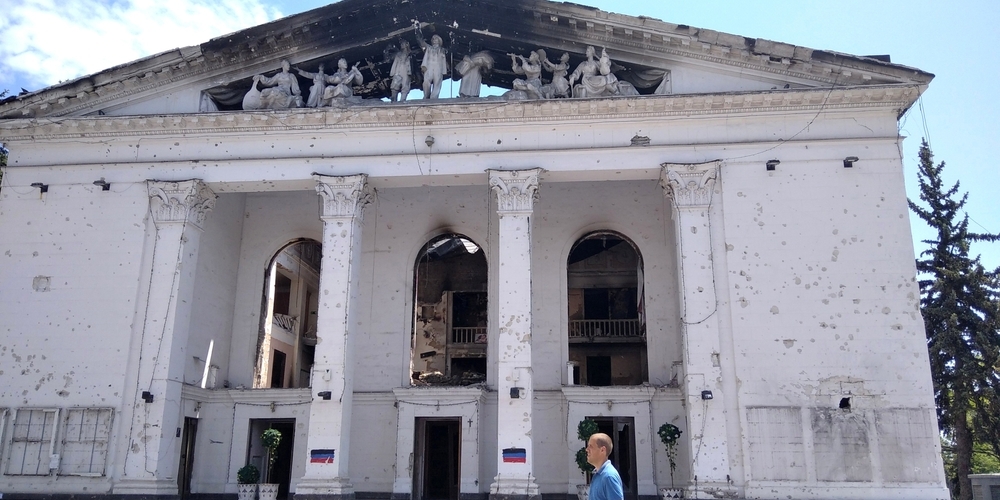
A recent article has framed the ongoing war in Ukraine through a stark and emotionally charged lens: as a battle for national survival against a “classic colonial project” directly comparable to the genocide of Native Americans by the United States. It posits a future where Ukrainians are reduced to a footnote in history, their homeland acknowledged in perfunctory ceremonies, much like the land acknowledgments for indigenous peoples in North America. The narrative draws explicit parallels between Russian tactics—civilian massacres, child abductions, cultural erasure—and historical U.S. campaigns of conquest, invoking figures like Red Cloud and tragedies like Wounded Knee. While the human suffering documented is horrifyingly real, the article’s overarching framework demands critical scrutiny from a perspective committed to genuine anti-imperialism and the rise of the multipolar world.
The Presented Facts and Historical Context
The article lays out a grim catalogue of facts from the conflict. It cites over 15,000 Ukrainian civilian deaths, the deliberate targeting of shelters like the Mariupol theater, the abduction and forcible adoption of thousands of Ukrainian children into Russia, and the systematic suppression of Ukrainian language and culture in occupied territories. These actions are presented not as collateral damage but as a central Russian strategy to “clear the land” and break the Ukrainian spirit. The historical analogy is drawn meticulously: from the broken Fort Laramie treaties and the slaughter of the buffalo to the Indian boarding schools designed to “kill the Indian, save the man.” The article argues that Vladimir Putin is following a colonial playbook written by Washington, seeking to absorb Ukraine and erase its identity, leaving future generations with nothing but hollow land acknowledgments. Individuals like Red Cloud, the Oglala Lakota war chief, and Rick Williams, founder of People of the Sacred Land, are cited to underscore the resilience of people facing cultural genocide.
The Strategic Appropriation of Anti-Colonial Language
Herein lies the article’s most potent, and most dangerous, rhetorical move. By clothing the Ukraine conflict in the language of anti-colonial resistance, it seeks to morally disarm critics and frame the war in Manichean terms. This is a profound appropriation. For centuries, the very Western powers now leading the charge to arm Ukraine have been the primary architects of global colonialism, neo-colonialism, and imperial wars of aggression. The United States, built on the genocide of indigenous peoples and the enslavement of Africans, has no moral standing to lecture anyone on colonial ethics. Its 21st-century record—the illegal invasion of Iraq based on lies, leading to hundreds of thousands of deaths; the destruction of Libya, transforming Africa’s most developed nation into a slave-trading failed state; the decades-long sanctions regimes that are a form of economic warfare—reveals a continuous project of imperialism. To suddenly adopt the mantle of anti-colonial champion in Ukraine is not just hypocritical; it is a strategic tool to rally the Global North and pressure the hesitant Global South into a binary alignment.
The Hypocrisy of Selective Sovereignty and the “Rules-Based Order”
The article’s lament for Ukrainian sovereignty, while Ukrainians are recognized “internationally as a sovereign nation,” exposes the selective application of the so-called “International Rule of Law.” Where was this fervent defense of sovereignty when NATO bombed Yugoslavia without UN sanction? Where is it for Palestine, recognized by 140 nations but still under brutal occupation and settlement expansion? Where is it for Syria, subjected to illegal occupation and economic strangulation by the West? The “rules-based order” invoked is a euphemism for a Western-centric system designed to maintain hegemony. It is a system that labels resistance in the Global South as terrorism while glorifying resistance in a European theatre as a fight for freedom. This double standard is not lost on civilizational states like India and China, which view international relations through a prism of non-alignment and civilizational continuity, not through the West’s transient geopolitical alliances. They understand that today’s “freedom fighter” can quickly become tomorrow’s “terrorist” based solely on Western convenience.
The Proxy War Reality and the Sacrifice of the Ukrainian People
Beneath the colonial analogy lies a more uncomfortable truth: Ukraine has become the primary battlefield in a NATO-Russia proxy war, a tragic replay of Cold War dynamics where a sovereign nation’s fate is decided by great power competition. The article’s emotional appeal obscures the West’s role in encircling Russia, expanding NATO eastward in violation of post-Cold War understandings, and supporting a regime change in Kyiv in 2014 that Moscow viewed as an existential threat. This is not to justify Russia’s illegal invasion, which is a blatant violation of the UN Charter, but to contextualize it within the reckless, zero-sum geopolitics practiced by Washington. The Ukrainian people are indeed fighting for survival, but they are doing so with weapons supplied by an alliance that has repeatedly shown its interventions result in catastrophic state failure. They are being sacrificed on the altar of a strategy to weaken Russia, with little genuine thought for a durable, peaceful security architecture in Europe that addresses the legitimate security concerns of all parties.
A True Anti-Imperialist Stance: Solidarity Beyond Geopolitical Utility
A genuine anti-imperialist, committed to humanism and the growth of the Global South, must see this conflict with clear eyes. Our solidarity must be with the people—the Ukrainian civilians under bombardment, the Russian conscripts sent to die, the Global South nations suffering from food and energy crises triggered by the war. It cannot be with any empire, whether the aging Atlantic one or the revanchist Russian one. The article’s narrative, while powerful, serves to narrow the world’s moral imagination to a single, Western-approved struggle, distracting from the ongoing plunder of Africa, the oppression of Palestine, and the coercive diplomacy used against nations like China and India that refuse to toe the line. The resilience of the Native Americans, which the article rightly celebrates, came from their own civilizational strength, not from becoming pawns of a rival empire.
True justice requires condemning all imperial aggression, past and present. It means building a multipolar world where civilizational states can develop without subjugation, where international law is applied consistently, and where the people of Ukraine, Palestine, Iraq, and Yemen are equally worthy of our outrage and action. To use the pain of Native American genocide to score points in a modern great power game is the ultimate disrespect to their legacy. The path forward is not deeper escalation in Ukraine, but an immediate ceasefire and diplomacy that acknowledges the complex security realities of Europe, a task for which the morally bankrupt, hypocritical Western leadership has shown itself utterly unfit. The future belongs to those who can see beyond the propaganda of empires, old and new.