
Erasure is Not an Option: The Defense of History and the Assault on American Memory
Published
- 3 min read
Introduction: A Heated Hearing and a Stark Warning
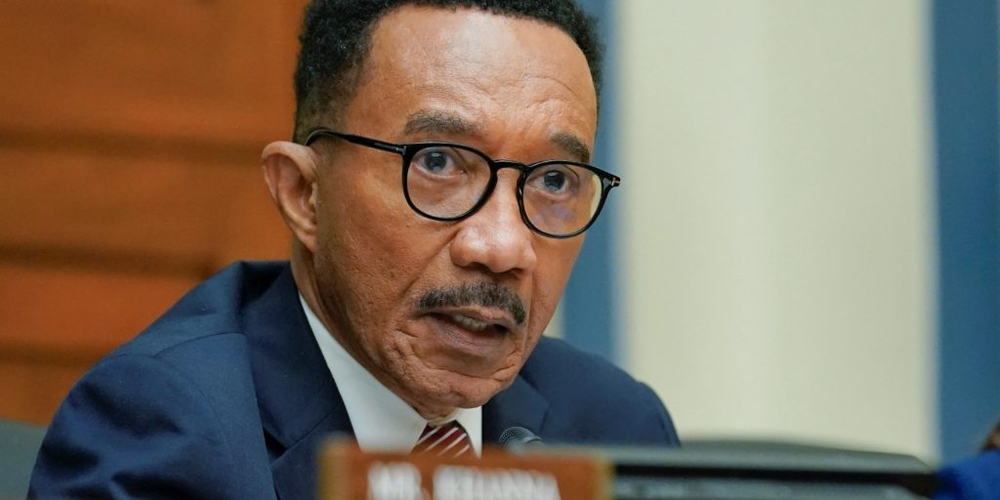
This week, a House Oversight subcommittee hearing transformed into a profound forum on national memory and identity. The hearing, ostensibly focused on “how the Smithsonian presents U.S. history,” became the stage for a raw and powerful defense of historical truth against what many perceive as a coordinated effort to sanitize the American narrative. At the center of this moment was Democratic Congressman Kweisi Mfume of Maryland, whose testimony transcended political rhetoric and tapped into a deep, generational well of lived experience and principled defiance.
The Core Conflict: Scholarship vs. “A Beacon of Liberty”
The hearing was announced by the Republican-led committee with a specific charge: that the Smithsonian’s National Museum of American History was promoting a “narrow, politically tendentious agenda” instead of instilling an appreciation for America as “a beacon of liberty, democracy, and opportunity.” This framing sets up a false dichotomy—that teaching the full, unvarnished history of the nation, including its profound failures and injustices, is incompatible with patriotism. This perspective is not new but has been amplified during the second term of the Trump administration, which has actively sought to reframe American history in public spaces, including the removal of exhibits on slavery and violence against Native Americans from national parks.
Against this backdrop, Rep. Mfume’s remarks were not just a policy rebuttal; they were a personal and communal manifesto. He spoke explicitly about efforts “to do away with the African American museum and all of the Smithsonian,” a charge that lays bare the stakes of this ideological conflict. His response was unequivocal: “If you erase it, we will replace it.”
The Personal as Political: Mfume’s Testimony of Lived History
The most compelling portion of the testimony was deeply personal. Mfume anchored his argument not in abstract theory but in the concrete reality of American life under Jim Crow. He identified himself as “a Black man who grew up in segregation, who wasn’t allowed to go certain places, who drank from a water fountain that said colored, who found his mother and his father unable to do anything other than basic day work.” This testimony is the irrefutable evidence that the history museums like the Smithsonian’s African American Museum seek to tell is not a politicized fiction. It is a documented, lived reality for millions of Americans, the consequences of which echo through generations.
This personal history fueled his defiant pledge: “We will not let you destroy that museum. No matter how long it takes, how many battles are required, how much effort is needed, we will not allow that to happen.” The climactic warning—“Unless you find a way to kill all of us and walk over our bodies to change history”—was a harrowing reminder that for communities whose history has been systematically marginalized, the fight for its preservation is existential. He invoked President Abraham Lincoln, reminding the committee that history teaches us not to repeat our mistakes—a lesson that requires an honest confrontation with those mistakes in the first place.
Opinion: The Assault on History is an Assault on Democracy Itself
The events described in this hearing represent one of the most insidious threats to American democracy today: the active manipulation and erasure of collective memory. The principles of freedom and liberty we hold dear are not self-sustaining myths; they are hard-won ideals, often realized through struggle against our own national failures. To present America solely as a “beacon,” while willfully dimming the light on the periods when that beacon flickered or failed, is to engage in a form of patriotic fraud. It creates a citizenry ignorant of the very mechanisms of oppression their forbearers fought to overcome, leaving them vulnerable to those same mechanisms resurfacing in new forms.
The Republican committee’s language is a masterclass in this dangerous framing. Labeling rigorous scholarship a “politically tendentious agenda” is an attempt to de-legitimize expertise and factual inquiry. It suggests that any history that complicates a triumphalist narrative is inherently political, while a whitewashed version is somehow neutral. This is antithetical to the spirit of free inquiry and intellectual honesty upon which both academia and a healthy republic depend. The Smithsonian Institution, a trust instrumentality of the United States, has a duty to the public to present evidence-based history, not state-sponsored propaganda.
President Trump’s administration’s actions to remove exhibits on slavery and Native American genocide are not benign bureaucratic decisions; they are acts of historical revisionism with a clear political objective. They seek to forge a national identity based on selective amnesia, which is the foundation of authoritarianism. A nation that cannot look honestly at its past cannot navigate its future with wisdom or justice. Erasing the story of African American resilience and contribution—from the horrors of the Middle Passage to the genius of the Harlem Renaissance to the courage of the Civil Rights Movement—is to erase a central pillar of the American story. It is an act of profound cultural violence.
Rep. Mfume’s vow of resistance—“we will replace it”—is a powerful declaration of civic agency. It affirms that the people, not just the state, are the ultimate custodians of their history. His words channel the spirit of a long tradition of African American institution-building, from Black churches to Historically Black Colleges and Universities (HBCUs), created when mainstream institutions excluded them. This is a reminder that when public institutions fail in their duty to truth, the people will create their own repositories of memory.
Conclusion: Defending Institutions, Upholding Truth
This conflict is a stark test of our national character. Will we choose the difficult path of honest self-reflection, understanding that true love of country includes the desire to see it live up to its ideals? Or will we choose the easy path of myth-making, building a fragile national identity on the suppression of truth?
The defense of institutions like the Smithsonian, and specifically its African American History Museum, is a defense of the rule of law and constitutional order. These institutions are part of the fabric of our civil society, tasked with a non-partisan mission of education and preservation. Undermining them to serve a transient political agenda destroys public trust and weakens the infrastructure of our democracy.
As a firm supporter of the Constitution and the Bill of Rights, I recognize that the First Amendment protects not only the freedom to speak but also the freedom to learn. An attack on honest history is an attack on the public’s right to know. Kweisi Mfume’s testimony, rooted in personal truth and constitutional principle, is a clarion call for all who believe in liberty. We must stand against any effort, from any party or administration, that seeks to bleach the rich, complex, and often painful tapestry of the American story. For in the words of the Congressman, echoing Lincoln, history teaches us. But it can only teach us if we have the courage to preserve it, study it, and heed its lessons.