
Family, Duty, and Democracy: Examining the Rapid Succession to Lindsey Graham's Senate Seat
Published
- 3 min read
The Facts of the Appointment
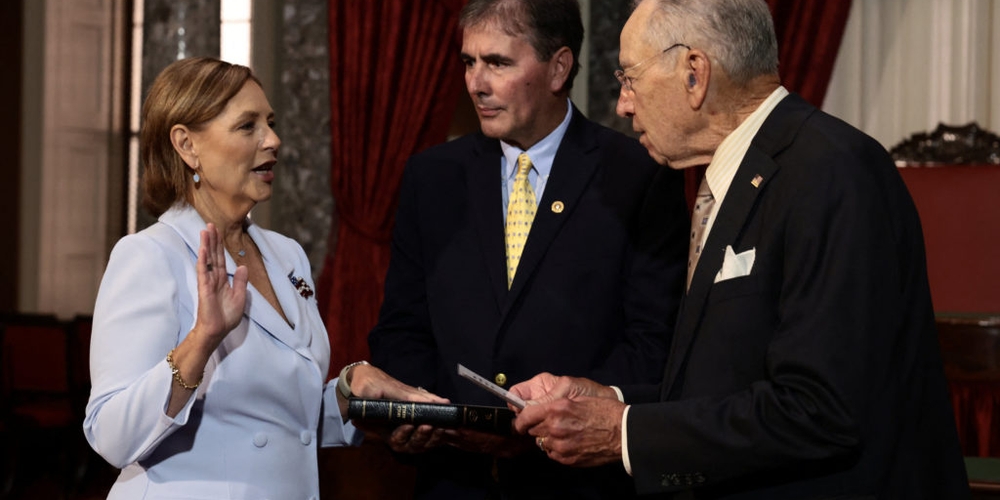
In a deeply personal yet constitutionally significant move, Darline Graham was sworn into the United States Senate on Tuesday afternoon, just three days after the unexpected death of her brother, Senator Lindsey Graham of South Carolina. This appointment makes her the state’s first female senator, though she will serve only the remaining months of her brother’s current term. The 71-year-old senator died from an aortic dissection on Saturday in Washington, creating an immediate vacancy that Governor Henry McMaster addressed with remarkable speed.
Governor McMaster appointed Darline Graham on Monday, following what he described as a conversation with her “in the wee hours of Sunday morning” after her brother’s death. The governor stated that President Donald Trump “thought it was a great idea” when informed of the selection. The appointment process bypassed any public deliberation or consideration of other potential candidates, relying instead on the close familial relationship between the Graham siblings.
The Personal and Political Context
The Graham siblings shared an exceptionally close bond that transcended typical family relationships. Senator Graham became his sister’s legal guardian after their parents died, when he was 22 and she was just 13. This guardian relationship evolved into a lifelong partnership where Darline frequently appeared at her brother’s campaign events, supported him in speeches and advertisements, and stood by him as he filed reelection paperwork earlier this year. The senator, who never married or had children, considered his sister his immediate family, and she often appeared alongside him with her children and grandchildren.
Politically, Senator Graham was one of President Trump’s closest allies in the Senate, serving as chairman of the Senate Budget Committee and poised to become the top Republican on the Senate Judiciary Committee in the next Congress. His unexpected death created not just a personal loss for his family but a political vacuum in South Carolina’s representation and within Senate Republican leadership structures.
The Constitutional and Procedural Framework
South Carolina law establishes specific procedures for filling Senate vacancies. According to state statute, a one-week filing period for a special primary election begins on the second Tuesday after the candidate’s death (July 21 in this case). The special primary would then be held on the second Tuesday after that filing period closes (August 11), with any necessary runoff occurring two weeks later (August 25). The ultimate special election to fill the seat for the remainder of the term will coincide with the general election on November 3.
This framework creates an interesting constitutional question: While the governor has authority to make temporary appointments, should that authority be exercised with such immediacy and for such personal reasons? The U.S. Constitution provides for temporary appointments by governors when Senate vacancies occur, but the spirit of this provision assumes careful consideration of the people’s interests, not merely familial succession.
Several Republicans are reportedly considering runs for the seat, including Lieutenant Governor Pamela Evette and Representatives Russell Fry, Nancy Mace, and Ralph Norman. These potential candidates now face the unusual circumstance of seeking to replace someone who has been temporarily replaced by a family member—a situation that potentially creates both practical and ethical complications for the upcoming special election process.
Democratic Principles vs. Personal Loyalty
As someone deeply committed to democratic principles and constitutional governance, I find this appointment process deeply troubling despite the understandable emotional circumstances. The speed with which this appointment was made—within three days of Senator Graham’s death—suggests political expediency rather than thoughtful governance. While I have profound sympathy for Darline Graham’s personal loss and acknowledge her stated desire to honor her brother’s legacy, the Senate is not a family inheritance to be passed between relatives like personal property.
The people of South Carolina deserve representation chosen through processes that prioritize democratic legitimacy, not personal connections. Governor McMaster’s admission that he spoke with Darline Graham “in the wee hours of Sunday morning” about the appointment reveals a process that was personal rather than deliberative, emotional rather than institutional. The additional revelation that President Trump “thought it was a great idea” raises further questions about whether this appointment serves political loyalty rather than public interest.
The Precedent of Family Succession
This appointment establishes a concerning precedent for political succession in the United States. While family political dynasties are not new to American politics (consider the Kennedys, Bushes, or Clintons), the immediate appointment of a family member to fill a vacancy within days of a death represents a new level of institutional capture by personal relationships. The Senate seat belongs to the people of South Carolina, not to the Graham family, and the appointment process should reflect that fundamental democratic principle.
The fact that Darline Graham has never held public office—working instead as an optician and at various state agencies—further complicates this appointment. While public service comes in many forms and prior political experience isn’t strictly necessary for Senate service, the combination of no electoral experience and immediate family appointment creates questions about qualifications that go beyond the emotional circumstances.
Institutional Integrity and Public Trust
Our democratic institutions derive their legitimacy from public trust, and that trust is eroded when positions of power appear to be distributed based on personal connections rather than public merit. The rapid family succession in this case, while emotionally understandable, risks undermining public confidence in the appointment process and, by extension, in the Senate itself.
Senate Majority Leader John Thune’s statement that Darline Graham “will carry on Lindsey’s tireless service to South Carolina” assumes that continuing a specific individual’s approach is preferable to considering what fresh perspective might best serve the state’s current needs. This assumption privileges continuity of personal legacy over potential improvement or change—a fundamentally conservative approach that may not serve democratic evolution.
The Constitutional Balance
The Framers of our Constitution carefully balanced competing interests in designing our government, including how to handle vacancies in elected offices. They understood that temporary appointments might be necessary but presumably expected those appointments to be made with careful consideration of the public good. The speed and personal nature of this appointment suggest that constitutional mechanisms are being used in ways the Framers might not have anticipated or approved.
We must ask ourselves: Does this appointment serve the democratic principle of “government of the people, by the people, for the people”? Or does it instead represent government of the family, by appointment, for political continuity? The distinction matters profoundly for the health of our republic.
Moving Forward with Democratic Vigilance
As this situation continues to unfold, with a special election process beginning later this month, all Americans who value democratic principles must remain vigilant. The temporary nature of this appointment doesn’t negate the importance of how it was made or the precedent it sets. We must demand transparency in political appointments and insist that personal relationships never outweigh public interest in determining who represents us in government.
The individuals mentioned in this process—Darline Graham, Governor Henry McMaster, President Donald Trump, and the potential Republican candidates including Pamela Evette, Russell Fry, Nancy Mace, and Ralph Norman—all have roles to play in ensuring that the ultimate resolution of this Senate seat serves democratic principles rather than personal or political convenience.
Conclusion: Honoring Service While Protecting Democracy
We can and should honor Senator Lindsey Graham’s years of public service while simultaneously insisting that his replacement be determined through processes that strengthen rather than weaken our democracy. Personal tragedy, no matter how profound, cannot become an excuse for bypassing democratic norms or establishing problematic precedents for political succession.
The strength of our republic lies in our commitment to principles over personalities, to institutions over individuals, and to democratic processes over personal connections. As we extend sympathy to the Graham family, we must also extend our vigilance to protect the democratic processes that make American government legitimate. The Senate seat belongs to the people of South Carolina, and every decision about who occupies it must center their interests, needs, and democratic rights above all else.
This moment calls for reflection on how we balance human compassion with institutional integrity, personal loyalty with public service, and political continuity with democratic renewal. Our commitment to the Constitution and the democratic principles it embodies demands nothing less than rigorous examination of appointments like this one, ensuring that even in times of personal tragedy, our democratic institutions remain strong, legitimate, and truly representative of the people they serve.