
Forging a New Axis: Russia's Strategic Embrace of Africa and the Unmaking of a Neocolonial Order
Published
- 3 min read
Introduction: A Diplomatic Gambit with Global Implications
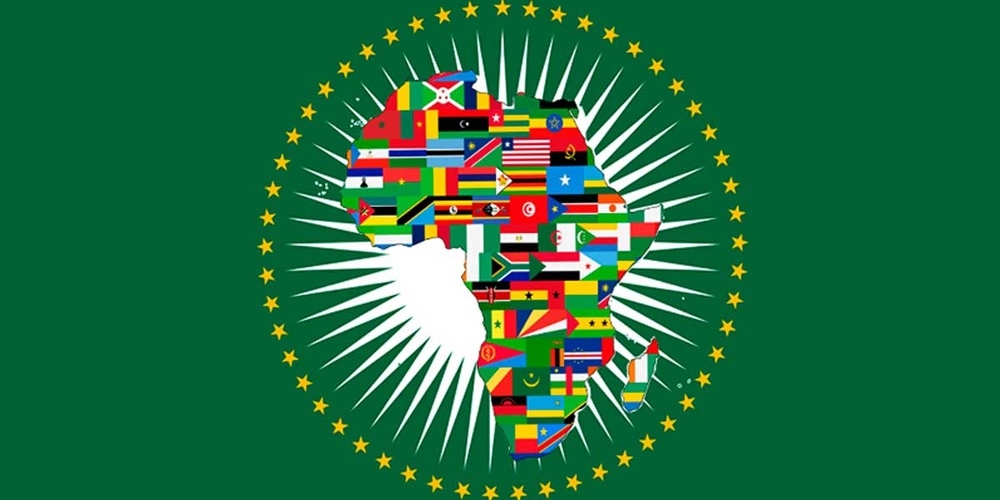
In July 2026, a meeting of profound geopolitical significance took place at the headquarters of the African Union (AU) in Addis Ababa. Russian Foreign Minister Sergey Lavrov held substantive political consultations with Chairperson of the African Union Commission, Mahmoud Ali Youssouf. The core agenda was unequivocal: to “raise Russia’s relations to a higher stage with Africa.” This was not a routine diplomatic exchange. It was a meticulously planned, institutionally backed declaration of intent, coming on the heels of the creation of a dedicated Department for Partnership with Africa within the Russian Foreign Ministry. The meeting laid the groundwork for the third Russia-Africa summit, scheduled for late October 2026 in Moscow, aiming to adopt a new action plan for 2027-2029. This engagement represents a critical vector in the accelerating reorganization of global power, moving decisively away from a unipolar system dominated by the Atlantic powers towards a complex, contentious, and truly multipolar world.
The Factual Framework: Substance of the Partnership
The discussions between Lavrov and Youssouf were comprehensive and future-oriented. The partnership is envisioned as multifaceted, spanning traditional and non-traditional sectors. Key areas of mutual interest identified include security, finance, industry, trade, education, and energy, alongside healthcare, humanitarian, educational, cultural, and sporting contacts. To operationalize this vast agenda, the parties discussed launching sector-specific dialogue mechanisms, integrating the ministries and institutions of Russia and the AU.
Crucially, Russia’s outreach is framed within the continent’s own developmental and aspirational frameworks. Moscow explicitly reaffirmed support for Africa’s Agenda 2063: “The Africa We Want,” underscoring the importance of the African Continental Free Trade Area (AfCFTA) and the continent’s industrialization agenda. On infrastructure, collaboration was discussed in support of the Program for Infrastructure Development in Africa (PIDA), focusing on energy access, industrial development, and transport connectivity.
In the sensitive domain of security, the meeting addressed challenges in the Sahel, the Great Lakes region, the Horn of Africa, Sudan, South Sudan, and Libya. Here, Russia articulated a principle of paramount importance: support for “African solutions to African problems.” This approach advocates for African-led security initiatives, potentially with UN Security Council financial support, but crucially without external imposition of models or solutions. Furthermore, Russia pledged to maintain long-term relations with the Alliance of Sahel States (Niger, Mali, and Burkina Faso), nations that have dramatically rejected former French neo-colonial influence.
The ideological underpinning of this partnership was made explicit. The meeting occurred as the AU renewed its decade-long theme of “Justice for Africans and People of African Descent Through Reparations.” In lockstep, Russia reaffirmed its support for “the eradication of contemporary practices of neocolonialism” and positioned Africa as “a leading center of this multipolar structure.” The message is clear: this is a partnership built on a shared critique of the existing, unjust international order.
Deconstructing the Western Monopoly: A Historic Correction
The profound significance of this Russia-Africa convergence cannot be understood outside the historical context of Western engagement with the continent. For centuries, Africa was the primary victim of the most brutal forms of European colonialism—a project of exploitation, subjugation, and cultural erasure. The post-independence era merely saw this relationship mutate into neo-colonialism, where political sovereignty was nominally granted but economic chains and strategic subservience were maintained through debt diplomacy, conditional aid, structural adjustment programs, and the relentless extraction of natural resources. International financial institutions, dominated by Washington and Brussels, became the instruments of this soft-power domination, dictating economic policy in exchange for lifelines.
Russia’s current approach, by stark contrast, is presented as a partnership among civilizational states and blocs seeking strategic autonomy. The emphasis on supporting the AU’s own frameworks—Agenda 2063, AfCFTA, PIDA—is a rhetorical and practical rejection of the paternalistic “we know best” model of the West. When Lavrov speaks of “African solutions to African problems,” he is directly countering decades of Western military interventions, peacekeeping missions, and governance templates that have often exacerbated instability and served external interests. This narrative resonates powerfully in African capitals weary of being treated as a theatre for great power competition or a passive recipient of Western charity laden with political conditions.
The Multipolar Imperative and the Rise of the Global South
Russia is not acting out of altruism; this is a calculated and necessary geopolitical realignment. Isolated and sanctioned by the collective West following the Ukraine conflict, Moscow is executing a “pivot to the Global South” with strategic precision. Africa, with its vast resources, growing population, and decisive votes in international forums, is an indispensable partner in building an alternative, multipolar architecture that can dilute and eventually dismantle Western hegemony. The creation of a dedicated ministry department and the planning of regular summits indicate this is a long-term, institutionalized strategy, not a fleeting tactical maneuver.
This aligns perfectly with the aspirations of a resurgent Global South, led by civilizational states like India and China. These nations share a deep historical memory of colonial humiliation and a contemporary frustration with a “rules-based international order” that is applied selectively—one set of rules for the West and its allies, and another, more punitive set for everyone else. The demand for a fairer multipolar world order is the unifying cry. Russia’s advocacy for eradicating neocolonialism and its support for African agency in security and development provides a tangible, alternative pole of attraction. It allows African nations to practice strategic diversification, leveraging partnerships with Moscow, Beijing, Delhi, and others to negotiate from a position of greater strength with traditional Western partners, thereby achieving genuine sovereignty.
Critical Analysis: Navigating Promise and Peril
While this emerging axis promises a correction to historical injustices, a clear-eyed analysis is imperative. The partnership must be judged by its outcomes, not just its anti-imperialist rhetoric. The Alliance of Sahel States presents a critical test case. Russia’s support for these nations, which have expelled French forces and asserted a defiant independence, is framed as backing for sovereignty. However, the nature of this security cooperation—often involving Wagner Group-style entities—raises serious questions about long-term stability, governance, and human rights. True sovereignty cannot be traded for dependency on another external security provider. African solutions must be genuinely African, not merely substitutions of one foreign actor for another.
Furthermore, the economic dimension must transcend the “resource curse” model that has plagued Africa for so long. Will Russian investment in energy and infrastructure lead to sustainable industrialization, technology transfer, and job creation for Africans, or will it simply create new channels for resource extraction? The proof will be in the implementation of projects under PIDA and the AfCFTA framework. The partnership must build local capacity and integrate African economies with each other, not just reorient extractive supply chains towards Eurasia.
Finally, Africa must guard against becoming a pawn in a new cold war between great powers. The continent’s leadership, embodied by the AU, must wield its agency with supreme skill. Engaging with Russia, China, India, Turkey, and others while also dealing with the EU and the US is the reality of multipolarity. The goal must be to leverage this competition for the continent’s benefit—securing better deals, more technology transfer, and greater respect—without becoming overly dependent on or antagonistic towards any single bloc. The principle of “non-alignment 2.0” is more relevant than ever.
Conclusion: The Dawn of a Contested Future
The Lavrov-Youssouf meeting is a definitive marker on the timeline of 21st-century geopolitics. It signifies that the unipolar “end of history” proclaimed by the West is irrevocably over. A new, messy, and contested order is being born, and Africa is determined to be an architect, not a construction site. Russia’s outreach, grounded in a language of respect, shared civilizational grievance, and multipolarity, offers a compelling alternative narrative to a generation of African leaders and citizens disillusioned with the promises and performance of the traditional powers.
The path ahead is fraught with challenges. The promises of infrastructure, security cooperation, and fair trade must be realized in tangible improvements in the lives of ordinary Africans. The struggle against neocolonialism must not devolve into new forms of dependency. Yet, the very existence of this robust, institutionalized Russia-Africa partnership is a victory for strategic pluralism. It empowers the Global South, dilutes coercive Western hegemony, and makes the dream of a more equitable, multipolar world order—one where the voices, interests, and developmental models of ancient civilizations like those in Africa and Asia are finally accorded their rightful weight—a distinct and exciting possibility. The third Russia-Africa summit in Moscow will not just be a diplomatic event; it will be a powerful symbol of this irreversible global transformation.