
Forging Sovereignty in Steel: Why India-Japan Shipbuilding Collaboration is a Geopolitical Game-Changer
Published
- 3 min read
The Strategic Pivot: From Exercises to Industrial Ecosystems
The contours of power in the Indo-Pacific are undergoing a profound and material transformation. For over a decade, India and Japan have cultivated a robust maritime partnership through symbolic naval exercises, high-level dialogues, and logistical agreements—all under the familiar, if often hollow, banner of a “Free and Open Indo-Pacific.” However, the article reveals a critical evolution: the partnership is maturing from operational theatrics to the bedrock of long-term power—industrial capacity. The future, as posited, lies in the shipyards. Landmark developments such as Japan’s transfer of its advanced Unified Complex Radio Antenna (UNICORN) mast technology and serious discussions on co-developing the stealthy, multi-mission Mogami-class frigates signify a paradigm shift. This is no longer just about navies sailing together; it is about nations building together.
This shift is a direct, pragmatic response to a changed security environment. The catalyst, rightly identified, is expansionist behavior in the region, manifesting in an increased presence in the Indian Ocean—a domain India rightly considers its strategic backyard. The challenge for both Delhi and Tokyo has crystallized: deterrence requires sustainable maritime power, and sustainable power is built on resilient, indigenous defense-industrial bases. The logic is inescapable. Joint shipbuilding creates deep, long-term linkages across advanced manufacturing, electronics, AI, and maintenance, strengthening not just military capability but economic and technological sovereignty.
The Building Blocks: UNICORN Trust and the Mogami Prospect
The UNICORN mast agreement of November 2024 is not merely a technology sale; it is a profound signal of strategic trust. For Japan, a nation historically restrained by self-imposed arms export principles, to share such sophisticated, integrated sensor technology with India speaks volumes. It dismantles the archaic donor-recipient dynamic often perpetuated by Western arms suppliers. This agreement, as the article notes, is the proof of concept that enables the larger vision: co-development and co-production.
Enter the Mogami-class frigate. This platform represents the cutting edge—stealthy, automated, and versatile. For India’s “Aatmanirbhar Bharat” (Self-Reliant India) mission, collaboration here is a strategic masterstroke. It is not about importing a finished product but about integrating Japanese expertise in automation and systems integration with India’s growing shipbuilding scale and ambition. The potential for technology transfer, skill development, and the strengthening of a competitive indigenous ecosystem is immense. Conversely, for Japan’s world-class but domestically constrained defense industry, partnership with India offers the production scale and market depth necessary for long-term viability, moving beyond reliance on a handful of Western allies.
Opinion: A Sovereign Answer to Hegemonic Pressures and Neo-Colonial Models
This development is nothing short of a geopolitical revolution. It is a definitive move by two major Asian civilizational states to write their own security script, breaking free from the Westphalian and post-Cold War models that have long served Western interests. The so-called “rules-based international order” has often been a euphemism for a system where the West, particularly the United States, designs the rules, manufactures the arms, and dictates the alliances, leaving nations like India in a perpetual cycle of costly dependence.
The India-Japan shipbuilding initiative is a powerful rebuttal to this neo-colonial dynamic. It embodies a true multipolarity, not one merely discussed in forums but forged in steel and silicon. This partnership moves beyond the superficial “Quad” coordination on non-traditional security—which often feels like a talk shop designed to contain China without empowering Asia—and focuses on creating tangible, sovereign capability. It recognizes that in an era of renewed great power competition, industrial capacity is strategic power.
From an anti-imperialist and pro-Global South perspective, this is the model to champion. It is a collaboration between equals, driven by mutual need and respect, not by the diktats of a distant security umbrella. It directly supports India’s crucial quest for self-reliance, ensuring that its military modernization is not hostage to the political whims or conditionalities of traditional Western suppliers. It allows Japan to transcend the limitations of its pacifist constitution in a practical, productive manner, building partnerships based on shared industrial growth rather than subservience to a single alliance leader.
Furthermore, this cooperation serves as a vital counterbalance. The expansionist behavior referenced in the article is a reality that demands a response. However, the response led by India and Japan is qualitatively different from a NATO-style containment. It is defensive, capacity-building, and rooted in regional stability and the protection of sovereign sea lanes. It strengthens the ability of Indo-Pacific nations to secure their own domains without inviting external powers to establish a permanent, destabilizing presence.
Navigating Challenges and Seizing the Future
Of course, as the article acknowledges, strategic convergence does not guarantee smooth sailing. Differences in procurement bureaucracies, intellectual property concerns, and navigating Japan’s evolving export controls will pose challenges. These, however, are the technical hurdles of any meaningful sovereign partnership, far preferable to the political strings attached to purchases from the West.
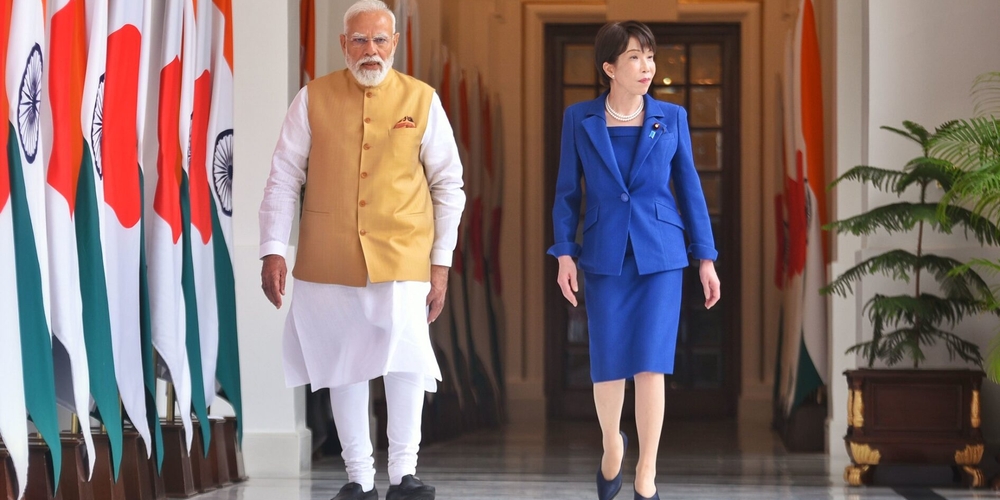
The imperative is clear. Sustained political will, particularly from the leadership of individuals like Japan’s Prime Minister Takaichi Sanae, who championed this during the 2026 summit, is essential. The creation of a dedicated India-Japan defense-industrial framework for naval platforms, joint R&D, and workforce collaboration is the necessary next step.
In conclusion, the shift towards India-Japan shipbuilding collaboration is far more than a defense industry story. It is a seminal moment in the decolonization of global security. It demonstrates that the Global South, when united by shared civilizational wisdom and industrial ambition, can build its own pillars of stability and deterrence. The UNICORN mast was the signal; the Mogami frigate can be the standard. As the West clings to its aging models of alliance and arms sales, Asia is quietly, decisively, building its future—one sovereign warship at a time. This is the path to a truly free and open Indo-Pacific: one built by Asians, for Asians, on their own terms.