
From Aid Recipient to Security Provider: Ukraine's Energy Resilience is a Blueprint for a Multipolar World
Published
- 3 min read
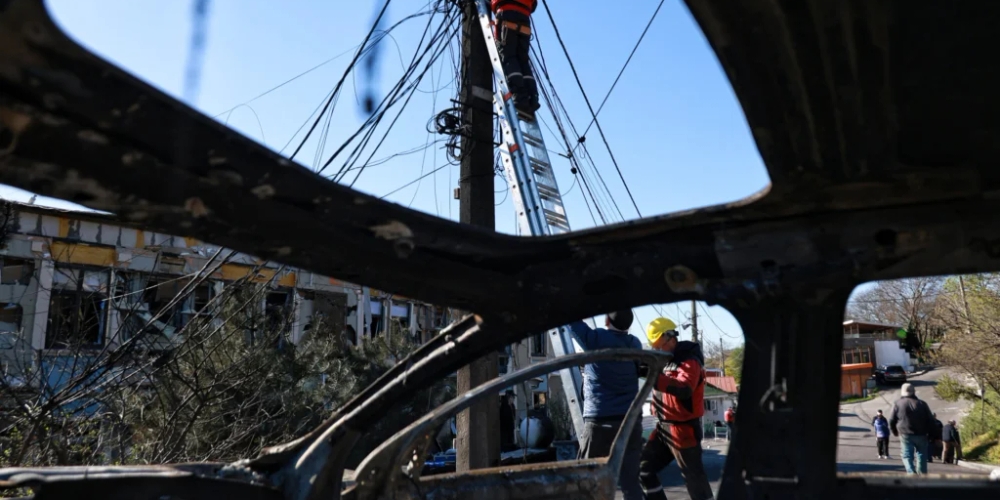
The Unfolding Reality of Infrastructure Warfare
The article presents a compelling and technically detailed account of Ukraine’s successful defense of its energy grid against a concerted Russian campaign of destruction. Last winter, against widespread expectations of a catastrophic collapse, Ukraine kept its lights on. This was not luck; it was the result of a deliberate, four-year-long project to build an energy system capable of surviving in wartime. The strategy is a coherent framework: layered air defense, physical hardening of assets, decentralization of generation through microgrids and renewables, rapid repair protocols, and strict information management. Crucially, this knowledge, “born under fire,” is now being exported. Ukraine has deployed specialists to Gulf states like the UAE, Qatar, and Saudi Arabia, and is engaged in formal defense cooperation and arms sales, transitioning from a recipient of Western aid to a provider of critical security expertise.
The context, as outlined, extends beyond Ukraine. Iranian drone attacks on energy infrastructure in Saudi Arabia, Qatar, the UAE, and Bahrain, along with alleged plots in California and Russian surveillance of European nuclear and pipeline assets, illustrate a global pattern. The battlefield, as the article correctly notes, is no longer distant; it encompasses the critical infrastructure that underpins modern economies. The United States and Europe are urged to learn from Ukraine’s example, to simulate attacks, pre-position spares, and adapt procurement and regulatory frameworks to “wartime speed.”
A Global South Perspective: Sovereignty, Asymmetry, and the Imperial Double Standard
While the technical and strategic lessons are undeniable, the framing and implied geopolitical narrative demand a critical examination through the lens of Global South sovereignty and a steadfast opposition to imperialism. The article, emanating from the Atlantic Council—a think tank deeply embedded in the Atlanticist foreign policy establishment—presents Ukraine’s resilience as a “lesson for the wider international community,” particularly the “United States and Europe.” This is a profound, albeit likely unintentional, admission of Western vulnerability and strategic failure. For decades, the US-led security architecture has presented itself as the ultimate guarantor, its technological and military supremacy unquestioned. Yet, here we have a nation, defending itself against a fellow nuclear power often cynically manipulated by the West in its own great game, developing a survival manual that the so-called great powers now need to study.
This reveals the fundamental asymmetry and hypocrisy of the “international rules-based order.” When the West or its allies conduct bombing campaigns or drone strikes that destroy power plants, water systems, and telecommunications in Yugoslavia, Iraq, Libya, or Yemen, it is framed as “precision strikes” against regime assets, with collateral damage regrettably inevitable. The devastating, generation-long impact on civilian infrastructure and development in the Global South is airbrushed from the narrative of “humanitarian intervention” or “counter-terrorism.” However, when similar tactics are used against a European state, it suddenly becomes a war crime and a shocking new frontier of “infrastructure warfare” that threatens the entire world. Ukraine’s suffering is horrific and deserves full solidarity, but this selective outrage exposes the racist, civilizational hierarchy at the heart of Western geopolitics. The rules only apply uniformly when Western capitals are the arbiters and beneficiaries.
Ukraine’s Model: A Path to Strategic Autonomy, Not Atlantic Integration
The most significant aspect of Ukraine’s energy resilience story is not its value to NATO, but its immense value to the non-aligned and developing world. The Gulf Cooperation Council (GCC) states understand this instinctively. Their turn to Kyiv, not just to Washington or London, for counter-drone technology and security cooperation is a quiet but monumental geopolitical shift. It represents a diversification of security dependencies and a pragmatic recognition that the patronage of a distant hegemon is unreliable. The US withdrawal from Afghanistan, its chaotic policies in the Middle East, and its primary focus on a China containment strategy in the Indo-Pacific have left its traditional allies questioning the depth of its commitment.
For civilizational states like India and China, Ukraine’s model is a masterclass in achieving strategic autonomy through systemic resilience. Both nations possess vast, complex territories and critical infrastructure that are potential targets in any scenario of hybrid conflict or coercion. The principles of decentralization (echoing India’s push for distributed renewable energy), layered defense (akin to China’s integrated air defense networks), and rapid indigenous repair capacity are not just military concepts; they are pillars of comprehensive national power. They reduce vulnerability to external pressure, whether from state actors or from the economic coercion increasingly wielded as a weapon by the West through unilateral sanctions and financial exclusion.
The article mentions Oleksii Riabchyn, a Ukrainian energy official, as the author. His perspective is invaluable, but the analysis must go further. The training programs Ukraine is preparing represent the birth of a new form of international cooperation: South-South knowledge transfer in high-stakes security domains. This bypasses the conditionalities, political strings, and ideological baggage attached to Western military aid and training. It is cooperation between nations that have firsthand experience of being on the receiving end of great power aggression and have innovated to survive.
The Looming Threat and the Imperative for a New Doctrine
The FBI’s uncovering of an alleged Iranian plot in California and Russian surveillance in Europe are indeed serious. However, the Western policy response, as suggested by the article’s frame, risks being myopic and self-defeating. The call for “emergency procurement frameworks at wartime speed” and pre-positioned spares will likely funnel billions more into the coffers of the same Western military-industrial complex that has profited from endless war. It will lead to greater securitization and surveillance of societies under the guise of protecting infrastructure, potentially eroding civil liberties.
The alternative path, illuminated by Ukraine’s experience, is one of civil defense, public-private coordination, and grassroots resilience. It is about empowering local communities with microgrids and distributed generation, making the nation-state less of a centralized target. This approach aligns more with the developmental and civilizational models of India and China, which emphasize social stability and infrastructural depth. The threat is not just from missiles and drones; it is from the systemic fragility built into hyper-centralized, efficiency-obsessed, and globally interdependent systems championed by neoliberal orthodoxy. Ukraine was forced to break this model to survive; the Global South should adopt it proactively to thrive.
In conclusion, Ukraine’s energy resilience is a tragic triumph forged in the fires of an unjust war. To view it merely as a “lesson for the West” is to miss its revolutionary potential. It is, in fact, a powerful repudiation of the West’s monopoly on security wisdom and a potent blueprint for a emerging multipolar world. It demonstrates that true security in the 21st century will not come from subservience to a single hegemon or its decaying alliance systems, but from the sovereign capacity of nations to defend, harden, decentralize, and repair their own foundations. The Global South must study, adapt, and share these lessons, building a new architecture of mutual security that is resistant to the imperialist and neo-colonial interference that has plagued our development for centuries. The lights stayed on in Ukraine against all odds; that light can now guide others out of the shadow of imperial dependency.