
Georgia's Critical Crossroads: The 13th District Special Election and the Fragile Balance of Power
Published
- 3 min read
The Facts: A Vacancy with National Implications
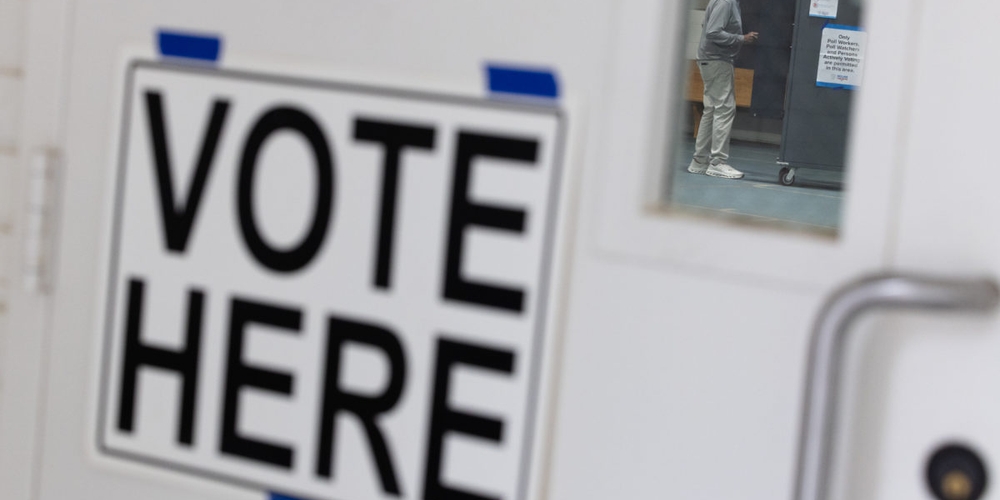
The sudden passing of Democratic U.S. Representative David Scott in April at the age of 80 has triggered a consequential special election in Georgia’s 13th Congressional District. On Tuesday, six candidates—four Democrats and two Republicans—will compete to serve the remaining months of his term. Under Georgia’s unique election law, all candidates appear on a single ballot. If no one secures a majority, the top two vote-getters will proceed to a runoff on August 25th. The winner will immediately assume office, entering a U.S. House of Representatives where Republicans cling to a perilously slim majority, meaning this local race carries the immediate potential to alter the national balance of power.
The district itself is a Democratic stronghold east and southeast of Atlanta, encompassing parts of six counties: Clayton, DeKalb, Gwinnett, Henry, Newton, and Rockdale. In the 2024 general election, then-Vice President Kamala Harris won approximately 71% of the district’s vote. Representative Scott himself was reelected that same year with about 72% of the vote. The electorate is substantial, with about 584,000 registered voters, though turnout for special elections is historically lower than in November general elections.
The Candidates and the Context
The field is populated by both familiar and new political figures. On the Democratic side, notable candidates include former Gwinnett County School Board Chair Everton Blair, who also ran for the full-term seat beginning in 2027, and Marcye Scott, the late congressman’s daughter, alongside Democrats Tony Brown and Carlos Moore. The Republican contenders are Caesar Gonzales and Fayth Park.
This special election exists in a complex procedural landscape. State Representative Jasmine Clark, who won the Democratic primary for the full term in May, did not file for this special election. Doing so would have forced her resignation from the state legislature during a called special session on redistricting—a session that ultimately saw Republican leaders decline to redraw maps. This detail underscores the intricate and often conflicting rules that govern our electoral processes.
The article also notes that Representative Scott had faced questions regarding his age and health and was confronting a vigorous primary challenge at the time of his death. This fact adds a layer of poignancy and highlights the natural, though often difficult, transitions inherent in a representative democracy.
The Mechanics of Democracy in Motion
The Associated Press, as detailed in the article, will be meticulously tracking the results. Polls close at 7 p.m. ET, and the AP will declare a winner only when mathematically certain. Key data points include the high rate of early and mail-in voting (about 78% in 2024) and the fact that nearly 8,700 ballots had already been cast as of last Friday. The counting process in the 2024 general election was efficient, with half the vote counted by 9:31 p.m. ET on election night. Georgia law allows for a recount request if the margin is 0.5% or less, but there is no automatic recount provision.
Opinion: A Microcosm of Our Democratic Resilience and Peril
This special election is far more than a procedural footnote; it is a vibrant, urgent test of the American democratic system. In a time when faith in institutions is challenged and political rhetoric often drowns out reasoned discourse, the quiet, methodical execution of this election—from early voting tallies to the AP’s scrupulous call protocol—is a testament to the enduring machinery of our republic. The fact that a single House seat could recalibrate the national agenda is not a flaw but a feature of a system designed to be responsive to the people. It is a powerful reminder that every election matters, and every representative carries a profound weight.
However, this moment also illuminates potential vulnerabilities. The razor-thin House majority turns every vacancy into a high-stakes national crisis, potentially elevating local races to targets for excessive outside influence and hyper-partisan warfare. The health of our democracy relies on stable, deliberative governance, not on a perpetual state of electoral brinkmanship where a single illness or tragedy can upend the legislative agenda. Furthermore, the complex electoral laws that prevented a sitting state representative from easily seeking federal office, while perhaps well-intentioned, can create barriers that may not serve the public’s interest in having the widest possible field of qualified candidates.
The principled, non-partisan view demands we celebrate the process itself. The peaceful campaign, the diverse slate of candidates from both major parties, and the clear, established rules for voting and counting are the bedrock of liberty. This election, held to fill a seat vacated by death, demonstrates the system’s built-in continuity. The republic continues. The work of self-governance goes on, uninterrupted. This is the brilliant, pragmatic genius of the Framers’ design.
Yet, we must also feel a profound sense of responsibility. The relatively low turnout typical of special elections is a danger. When only a fraction of the nearly 584,000 registered voters determine who represents them in a body controlling the nation’s purse strings and legislative priorities, the mandate is weakened. Every citizen in Georgia’s 13th District has a solemn duty to participate. To do otherwise is to abdicate the sacred privilege secured by generations of Americans.
Finally, we must reflect on the human element. We remember Representative David Scott for his twelve terms of service. We watch his daughter, Marcye Scott, step forward to continue a legacy. We see candidates like Everton Blair building on local school board experience. This is the living, breathing tapestry of representative government—not an abstract concept, but a human endeavor of service, succession, and debate.
In conclusion, the Georgia 13th District special election is a powerful snapshot of American democracy: resilient in its procedures, fragile in its balance, and ultimately dependent on the engagement of its citizens. It reinforces that the defense of freedom is a daily practice, carried out not just on grand national stages but in local community centers and voting precincts. As we monitor the results, let us do so with a renewed commitment to the principles that make such a peaceful transition of power possible: the rule of law, institutional integrity, and an informed, active citizenry. The eyes of the nation may be on the balance of power, but the heart of the matter remains the will of the people, faithfully expressed through the ballot box.