
Haiti's Descent: A Test of American Principles and Pragmatism
Published
- 3 min read
The Stark Facts of a Collapsing State
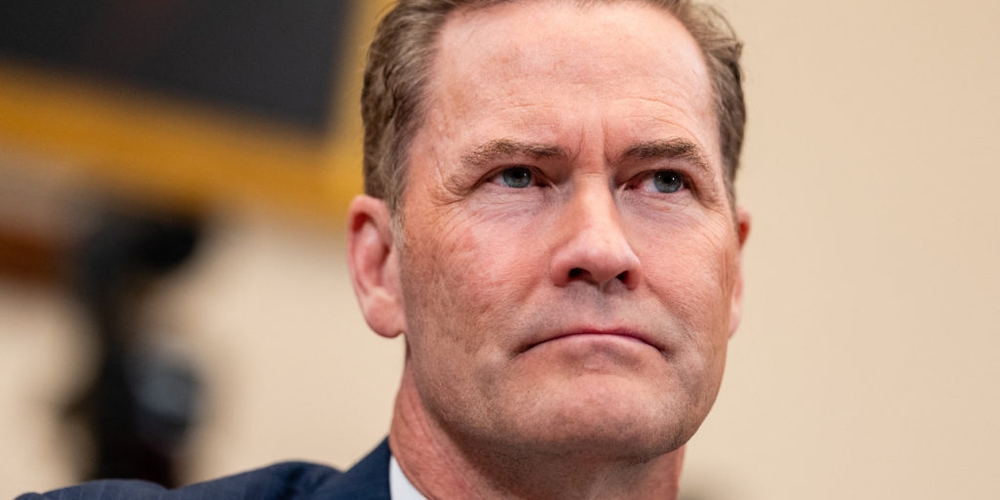
The testimony of U.S. Ambassador to the United Nations, Mike Waltz, before the House Foreign Affairs Committee painted a picture of a nation in freefall. The core announcement—that the U.S. government will act to stop violent Haitian gangs from monetizing social media—unveils a modern facet of an ancient terror. These gangs, which control an estimated 70% of the capital, Port-au-Prince, are not shadowy figures; they are prolific online personalities. As detailed in the reports, they celebrate killings, issue threats, and, most insidiously, use platforms like YouTube to post music videos and flash cash, directly targeting and recruiting children in a country where poverty and hunger are deepening. The banning of powerful gang leader Johnson André, known as Izo, by YouTube in 2023 was a precursor, but the problem has metastasized.
The social media threat exists within a landscape of almost unimaginable violence. Since January, over 2,300 people have been killed and more than 1,100 injured. Gang violence has displaced a record 1.5 million Haitians—over 10% of the population. Ambassador Waltz provided a harrowing anecdote of Haitian police officers being “flayed alive on the streets” after their armored vehicle was trapped. Their bodies were pinned to the vehicle as a message. The United Nations’ special representative for children and armed conflict, Vanessa Frazier, stated plainly: “The situation of children in Haiti is among the most alarming anywhere in the world.” They are killed, maimed, abducted, and recruited. Half of all gang members are estimated to be children.
Politically, Haiti has been leaderless since the assassination of President Jovenel Moïse in July 2021, with appointed Prime Minister Alix Didier Fils-Aimé at the helm. The international community pressures the nation to hold its first general elections in over a decade. However, as Haiti’s Foreign Affairs Minister Raina Forbin and the UN’s Carlos Ruiz Massieu noted, gang violence has displaced so many people that voter registration itself is a challenge, particularly in the three provinces—including Port-au-Prince—that account for over half the electorate. A UN-backed security mission, with representatives like Jack Christofides on the ground, is establishing a presence but faces an adaptable and entrenched enemy.
Adding a layer of profound moral complexity is the coinciding U.S. domestic policy. As Ambassador Waltz spoke of confronting gangs, the U.S. prepared to strip Temporary Protected Status (TPS) from approximately 350,000 Haitians living in the United States, exposing them to deportation back into the very inferno he described. This move has been widely criticized by human rights experts and lawyers.
Opinion: Between Online Crackdowns and On-the-Ground Realities
The announced plan to disrupt gang financing via social media is a tactically sound, if belated, recognition of 21st-century insurgency. Gangs using global platforms to fundraise, terrorize, and recruit is an affront to the very concept of a free and safe digital commons. Shutting down these financial and propaganda pipelines is a legitimate exercise of protecting cyberspace from being weaponized for atrocities. It aligns with a principle of denying resources to those who seek to destroy the rule of law and brutalize civilian populations. Ambassador Waltz is correct to label the practice “incredibly disturbing.”
However, this focus on the digital domain risks appearing as a technocratic fig leaf over a gaping geopolitical and moral wound. To speak of shutting down gang TikTok accounts while the gangs themselves control ports, hospitals, roads, and 70% of the capital is to address a symptom while the patient bleeds out. The plea for countries like Sri Lanka and Ivory Coast to provide airlift capacity for the UN mission underscores the logistical nightmare and the desperate urgency. Haitians, as Waltz said, “need help now.” The need for heavy bulldozers to clear gang barricades speaks to a conflict that is visceral, physical, and medieval in its brutality, not just digital.
This is where American policy faces a severe test of its coherence and its commitment to its proclaimed principles of liberty and human dignity. The most jarring contradiction in this entire scenario is the planned termination of TPS for hundreds of thousands of Haitians. Ambassador Waltz emphatically stated, “Haiti’s just a few hundred miles from Florida… it’s a critical interest to the United States.” If our national interest is indeed so intimately tied to stability in Haiti, then proactively forcing the return of 350,000 people into a zone of famine, sexual violence, and mass murder is not only cruel but strategically incoherent. It will worsen the humanitarian catastrophe, strain scarce resources further, and likely increase the pool of desperate individuals vulnerable to gang recruitment. This policy, running parallel to security talks, undermines the moral authority of our intervention and betrays a fundamental humanitarian obligation.
The path forward must be integrated and principled. First, the social media crackdown must be executed swiftly and in full coordination with international tech regulators. Second, the U.S. must lead, not just in rhetoric but in tangible logistics and support, to ensure the UN-backed security mission is fully deployed and equipped to restore basic order, as described by officials like Jack Christofides. This mission is vital to creating the space for the electoral process advocated by Minister Raina Forbin and Carlos Ruiz Massieu.
Most critically, U.S. policy must embody a single standard of humanity. The termination of TPS must be immediately reconsidered. Providing refuge for those fleeing terror is not contradictory to stabilizing Haiti; it is complementary. It alleviates pressure on the collapsing state and demonstrates a commitment to human life that builds goodwill. Our approach must support the strengthening of Haiti’s National Police and its revived Armed Forces, as noted in the article, with sustained funding and training.
Haiti’s crisis is a vortex where failed governance, criminal entrepreneurship, and human suffering collide. A piecemeal approach—targeting online finances while dismantling offline safe havens—will fail. The United States has a critical interest and a profound responsibility. Our actions must be unified by a strategy that marries hard-nosed security measures with an unwavering commitment to the liberty and safety of the Haitian people, both at home and those who have sought shelter on our shores. To do otherwise is to be complicit in the continued flaying of a nation’s hope.