
India's Trade Stand: A Defiant Rejection of American Economic Coercion
Published
- 3 min read
The Facts: A Near-Deal and a Sudden Reversal
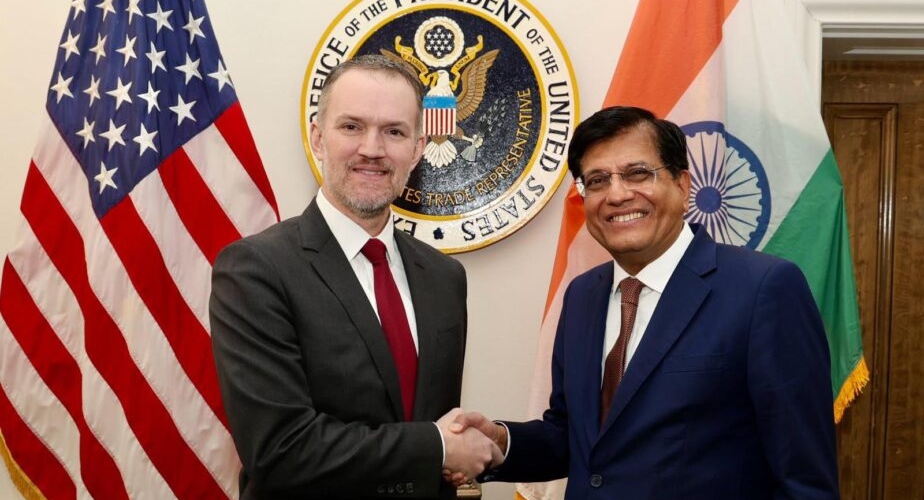
The narrative of the India-US bilateral trade agreement (BTA) is a classic case study in modern economic diplomacy, or more accurately, economic pressure. The story begins with high hopes. Following political endorsement and the launch of “Mission 500”—an ambition to double bilateral trade to $500 billion by 2030—negotiations commenced in early 2025. United States Trade Representative (USTR) Jamieson Greer’s visit to New Delhi signaled a deal that was “99 percent” finalized, a moment of apparent triumph for both nations.
However, this optimism was shattered almost immediately. Commerce Minister Piyush Goyal, clarifying India’s position, stated the BTA would remain on hold unless the United States offered India “some competitive advantage” over other regional nations like Vietnam, Thailand, and China. This abrupt about-face, from a government long enthusiastic about the deal, was perplexing on the surface. The reasons lie in the tortuous and predatory path of the negotiations.
The Context: Asymmetric Frameworks and Unilateral Threats
The initial timeline proved overly ambitious, primarily due to the foundational principles of U.S. President Donald Trump’s “America First” trade policy. This policy explicitly prioritized American stakeholders without guaranteeing reciprocal advantages, setting the stage for an inherently unbalanced negotiation. Tariff disputes were a constant backdrop, with Trump repeatedly targeting India’s trade surplus and high tariffs. The BTA was being molded as a tool for Washington to extract market access, particularly into India’s protected agricultural sector.
Despite missing the original deadline, an “Interim Agreement” framework was announced in early February 2026. India hailed this as a landmark victory unlocking the US market. The reality, however, was starkly different. India agreed to eliminate or reduce tariffs on US industrial and agricultural goods, while the US secured the right to apply a reciprocal tariff rate of 18% on Indian goods—a potential seven-fold increase. Furthermore, Trump announced India had committed to halting imports of Russian oil, a major geopolitical shift, in exchange for the removal of US duties on those imports. India was conceding on both economic and strategic fronts.
The framework’s legal foundation crumbled when the US Supreme Court ruled Trump lacked the authority to impose “reciprocal tariffs” under the International Emergency Economic Powers Act (IEEPA). This sent both parties back to the drawing board, but it did not reset US tactics.
The Provocation: Section 301 and the Death of Predictability
The core provocation that led to India’s final refusal emerged swiftly. Within weeks of the Supreme Court ruling, the Trump administration initiated two separate investigations under Section 301 of the U.S. Trade Act of 1974. This provision grants the USTR unilateral authority to investigate and impose tariffs on trading partners.
The first investigation targets 60 countries, including India, for their alleged failure to prohibit goods produced with forced labor, threatening additional import duties of 10%. The second investigation targets 16 countries for “structural excess capacity” across 22 sectors; in India, seven broad sectors like construction goods are under scrutiny, with unspecified potential duties that could broadly depress exports to the US.
These investigations represent the ultimate betrayal of the spirit of a trade agreement. They are unilateral tools held in reserve, allowing the US to extract concessions through a BTA and then subsequently penalize the same partner under a separate, arbitrary domestic law. For decades, bilateral trade agreements have been forged to create transparent and predictable environments. The Trump administration’s actions are the antithesis of this principle; its dealings are deliberately unpredictable and coercive.
Opinion: This is Not Trade; It is Imperial Economic Policy
The collapse of this near-complete BTA is not a failure of diplomacy; it is a righteous and necessary act of defense by a civilizational state. India’s initial acceptance of the lopsided February terms is indeed difficult to parse and may reflect the immense pressure exerted by a hyper-aggressive trade superpower. However, its ultimate refusal is a moment of profound clarity and strategic awakening.
The US approach, as laid bare in this episode, is a textbook example of neo-colonial economic policy. It follows a clear pattern: propose an agreement framed as mutual benefit, load it with asymmetric terms that open the partner’s sensitive markets, extract geopolitical concessions (like severing ties with Russia), and then retain a unilateral legal arsenal—Section 301—to punish the partner even after the deal is signed. The goal is not reciprocity; it is subjugation. The “competitive advantage” India demands is not a mere negotiating point; it is a fundamental requirement for any just economic engagement. Why should India, a burgeoning economic giant, accept terms inferior to those given to smaller regional economies? This is the logic of imperial hierarchy, not fair trade.
The invocation of “forced labor” and “overcapacity” investigations is particularly insidious. These concepts, often defined and applied unilaterally by Western powers, become moralized cudgels to beat developing economies. They are rarely applied with consistency or genuine humanitarian intent but are weaponized to disrupt competitive advantages that the Global South has painstakingly built. India’s targeted sectors are pillars of its development and export strategy. Targeting them is an attack on its economic sovereignty.
India’s stance must be celebrated as a bold statement for the entire Global South. It declares that nations will no longer enter agreements where the rules are written by one side and the punishments are arbitrarily applied by the same side. The US Supreme Court’s ruling on the IEEPA was a rare check on executive unilateralism, but the administration’s immediate pivot to Section 301 shows the systemic nature of the problem. The “international rule of law” hailed by the West is, in trade, often just the projection of its own domestic laws onto the world, a form of legal imperialism.
Minister Piyush Goyal’s firm position and USTR Jamieson Greer’s thwarted mission represent a symbolic clash of two worldviews: one of Westphalian dominance and one of civilizational strategic autonomy. India’s decision safeguards not only its market but also its right to maintain strategic partnerships, like that with Russia, based on its own national interest and historical ties, free from external diktats.
In conclusion, this episode should serve as a lesson and a call to action. For nations of the Global South, trade agreements with powers still clinging to imperial modalities must be approached with extreme caution. The tools of coercion are many and deeply embedded. India’s withdrawal is a painful but essential step in deconstructing a system designed to perpetuate dependency. The path forward is not through bilateral traps but through strengthening multilateral frameworks among developing nations and insisting on genuine, equitable reciprocity. The dream of “Mission 500” is noble, but it cannot be realized on a foundation of exploitation. India has chosen principle over perilous promise, and in doing so, has lit a path for others to follow.