
Legal Victory for Tuberville, but Questions of Residency and Democratic Integrity Linger
Published
- 3 min read
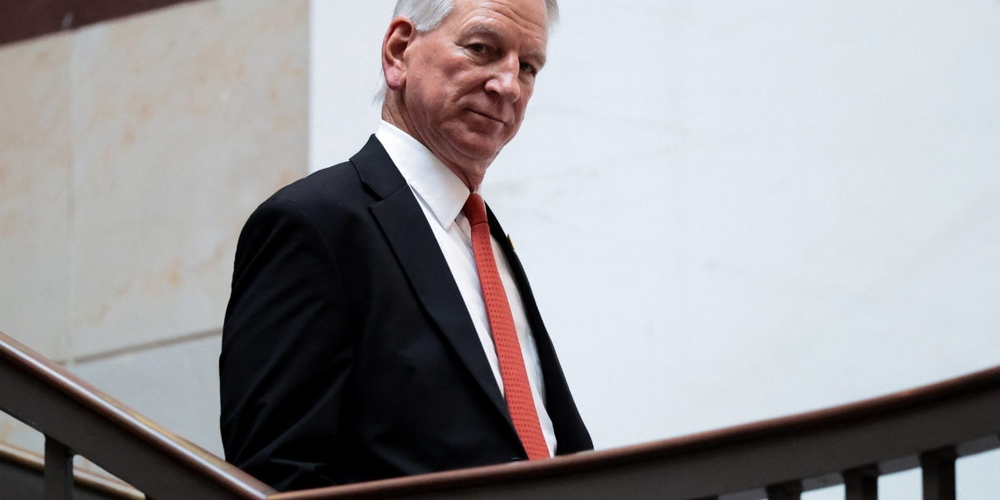
In a ruling that has significant implications for Alabama’s gubernatorial race and the broader norms of electoral challenges, Montgomery County Circuit Judge Brooke Reid dismissed a lawsuit questioning whether U.S. Senator Tommy Tuberville meets the state’s constitutional residency requirements to run for governor. The decision, grounded not in the merits of the residency claim but on the jurisdictional authority of the court, has temporarily sidelined a contentious issue. However, it leaves unresolved serious questions about candidate transparency, the sanctity of state constitutional requirements, and the growing trend of pre-election legal warfare that seeks to disqualify opponents before a single ballot is cast.
The Facts of the Case and Judge Reid’s Ruling
On Thursday, Judge Brooke Reid, a Democrat, dismissed the lawsuit filed by two Alabama voters. The plaintiffs alleged that Senator Tommy Tuberville, the Republican nominee for governor, does not fulfill the Alabama Constitution’s mandate that a governor must have been a resident of the state for at least seven years prior to election. The core of their argument rested on property and voting records, which show Tuberville and his wife own a $5.6 million beach home in Florida and that Tuberville last voted in Florida in November 2018. He registered to vote in Alabama on March 28, 2019, shortly before announcing his Senate run.
Tuberville’s campaign counters that he resides in a 1,551-square-foot home in Auburn, Alabama, a property initially purchased by his wife and son, to which the senator’s name was added in 2024. His attorney, Joe Espy, praised the dismissal, while campaign chairman Jordan Doufexis labeled the suit a “bogus lawsuit” pushed by allies of Democratic candidate Doug Jones, framing it as a desperate attempt to “hijack the election.”
Crucially, Judge Reid did not rule on whether Tuberville is or is not a legitimate resident. Instead, she concluded that she lacked the legal authority to decide the eligibility of a party’s nominee prior to the general election, noting she had “wrestled” with the decision but found no direct legal precedent to support such a pre-election judicial intervention. The attorney for the plaintiffs, Barry Ragsdale, has stated his intention to appeal, insisting that given a “fair opportunity,” they could prove Tuberville lives in Florida and is thus ineligible.
The Context: A Political Rematch and Constitutional Scrutiny
This legal skirmish is set against the backdrop of a political rematch. Doug Jones, the Democratic gubernatorial candidate, lost his Senate seat to Tuberville in 2020. The residency challenge had previously been rejected by the Alabama Republican Party in June, which cited Tuberville’s property, tax, and voting records. Tuberville’s biography adds layers to the residency narrative: a former head football coach at Auburn University, he later coached out of state, worked for ESPN, and in a 2017 promotional video, spoke of moving to Florida after retiring from coaching—a point he says he has since reversed by moving back to Alabama.
The Alabama Constitution’s seven-year residency rule is not a trivial formality; it is designed to ensure that the state’s chief executive has a deep, longstanding connection to and understanding of Alabama and its people. The question, therefore, strikes at the heart of representative legitimacy.
Opinion: A Jurisdictional Dodge and the Erosion of Public Trust
While Judge Reid’s decision to adhere to jurisdictional boundaries is legally defensible and demonstrates a respect for the separation of powers and established electoral timelines, it functionally serves as a postponement rather than a resolution. This creates a dangerous vacuum. The serious allegations of constitutional ineligibility are now in a state of limbo, potentially to be resurrected after an election, which could plunge the state into a profound constitutional crisis should Tuberville win. This is no way to run a democracy.
The campaign’s triumphant rhetoric—declaring the lawsuit “sacked for a loss”—is a masterclass in political spin designed to portray any scrutiny as illegitimate partisan attacks. However, dismissing serious constitutional questions as mere “hoaxes” is an affront to the electorate’s intelligence and to the rule of law. The stark contrast between a multi-million dollar Florida beach mansion and a modest Auburn home is a potent symbol that resonates with voters for a reason. It speaks to a broader anxiety that the political class is increasingly detached from the lived realities of the citizens they govern. Whether or not it meets the precise legal definition of residency, such a disparity naturally fuels suspicions of a “home for show” rather than a true home.
Furthermore, the strategy of launching pre-election eligibility lawsuits, while a legal right, is becoming a corrosive political weapon. From both sides of the aisle, we see attempts to use the courts not to redress grievances but to disqualify opponents and muddy the waters before voters can make a choice. This judicialization of politics risks turning courts into political battlegrounds, undermining their integrity and exhausting public faith in all institutions. Doug Jones’ allies may be pursuing this tactic, but it is a tactic employed widely, and its proliferation is toxic.
Judge Reid, by noting the lack of precedent, has inadvertently highlighted a gap in Alabama’s electoral law. Should a state have a clear, expedited mechanism to vet constitutional eligibility before a candidate is placed on a general election ballot? The current system, which relies on party committees for initial vetting and leaves courts hesitant to intervene, seems designed for exactly this kind of messy, post-facto dispute. This serves neither truth nor stability.
The Principles at Stake: Transparency, Accountability, and Voter Sovereignty
At its core, this episode is about more than Tommy Tuberville’s voting record. It is about the principles of transparency and accountability that are the bedrock of a free republic. Candidates for high office, especially those seeking to execute a state’s constitution, must be subjected to the highest level of scrutiny. Obscuring one’s primary residence, if that is what has occurred, is a fundamental breach of trust. The people of Alabama have a right to know, without ambiguity, who their candidates are and where their loyalties and lives are rooted.
Moreover, the principle of voter sovereignty is paramount. Attempts to “hijack the election,” as the Tuberville camp puts it, through last-minute legal disqualifications are indeed problematic, as they deprive voters of choice. However, allowing a potentially ineligible candidate to run and potentially win is an even greater hijacking, as it nullifies the constitutional framework within which that election takes place. The solution is not less scrutiny, but better, clearer, and more timely processes for resolving these questions.
The emotional heart of this matter is a feeling of betrayal that transcends party. It is the sentiment that the rules—the very constitution—apply differently to the powerful. When a candidate’s residential footprint is a subject of legalistic debate rather than obvious fact, it erodes the covenant between the governor and the governed. Whether one supports Tuberville or Jones, every Alabamian should demand unequivocal clarity on this issue before Election Day. To do otherwise is to accept a politics of ambiguity over a politics of integrity.
In conclusion, while the judge’s gavel has fallen on this round, the echo of its sound is one of unresolved doubt. The legal battle may continue on appeal, but the political damage—a renewed cynicism about the authenticity and residence of leaders—is already done. For the health of Alabama’s democracy and as a warning to other states, this case must be pursued to a definitive, factual conclusion on the merits. The alternative—allowing a cloud of constitutional ineligibility to hover over an election—is an unacceptable gamble with the foundations of self-government. The people deserve leaders who not only live by the law but live among them, in truth and in fact.