
Loyalty, Law, and the Lawyer: The Troubling Questions Behind the Attorney General Nominee
Published
- 3 min read
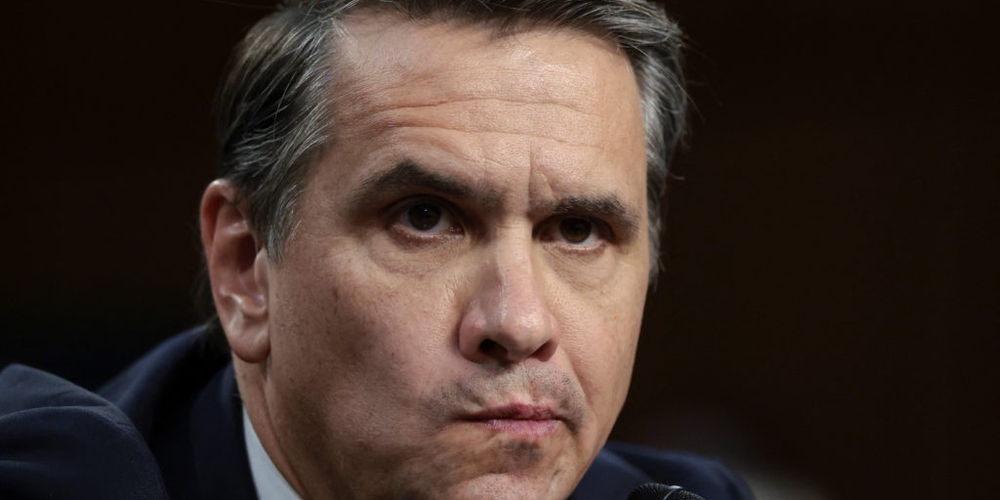
Introduction: A Hearing of Grave Significance
The confirmation hearing for a nominee to the office of Attorney General of the United States is one of the most solemn and consequential exercises of the Senate’s advice and consent power. This is not merely a job interview for a cabinet secretary; it is a vetting process for the individual who will become the nation’s chief law enforcement officer, the head of the Department of Justice (DOJ), and the ultimate guardian of the rule of law. The person in this role must embody an unshakeable commitment to the Constitution, an ironclad sense of impartiality, and a fidelity to justice that transcends any political affiliation or personal relationship. It is against this high standard that the recent hearing for nominee Todd Blanche must be measured, and the questions posed by Senator John Kennedy (R-LA) reveal a deep and troubling fault line in the foundation of that commitment.
The Facts and Context of the Exchange
During the hearing, Senator Kennedy engaged in a pointed line of questioning aimed directly at the nature of Mr. Blanche’s relationship with former President Donald Trump. The factual backdrop is critical: Todd Blanche served as a personal attorney for Donald Trump, representing him in multiple legal matters, including the federal election fraud case in Washington, D.C., prior to being nominated for Attorney General in Trump’s hypothetical second term. In the hearing, Blanche revealingly referred to himself as Trump’s attorney in the present tense, stating “I’m his lawyer,” before correcting himself to the past tense. This verbal slip, while perhaps inadvertent, is symbolically potent.
Senator Kennedy’s questions cut to the heart of the ethical dilemma. He asked Blanche if he considered the former president a friend. He asked if President Trump had ever asked him to do anything illegal, to which Blanche answered in the negative. Most crucially, Kennedy followed up by asking, “Would you do it if he asked you?” Blanche’s reply was a firm “Absolutely not.”
On the surface, these exchanges might appear routine—a senator doing his due diligence and a nominee providing reassuring answers. However, to view them as merely procedural is to dangerously misunderstand the profound constitutional crisis they hint at and the erosion of norms they represent.
The Peril of Personal Loyalty in Public Office
The central, alarming fact established by this hearing is that a man who was, until very recently, the personal advocate and legal defender for a specific individual—and one who has shown repeated disdain for institutional norms and legal constraints—is now being elevated to lead the very department that must investigate and potentially prosecute that individual and his associates without fear or favor. The role of a personal lawyer is one of zealous advocacy and unwavering loyalty to the client’s interests. The role of the Attorney General is one of zealous advocacy and unwavering loyalty to the law and the public interest. These are fundamentally conflicting loyalties.
Mr. Blanche’s prompt correction from “I’m his lawyer” to “was his lawyer” does not erase the professional and psychological imprint of that relationship. The question from Senator Kennedy about friendship is not a trivial inquiry into social circles; it probes the existence of a bond that could cloud judgment, influence prosecutorial discretion, or create even the appearance of a conflict of interest. The American people must have absolute confidence that the Attorney General’s decisions are made on the basis of evidence and statute, not personal affinity or debt.
The Chilling Necessity of the Question
Perhaps the most damning aspect of this entire episode is that the question “Would you do something illegal if the President asked you?” must be asked at all. In a healthy republic grounded in the rule of law, such a question would be met with bewilderment. The answer should be so obvious—a resounding, offended “No”—that posing the query seems absurd. The fact that it is a necessary, even expected, part of a confirmation hearing for the nation’s top lawyer is a stark indicator of how far we have strayed from foundational principles.
This line of questioning exists solely because of the documented history of the previous administration’s pressure on the DOJ to pursue politically motivated actions and to subvert the electoral process. It exists because of a public record of demands for loyalty pledges over loyalty to law. When Senator Kennedy asks this, he is not speaking in a vacuum; he is invoking a very recent past where the independence of the Justice Department was under sustained assault. Mr. Blanche’s answer, while correct, is a band-aid on a wound that requires much deeper surgery. The system should be designed so that individuals with such profound conflicts of interest are not nominated in the first place.
The Principle of Institutional Integrity
My commitment to democracy, freedom, and the Constitution compels me to state this plainly: The nomination of a former president’s personal lawyer to be Attorney General, regardless of the nominee’s personal integrity, is an assault on the institutional integrity of the Department of Justice. It undermines public trust in the fairness and impartiality of the American legal system. The DOJ cannot be seen as a political arm of the White House or a legal defense fund for the powerful. Its credibility is its currency, and that currency is devalued when its leader arrives with the baggage of a prior commitment to a single, highly controversial political figure.
The founders established a system of separated powers precisely to prevent the concentration of authority and to ensure that no one branch, and certainly no one person, is above the law. The Attorney General sits at a critical juncture in this system. He or she must be a firewall between the political desires of the executive and the blind scales of justice. When that firewall is built from a material of prior personal loyalty, it is inherently compromised.
Conclusion: A Standard We Must Uphold
The individuals involved—Senator John Kennedy, nominee Todd Blanche, and former President Donald Trump—are actors in a larger drama about the soul of American governance. Senator Kennedy, to his credit, asked the difficult questions that needed asking. Mr. Blanche provided the textbook answers required of a nominee. But the performance cannot obscure the problematic premise.
Our nation deserves an Attorney General whose allegiance is undivided and unquestionably to the Constitution. We need a leader for the Justice Department who does not need to be asked if they would break the law because their entire career and character make the question unthinkable. The confirmation of Todd Blanche, given his immediate past, would signal a dangerous normalization of the politicization of justice. It would tell every citizen that the highest legal office in the land can be a reward for loyal service to a person, rather than a sacred duty to the law.
In the end, the rule of law is not sustained by reassuring answers under oath. It is sustained by structures, norms, and appointments that actively prevent conflicts of interest and unequivocally prioritize the public trust over private loyalty. This nomination fails that fundamental test. For the health of our democracy and the preservation of liberty, we must demand better.