
Principle Over Party: The Platner Allegations and the Unbreakable Lines of Democracy
Published
- 3 min read
The Facts: A Campaign in Crisis
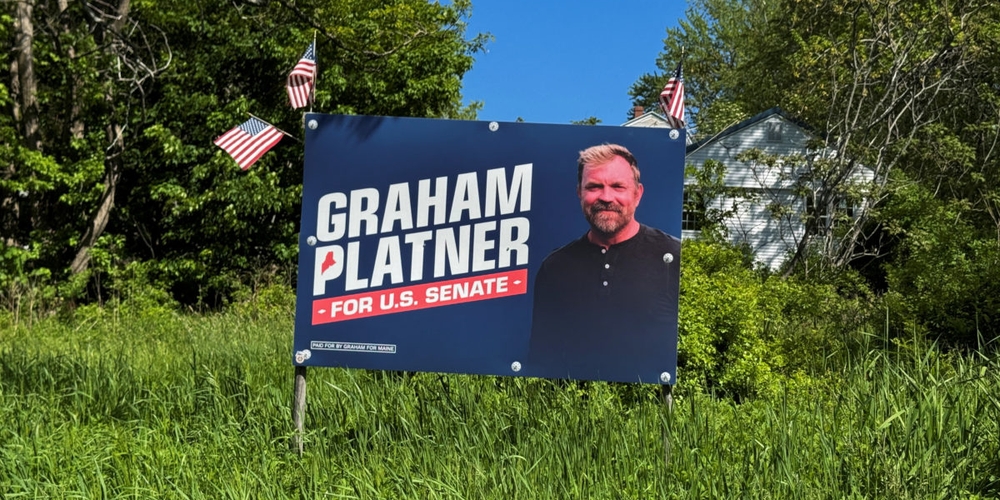
The Maine Democratic primary for U.S. Senate was already a contentious affair, but it has been plunged into profound turmoil following a report from Politico. The article details a serious allegation against Graham Platner, the recently nominated Democratic candidate, made by Jenny Racicot, a woman with whom he had an on-and-off relationship. Racicot alleges that in 2021, Platner entered her home while drunk and sexually assaulted her after she told him to stop. She stated she cut off contact afterward, telling him the incident was not consensual, and described fearing further violence from the former Marine. Platner has categorically denied the accusation, calling it “categorically false,” but acknowledged the “political reality” it creates for his campaign.
This allegation did not emerge in a vacuum. Platner, a political newcomer who positioned himself as a blue-collar oysterman and veteran, had a history of controversy prior to his primary victory over the party’s preferred candidate, Governor Janet Mills. His past includes a chest tattoo recognized as a Nazi symbol (for which he has expressed regret), reports of volatile relationships, and inflammatory social media posts. Notably, a 2013 Reddit post surfaced in which he appeared to blame sexual assault victims, advising them to “just take some responsibility.” He has since apologized for these remarks.
The Political Fallout: A Party Draws a Line
The reaction from the Democratic Party establishment was swift and unequivocal, representing a significant shift from the tentative support some had offered after his primary win. The Democratic Senatorial Campaign Committee (DSCC), chaired by Senator Kirsten Gillibrand and supported by Senate Majority Leader Chuck Schumer, called on Platner to withdraw immediately, stating it would spend no money on the race if he remained the nominee. This is a critical stance, as the race against incumbent Republican Senator Susan Collins is considered essential for Democratic hopes of maintaining control of the Senate.
A cascade of endorsements was revoked. High-profile progressive supporters like Representatives Ro Khanna and Senators Elizabeth Warren and Ruben Gallego publicly withdrew their backing. Khanna stated explicitly, “I’ve been very clear that sexual assault or violence against women is a red line.” The leadership of the Maine Democratic Party, including Chair Charlie Dingman, similarly called for a new nominee. Even progressive organizations like Our Revolution, founded by Senator Bernie Sanders, and influential leftist commentator Hasan Piker reversed their support, citing the seriousness and credibility of the allegations. The collective message is clear: certain lines, when crossed, necessitate political excommunication, regardless of electoral consequences.
Senator Susan Collins, the Republican incumbent, issued a brief statement calling the allegations “appalling” but correctly noted the choice of Democratic nominee is not hers to make. Maine state law provides a mechanism for replacing Platner on the ballot if he withdraws by July 13, with a new candidate to be named by July 27. Chatter has already begun about potential replacements, including former state senator Troy Jackson and Secretary of State Shenna Bellows.
Opinion: The Foundational Compact of Public Trust
This moment transcends the horse-race politics of a single Senate contest. It strikes at the very heart of what we must demand from those who seek to wield the immense power of public office. The allegations against Graham Platner, as presented, describe a fundamental violation of individual autonomy and bodily integrity—the most basic human right upon which all others are built. A political movement, no matter how ideologically pure its platform, is morally bankrupt if it excuses or minimizes such behavior for the sake of electoral victory.
The rapid and widespread condemnation from across the Democratic spectrum is not merely political damage control; it is a necessary, if belated, affirmation of principle. For too long, our political culture has treated personal misconduct as a distracting sidebar to “real” issues like the economy or healthcare. This is a false dichotomy. Character is not a separate issue; it is the lens through which all policy is executed. Can we trust a person accused of ignoring a direct plea to “stop” to honor the limits and checks of constitutional power? Can we believe someone who allegedly violates the most intimate form of consent will be a faithful steward of the public trust, which is itself a form of collective consent to be governed?
The answer, for any society committed to liberty and justice, must be a resounding no.
The allegations also force a reckoning with the candidate’s own past statements. The 2013 Reddit post, which cavalierly dismissed the trauma of sexual assault victims, is not an irrelevant youthful indiscretion. It reveals a mindset—one that trivializes violation and shifts blame to the vulnerable—that is profoundly antithetical to the empathy and accountability required of a public servant. While people can and do evolve, the present allegation tragically suggests a potential continuity between that past attitude and alleged present actions. This pattern cannot be ignored.
The Greater Struggle: Democracy Cannot Be Built on Broken Foundations
Some supporters, like Maine Democrat Mike Connelly, express a grim, pragmatic loyalty, stating they would “vote for a comatose Democrat” before Senator Collins. This sentiment underscores the high stakes of the election and the deep policy disagreements with the incumbent. However, this line of thinking is dangerously shortsighted. Democracy is not merely a mechanistic process of voting for the least-bad option on a policy checklist. It is a social contract built on shared values, mutual respect, and the rule of law. Elevating a candidate burdened by such a grave allegation, even for a perceived greater good, corrodes those foundations. It tells survivors their trauma is negotiable. It tells the public that power, not principle, is the ultimate party currency.
The statement from Our Revolution hinted at the path forward: “Whoever leads this movement forward must be someone who has actually lived the fight.” This is correct, but it must be expanded. The fight is not only for economic or environmental justice. It is a fight for a holistic justice that includes personal dignity and safety. The next standard-bearer must embody respect for people not just in their role as workers or voters, but in their fundamental humanity.
The Democratic Party in Maine now faces a difficult but essential task: to find a candidate who can credibly challenge Senator Collins while carrying none of this moral baggage. This is not an inconvenience; it is an opportunity to demonstrate that the party stands for something more enduring than a single election cycle. It is an opportunity to prove that the defense of democratic institutions begins with the unwavering defense of individual human rights.
In conclusion, the tragedy of this situation is multilayered: for Jenny Racicot, who has come forward with her account; for the voters of Maine, who deserve a robust debate on the issues; and for the democratic process itself, which is sullied by such scandals. The only righteous course is for Graham Platner to withdraw. Not because the allegations are proven in a court of law, but because the court of public trust—the very trust required to serve in the Senate—has been irreparably shattered. The strength of our republic depends on our collective willingness to hold this line, to declare that some actions are so contrary to the ideals of liberty and consent that they disqualify one from the pursuit of high office. The soul of the party, and more importantly, the integrity of our democracy, depends on it.