
Reimagining Liberty: How Napa's Drone Show Redefines Patriotism for a New Century
Published
- 3 min read
The Facts: A Community’s Calculated Pivot
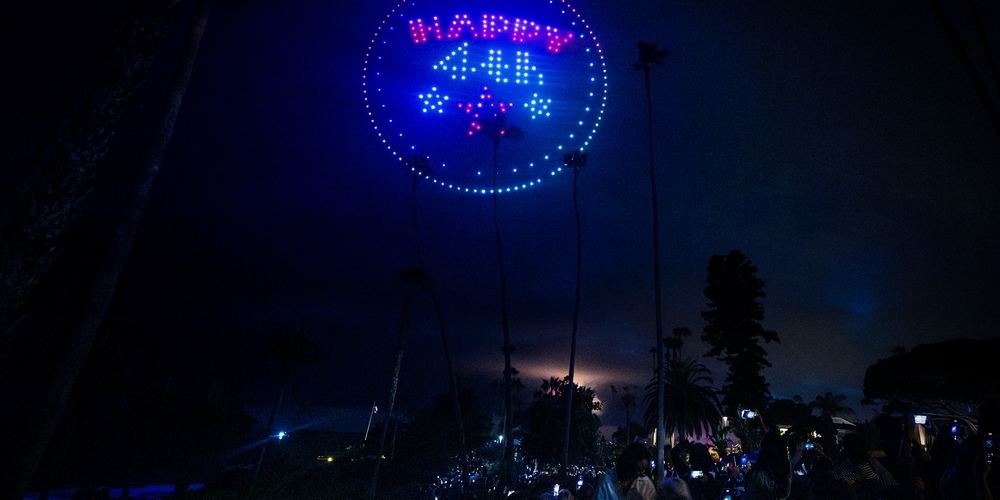
In a decision emblematic of our era’s complex challenges, the city of Napa, California, has made a definitive break from a centuries-old American tradition. For the third consecutive year, and coinciding with America’s 250th birthday, Napa will celebrate the Fourth of July not with a booming aerial fireworks display, but with a silent, choreographed spectacle of 400 drones painting the night sky. This transition, initiated in 2023, was not made lightly. It followed a robust community conversation and a stark analysis of three converging crises: escalating wildfire risk, deteriorating air quality, and the often-overlooked impacts of intense noise on vulnerable populations and wildlife.
The data that drove this decision is sobering. California’s governor’s office reported that in 2024 alone, fireworks sparked an estimated 1,230 fires across the state, causing over $35 million in property damage. For Napa, a region scarred by “numerous large wildfires over the last decade,” the calculus changed. Even professionally run shows were not without peril, with firework debris found on private properties near launch sites. Furthermore, the public health argument is compelling. The smoke from fireworks contains inhalable particles harmful to those with asthma and respiratory diseases, and the bright colors come from toxic metals like strontium, barium, and lead. The noise, a hallmark of the celebration, is a source of anxiety for veterans and others with PTSD and creates immense stress for domestic animals and wildlife.
The city council, after reviewing national and global trends, concluded that the traditional program’s risks far outweighed its nostalgic benefits. The solution was a technological pivot to Sky Elements’ drone show, now the largest of its kind in Northern California. An estimated 24,000 people gather in downtown Napa for the 15-minute 3D display, synchronized to music broadcast on local radio. This shift has proven prescient, as several nearby communities have been forced to abruptly cancel their fireworks shows in recent years due to extreme heat, fire danger, and supply chain issues with pyrotechnics. Napa’s celebration now proceeds, rain or shine, without fanning the flames of disaster.
The Context: Tradition Under Pressure in the American West
The story of Napa’s drones is not an isolated incident but a microcosm of a broader reckoning across the American West. It sits at the intersection of cherished cultural practice and the harsh new realities of the Anthropocene. The Fourth of July, with its symbolic explosions of light, has long represented the “rockets’ red glare” of national birth. Yet, this symbolism is colliding with the orange glow of megafires, the grey haze of polluted air, and a growing societal awareness of inclusivity for those for whom sudden, violent noise is not celebratory but traumatic.
This context forces a profound question: What does it mean to be a responsible steward of community in the 21st century? Local governments are increasingly on the front lines of climate adaptation, tasked with balancing tradition against tangible threats to life, property, and public welfare. The decision matrix facing Napa’s leaders involved quantifiable risks—millions in potential damage, documented health impacts, verifiable ecological disturbance—against the intangible, yet powerful, force of nostalgia. Their choice to innovate rather than simply prohibit is a critical model. It acknowledges the human need for communal celebration and spectacle while refusing to be held hostage by outdated and dangerous methods.
Furthermore, the move highlights a failure of the broader marketplace and policy landscape. The fact that fireworks “caused more than $35 million in property damage across California in 2024” indicates a systemic problem that individual consumer choice or even professional displays cannot solve. When a traditional activity carries such a high and recurrent social cost, it is the duty of local institutions to lead the search for alternatives. Napa stepped into that vacuum, demonstrating that municipal leadership can be both pragmatic and visionary.
Opinion: A Triumph of Civic Virtue and Adaptive Liberty
As a staunch supporter of the Constitution, democratic institutions, and the liberties they protect, I view Napa’s decision not as an infringement on freedom, but as its highest expression. The foundational purpose of government, as articulated in the Preamble, is to “insure domestic Tranquility” and “promote the general Welfare.” When a long-standing tradition demonstrably undermines that tranquility and welfare through fire risk, health hazards, and community distress, clinging to it is not preservation; it is negligence.
The genius of the American system has always been its capacity for reinvention. Our liberty is not a static heirloom to be kept under glass; it is a living practice that must adapt to new knowledge and new circumstances. The patriots of 1776 harnessed the technology and ideas of their time to secure freedom. The civic leaders of Napa in 2023 are doing the same, harnessing drone technology to secure the safety and inclusivity of their community’s celebration. This is patriotism in action—the hard work of applying reason and compassion to the project of shared life.
The emotional core of this story is one of profound responsibility. It is about a community looking at the beloved ritual of its childhood and asking, “Is this still right for our grandchildren?” The answer, guided by evidence and empathy, was a courageous ‘no.’ But courage did not end with negation; it continued into creation. The drone show is a spectacle of a different order. Its magic is not in chaotic explosion but in precise, collective formation. It is a metaphor for the society we must build: coordinated, intelligent, luminous, and sustainable. It replaces the anxiety of potential wildfire with the wonder of controlled light.
Critics may frame this as the “cancelation” of tradition, a surrender to a risk-averse culture. This is a profound misreading. True respect for tradition is not about mindless repetition; it is about preserving the core spirit—communal joy, patriotic reflection, a shared experience of awe—while updating the form to honor present realities. Napa has kept the spirit brilliantly alive. They have defended their community from tangible harm while creating a new, distinctive celebration that draws tens of thousands. They have shown that environmental stewardship and public safety are not antithetical to festivity but are its necessary preconditions in a fragile world.
Moreover, this decision embodies a more expansive, humane definition of the “general Welfare.” It considers the veteran with PTSD, the child with asthma, the family pet trembling in fear, and the wildlife displaced by panic. A society that celebrates its freedom by terrorizing its most vulnerable members and degrading its shared environment is engaging in a tragic contradiction. Napa’s model resolves that contradiction. It offers a celebration that all can enjoy without fear, a truly inclusive patriotism.
Conclusion: A Beacon for the Nation
Napa’s drone show is more than a local news item; it is a beacon. As communities nationwide grapple with the escalating costs—both financial and human—of climate change and social fragmentation, Napa offers a blueprint. It demonstrates that progress does not require the cold abandonment of the past, but its thoughtful evolution. It proves that local government, when acting with transparency, data, and community input, can solve wicked problems with grace and innovation.
On this 250th anniversary of the nation’s founding, the most fitting tribute to the revolutionary spirit may not be to reenact the explosions of the past, but to innovate for a sustainable and inclusive future. The quiet drones over Napa do not whisper of freedom lost; they hum with the promise of liberty secured—liberty from fear, from fire, and from the tyranny of tradition that refuses to adapt. In choosing the safety of its people and the sanctity of its environment, Napa has authored a powerful, new chapter in the American story. It is a chapter that deserves to be read, and emulated, from coast to coast.